With FISP Cycle 10 penalties now reaching $5,000 for a single late filing plus $1,000 for every month of delay, the cost of overlooking your facade is no longer just a maintenance issue; it’s a significant financial liability. Owning property in the five boroughs means balancing the pursuit of ROI with the relentless demands of the DOB and the harsh Atlantic climate. You shouldn’t have to choose between structural integrity and your bottom line. This 2026 guide shows you how to protect your investment through commercial restoration services, ensuring your envelope remains weather-tight while staying ahead of strict FISP mandates. We understand that navigating Local Law 11 and rising material tariffs can feel like a full-time job. By focusing on durable masonry repair and proactive waterproofing, you can transform compliance from a burden into a strategy for long-term value. We’ll break down the latest Cycle 10B filing windows, the impact of 2026 construction costs, and the technical restoration steps needed to secure your building’s future and curb appeal.
Key Takeaways
- Stay ahead of critical FISP Cycle 10 deadlines to avoid the significant fines and legal complications of NYC DOB non-compliance.
- Understand how the city’s unique freeze-thaw cycles and high-density environment specifically accelerate the deterioration of aging masonry.
- Learn why professional commercial building restoration NYC is essential for protecting your property value and ensuring long-term structural stability.
- Discover the forensic investigation techniques used to identify the root causes of water infiltration before they lead to costly structural damage.
- Explore how a strategic scope of work balances your immediate maintenance budget with the need for a durable, weather-tight building envelope.
The Landscape of Commercial Building Restoration in NYC
New York City presents a brutal environment for any structure. Between the constant vibration of the subway system and the “canyon effect” created by high-density skyscrapers, your building’s facade is under perpetual stress. Unlike suburban properties, a commercial building in Manhattan or Brooklyn faces concentrated urban pollutants that chemically react with historic limestone and mortar. This isn’t just about aesthetics; it’s about the fundamental safety of the public and the longevity of your investment. Effective commercial building restoration NYC requires a deep understanding of these localized pressures. The Department of Buildings (DOB) enforces strict mandates because a single loose brick can become a lethal projectile on a crowded sidewalk.
NYC’s Microclimate and Masonry Decay
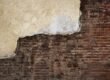
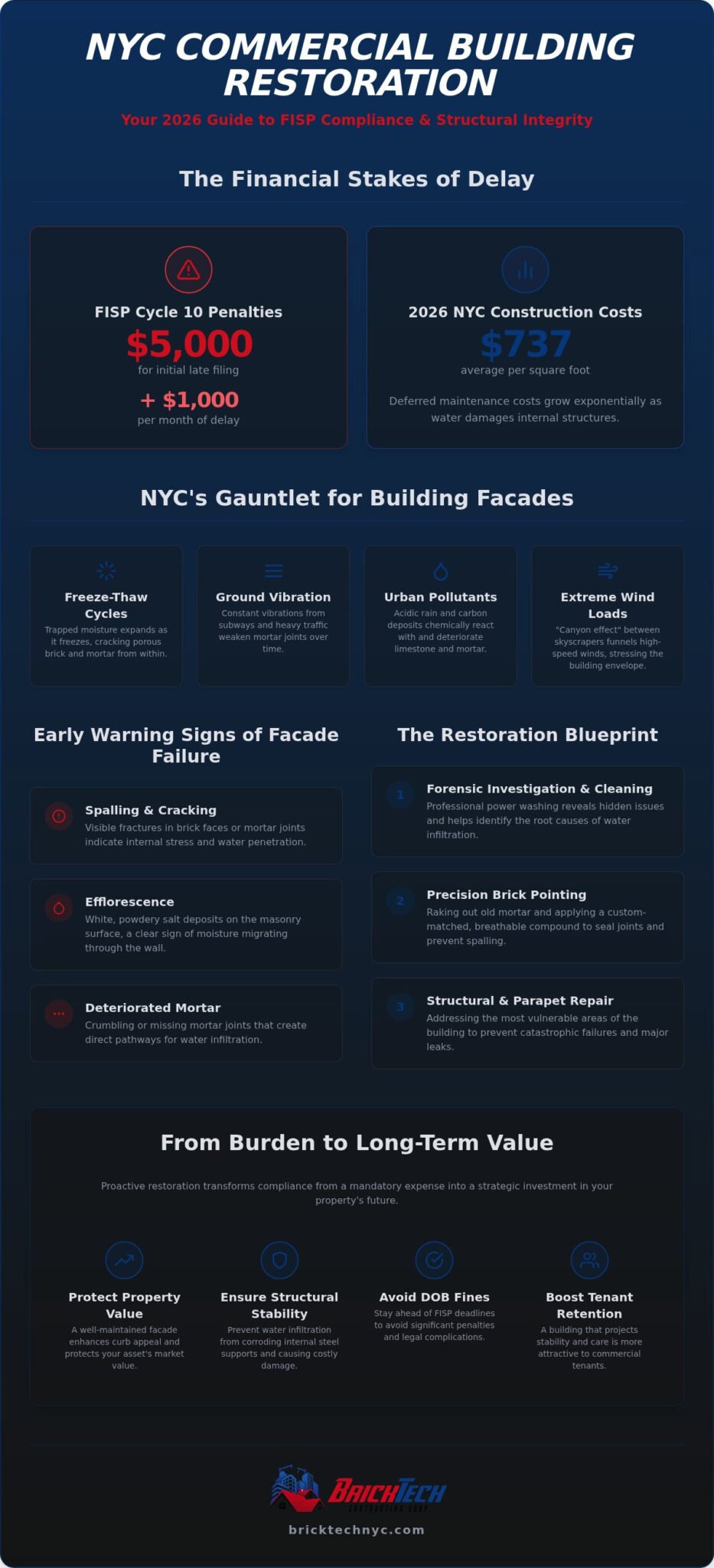
The freeze-thaw cycle is the primary enemy of NYC masonry. When wind-driven rain hits porous brickwork, moisture seeps deep into the substrate. As temperatures drop, this water expands, creating internal pressure that leads to spalling and cracked mortar joints. Over time, the principles of architectural conservation and historic preservation become vital to maintaining the building’s character while ensuring it remains weather-tight. You might notice white, powdery salt deposits called efflorescence or small hairline fractures in high-traffic zones. These are early warning signs that the building envelope is failing and needs expert attention.
The Economic Case for Timely Restoration
In 2026, the average construction cost in NYC has reached approximately $737 per square foot. With costs this high, waiting to address a leak or a crumbling parapet is a high-risk gamble. Deferred maintenance doesn’t just stay the same; it grows exponentially as water infiltration damages internal steel supports and backup walls. A well-maintained facade also plays a critical role in tenant retention. In a competitive real estate market, businesses want to lease space in buildings that project stability and professional care.
Common stressors on NYC commercial facades:
- Constant ground vibration from transit and heavy trucking.
- Acidic rainwater and carbon deposits from urban traffic.
- Extreme wind loads at higher elevations.
- The corrosive effect of salt air in coastal boroughs.
Proactive commercial building restoration NYC protects your asset value. It ensures you aren’t caught off guard by the hefty penalties associated with FISP Cycle 10, which can exceed $5,000 for simple administrative delays. Taking action now secures your building against the elements and keeps your operational budget predictable. We view every restoration project as a partnership designed to extend the life of your property and safeguard your bottom line.
Core Services: From Facade Restoration to Structural Masonry
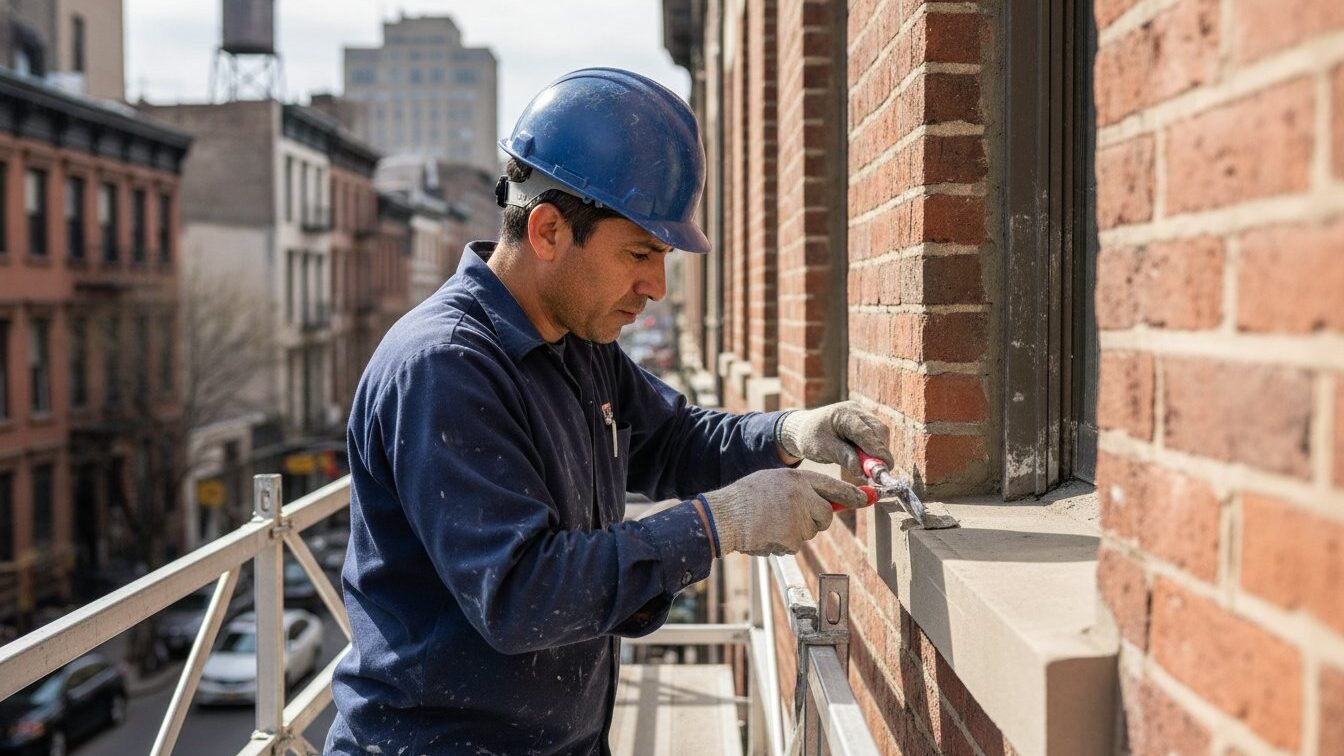
Maintaining a multi-story commercial building requires more than just superficial repairs. A comprehensive approach to commercial building restoration NYC involves sealing the building envelope against the city’s aggressive moisture cycles. We focus on restoring the structural integrity of your property while enhancing its visual appeal. This process typically begins with deep cleaning via professional power washing to reveal hidden cracks, followed by meticulous masonry repairs that stop water infiltration at its source. For medium-sized commercial buildings, which often rely on load-bearing brick walls, these services are essential for preventing the costly steel corrosion that occurs when moisture reaches the building’s frame.
Precision Brick Pointing and Mortar Matching
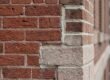
Professional brick pointing is the backbone of masonry longevity. In NYC, many historic commercial buildings were constructed using lime-based mortars that are softer than modern Portland cement. If a contractor uses mortar that’s too hard, it can cause the bricks themselves to crush and spall during temperature changes. Our team focuses on “raking out” old, brittle mortar to a specific depth without nicking the edges of the surrounding bricks. We then apply a custom-matched mortar that breathes with the structure. You can read more about this technical process in our brick pointing NYC guide. Getting this balance right ensures your facade remains flexible and weather-tight for decades.
Structural Parapet and Chimney Maintenance
Parapet walls are the most vulnerable part of any NYC building. Because they’re exposed to the elements on both sides, they often experience accelerated mortar decay and structural leaning. A compromised parapet isn’t just a maintenance issue; it’s a major liability under Local Law 11. Our specialized parapet wall construction New York services address these risks by installing proper flashing and stable masonry units. Similarly, commercial chimneys require regular restoration to maintain ventilation safety and prevent masonry collapse. If you’ve noticed cracks in your roof-line masonry, it’s time to consult with a reliable expert in facade restoration to evaluate the safety of your building’s highest points.
Navigating NYC Compliance: Local Law 11 and FISP Requirements
The Facade Inspection Safety Program (FISP), historically known as Local Law 11, is a mandatory requirement for NYC buildings taller than six stories. This law mandates a critical examination of exterior walls every five years. As we move through 2026, the 10th cycle of FISP is in full effect. It isn’t just a paperwork exercise; it’s a rigorous safety mandate designed to prevent masonry failure in our high-density environment. Successful commercial building restoration NYC often begins with these inspections, as they provide the roadmap for necessary structural repairs and long-term maintenance.
The FISP Inspection Process
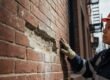
A Qualified Exterior Wall Inspector (QEWI), usually a licensed architect or engineer, must lead the inspection. The DOB requires a “hands-on” inspection, meaning the QEWI must be physically close enough to the facade to tap the masonry and check for hollow sounds or loose units. This typically requires scaffolding or industrial rope access. When planning these logistics, property owners should consult our facade restoration cost NYC guide to understand how inspection access and site safety requirements impact the overall project budget.
Addressing ‘Unsafe’ Designations and Violations
After the inspection, your building receives one of three statuses. “Safe” means no repairs are needed. “Safe With a Repair and Maintenance Program” (SWARMP) indicates the building is currently secure but requires specific maintenance before the next cycle to prevent it from becoming hazardous. An “Unsafe” designation is the most serious. It requires the immediate installation of a sidewalk shed within 30 days to protect the public from potential falling debris.
Resolving an “Unsafe” status involves a tight partnership between your engineer and a specialized contractor. Once repairs are finished, an amended report must be filed to clear the violation. Failing to correct these conditions results in an additional $1,000 monthly fine. Proactive commercial building restoration NYC ensures you address SWARMP items early, preventing them from escalating into “Unsafe” violations that disrupt your operations and damage your property’s reputation.
The Restoration Process: Identifying, Planning, and Executing
A successful commercial building restoration NYC project relies on more than just high-quality materials. It requires a methodical four-phase approach that begins long before a single brick is replaced. Rushing into physical repairs without a clear understanding of the building’s internal conditions often leads to recurring leaks and wasted capital. We treat every project as a forensic challenge, ensuring that the root cause of deterioration is eliminated rather than hidden behind a fresh layer of mortar. This structured path moves from investigation to planning, safe execution, and finally, a long-term maintenance strategy.
Forensic Masonry Diagnostics
Phase one is all about investigation. We use non-destructive tools like thermal imaging to identify pockets of moisture trapped behind the facade that aren’t visible to the naked eye. Probing allows us to check the condition of the wall ties and the underlying steel structure. It’s critical to differentiate between cosmetic settling cracks and deep structural failures caused by shifting foundations or rusted lintels. Surface-level fixes will always fail if internal drainage issues or clogged weep holes aren’t addressed first. By identifying these hidden problems early, we develop a scope of work in phase two that balances your immediate budget with the need for multi-decade durability.
Executing the Restoration Plan
Phase three focuses on safe execution. In the crowded streets of the five boroughs, managing the logistics of scaffolding and sidewalk sheds is a complex task. We prioritize site protection to ensure that tenants and pedestrians remain safe throughout the construction timeline. Quality control is maintained through consistent mortar joint depth and uniform application of specialized waterproofing membranes. Clear communication with building stakeholders ensures that everyone is aware of the progress and any necessary adjustments to the work schedule, minimizing the impact on daily commercial operations.
The final phase involves a rigorous closing inspection and the development of a preventative care plan. This proactive strategy helps property owners transition from reactive, emergency repairs to a sustainable maintenance program. If you suspect your building envelope has been compromised, don’t wait for a DOB violation to take action. You can request a professional facade evaluation to begin your commercial building restoration NYC with a data-driven plan that prioritizes both safety and your bottom line.
Why Brick Tech is Your Partner for NYC Commercial Restoration
Brick Tech Contracting Corp has served the five boroughs as a family-owned business since 1980. This deep-rooted geographic knowledge allows us to anticipate the specific challenges your property faces, from the salt air of coastal Queens to the heavy transit vibrations of the Bronx. We view every project as a partnership, prioritizing protection and longevity over quick turnarounds. Our team brings a seasoned perspective to commercial building restoration NYC, ensuring that every repair meets the highest standards of craftsmanship and compliance. We handle everything from NYC sidewalk violation removal to complex Local Law 11 repairs, giving you peace of mind that your investment is in expert hands.
Our approach is grounded in reliability and transparency. We understand that owning a commercial building in this city involves navigating high-pressure regulations and unpredictable weather cycles. By focusing on structural integrity and meticulous masonry work, we help property owners avoid the trap of repetitive repairs. We’ve spent decades refining our techniques to ensure that our work doesn’t just pass inspection but actually extends the life of the building envelope. When you work with us, you’re choosing a team that carries the weight of established authority and a commitment to excellence.
A Local Legacy of Masonry Excellence
Working with a contractor who understands specific NYC building stock is an advantage that national entities cannot replicate. We know the history of the materials used in your neighborhood, allowing for better mortar matching and structural alignment. As an experienced waterproofing contractor NYC, we use high-quality systems like Thorocoat to provide a resilient barrier against wind-driven rain. This “reliable expert” approach minimizes the stress of property management by providing stable, predictable results. We don’t believe in surface-level fixes; we believe in building a weather-tight future for your property.
Requesting Your Commercial Consultation
Securing your building’s exterior starts with an honest, detailed assessment. We provide comprehensive evaluations that look beyond the surface to identify the root causes of masonry decay. In a market where NYC construction costs average $737 per square foot, you can’t afford a contractor who learns on the job. Choosing a licensed and insured specialist is the only way to safeguard your budget and your liability. We’ll work with you to develop a phased restoration plan that addresses critical safety items first, followed by long-term preservation efforts. Your next step in commercial building restoration NYC is to partner with a team that values your investment as much as you do. Reach out to us to schedule your commercial consultation and protect your asset for the decades to come.
Securing Your Building’s Future in a Changing NYC Landscape
Protecting your property from the elements and the Department of Buildings requires a proactive, data-driven strategy. Staying ahead of FISP Cycle 10 deadlines and addressing structural masonry issues early are the only ways to avoid compounding costs. A weather-tight building envelope doesn’t just happen; it’s the result of forensic investigation and meticulous craftsmanship. By prioritizing durability and compliance now, you’re investing in the long-term resilience and market value of your asset. Brick Tech Contracting Corp has been a trusted partner for commercial building restoration NYC since 1980. As a licensed NYC General Contractor, we bring deep expertise in Local Law 11 repairs and specialized knowledge in NYC sidewalk violation removal to every project. We understand the unique pressures of the city’s microclimate and the high stakes of property ownership. Don’t wait for a violation to compromise your bottom line. Request a Professional Commercial Restoration Quote from Brick Tech today to ensure your building remains a safe, compliant, and valuable part of the New York skyline. We’re ready to help you protect what you’ve built.
Frequently Asked Questions
What is the typical cost of commercial building restoration in NYC?
Costs vary significantly based on building height, access requirements, and the extent of masonry damage. Factors like the type of scaffolding needed and the specific historic materials required for matching influence the final budget. We recommend a forensic evaluation to determine a precise scope of work rather than relying on broad square-foot estimates that may not account for hidden structural issues or complex DOB permitting fees.
How long does a facade restoration project usually take for a mid-sized building?
A standard project for a mid-sized commercial property typically ranges from three to six months. This timeline includes site mobilization, the installation of sidewalk sheds, and the actual masonry work. Weather conditions and the complexity of the Department of Buildings permitting process can also impact the schedule. We prioritize efficient execution to minimize the duration of scaffolding presence while ensuring the structural integrity of the building envelope is fully restored.
Do I need to vacate the building during masonry restoration?
No, you generally don’t need to vacate your property during commercial building restoration NYC. Most exterior work is performed from scaffolding or industrial rope access, allowing internal business operations to continue as usual. We implement strict site protection protocols and coordinate with building management to manage noise and dust. Our goal is to ensure the safety of tenants and pedestrians without disrupting your daily commercial activities or lease agreements.
What is the difference between brick pointing and repointing?
While often used interchangeably, pointing refers to the initial finishing of mortar joints, whereas repointing is the process of repairing those joints. Repointing involves carefully raking out old, deteriorated mortar and replacing it with new material that matches the original hardness and color. This is a critical step in NYC masonry maintenance to prevent water infiltration and maintain the overall stability of the load-bearing walls.
How often should a commercial building in NYC be inspected for facade safety?
Under the Facade Inspection Safety Program (FISP), buildings taller than six stories must undergo a professional inspection every five years. However, we recommend annual visual checks for all commercial properties to identify early signs of spalling or cracked mortar. Proactive monitoring helps you address minor issues before they escalate into “Unsafe” designations during your mandatory filing cycle; this saves you from emergency repair costs and heavy DOB penalties.
Can facade restoration help with building energy efficiency?
Yes, restoration significantly improves energy efficiency by sealing gaps in the building envelope. Repairing cracked masonry and applying high-quality waterproofing coatings prevents air leakage and moisture penetration. This reduces the load on your HVAC system and helps your property comply with Local Law 97 emissions limits. A weather-tight exterior is a fundamental component of any modern decarbonization strategy, lowering utility costs while protecting the structure’s longevity.
What happens if I miss my Local Law 11 filing deadline in 2026?
Missing your filing window results in an immediate $5,000 penalty from the DOB. Additionally, you’ll face a $1,000 fine for every month the report remains unfiled. If your building has a tax block number ending in 0, 7, or 8, your sub-cycle 10B window is currently open. Promptly filing your report is essential to avoid these administrative drains and ensure your property remains in good standing with the city.
Does Brick Tech handle sidewalk violation removal alongside facade work?
Yes, we specialize in NYC sidewalk violation removal as part of our comprehensive commercial building restoration NYC services. We coordinate the necessary permits and perform the concrete repairs required to clear DOT violations while your facade work is underway. This integrated approach simplifies the restoration process for property managers; it ensures that both the building envelope and the surrounding pedestrian pathways meet all local safety and compliance standards.