Did you know that the stringent facade safety laws governing our skyline today were originally triggered by a single piece of falling terracotta? As we move into 2026, the pressure on property owners is intensifying with new fines for delayed repairs and the strict filing windows of FISP Cycle 10. Managing a terracotta facade repair NYC project requires more than just a quick fix; it demands a deep understanding of how historic materials interact with modern environmental stressors. You probably feel the weight of these regulations, especially when faced with the high costs of custom masonry and the difficulty of finding specialized artisans who respect the original craftsmanship.
We understand that maintaining a safe, compliant building envelope is your top priority, even as the regulatory landscape shifts. This guide provides the clarity you need to identify early signs of glaze failure, navigate the latest Department of Buildings mandates, and restore your exterior using expert masonry techniques. You’ll learn how to protect your investment through long-term waterproofing and structural stabilization. From meeting sub-cycle deadlines to avoiding the mounting penalties of Local Law 11, we are here to help you preserve your building’s architectural beauty for decades to come.
Key Takeaways
- Stay ahead of FISP Cycle 10 deadlines and the strict new 2026 penalties designed to eliminate long-standing sidewalk sheds.
- Learn to distinguish between superficial glaze crazing and the internal structural damage caused by moisture and the “ice wedge” effect.
- Understand why professional terracotta facade repair NYC requires meticulous hands-on sounding and specialized historic masonry techniques to ensure building safety.
- Navigate the logistical requirements of a restoration project, including the coordination of scaffolding, safety netting, and NYC DOT sidewalk permits.
- Implement proactive maintenance strategies and gentle cleaning protocols that protect historic glazes from the damage caused by high-pressure washing.
Understanding Terracotta Facades in the NYC Landscape
Architectural terracotta was the miracle material of New York’s Gilded Age. It allowed for the grand, ornamental details seen on iconic buildings across the five boroughs. Fired in a kiln and often finished with a ceramic glaze, terracotta offered a level of fire resistance and versatility that solid stone couldn’t match. However, its unique construction presents specific challenges for modern maintenance. This material is both a decorative masterpiece and a structural skin that must be managed with care.
These blocks are not solid; they are hollow shells reinforced with intricate internal webbing. This design makes the material lightweight but also creates cavities where moisture can hide. When water infiltrates a block, NYC’s brutal freeze-thaw cycles cause that water to expand. This often shatters the internal structure from the inside out. This is why terracotta facade repair NYC requires a contractor who understands the invisible mechanics of the material, not just the surface appearance. The salt air from our coastal environment only accelerates the corrosion of the metal anchors holding these blocks to the building’s frame.
Terracotta vs. Stone: Identifying Your Building’s Material
Distinguishing between terracotta and natural stone is the first step in any restoration plan. You can often spot terracotta by looking for ‘crazing.’ This is a network of fine, hair-like cracks in the surface glaze that looks like old porcelain. Natural stone, such as limestone or brownstone, will never show this specific pattern. Because it was easier to mold than stone was to carve, you’ll most commonly find terracotta in highly decorative areas like cornices, window surrounds, and ornamental belt courses.
Another reliable method is the ‘tap test.’ When a professional mason strikes a solid stone block, it produces a dull thud. Striking a terracotta block creates a distinct, hollow ring. If the ring sounds flat or muffled, it often indicates that the internal webbing has failed or that the block is filled with water. Identifying these issues early is vital for a successful terracotta facade repair NYC project.
The Evolution of NYC Facade Materials
The transition from porous brownstone to durable terracotta began in the late 19th century as architects sought materials that could withstand the city’s soot and grime. By the early 1900s, it became the standard for high-rise construction in Manhattan and Brooklyn. These buildings often used terracotta as a protective skin integrated with a steel frame. It provided the look of expensive stone at a fraction of the weight.
As we move into 2026, many of these historic facades have surpassed their expected lifespan. The steel anchors holding the blocks in place are often corroding, creating hidden safety risks. Understanding the history and structural role of these materials is essential for ensuring your building remains safe and compliant with modern safety standards. Reliable restoration focuses on preserving this history while reinforcing the building’s structural integrity for the next century.
Identifying Common Terracotta Deterioration and Damage
Spotting damage early is the difference between a minor touch-up and a massive structural overhaul. While we previously discussed the hollow nature of these blocks, the real concern is how that design invites moisture. Glaze crazing, those tiny spiderweb cracks, might look like a natural part of an aging building, but they act as entry points for water. Once the protective seal is broken, spalling occurs as the ceramic face begins to flake or peel away from the clay body. Effective terracotta facade repair NYC starts with a forensic look at how the material is failing from the inside out.
The “Ice Wedge” effect is a primary driver of deterioration in our local climate. When water enters the hollow cavities of a unit, it sits against the internal webbing. During a typical New York freeze-thaw cycle, this water expands with immense force. It shatters the internal supports, leaving the block as a hollow shell with no structural integrity. You might also notice salt efflorescence, a white powdery substance on the surface. This isn’t just a stain; it’s a sign that water is migrating through the porous clay and bringing minerals to the surface, signaling deep-seated moisture issues.
The Danger of Internal Anchor Corrosion
The most significant threat to your building isn’t always visible on the surface. Rust jacking occurs when water reaches the internal iron or steel anchors that secure the terracotta to the building’s frame. When these metal components oxidize, they can expand up to 10 times their original size. This internal pressure is enough to crack even the strongest fired clay from within. It creates a “ticking clock” scenario for building owners.
A simple hairline crack on the exterior often masks a failing anchor system inside. According to the National Park Service guide on the Preservation of Historic Glazed Architectural Terra-Cotta, addressing these metal supports is critical for long-term stability. If you’ve noticed sudden cracking or shifting blocks, a professional facade restoration assessment can help determine if rust jacking is compromising your building’s safety. Ignoring these signs can lead to falling debris and severe liability risks.
Environmental Stressors Specific to New York City
New York City presents a unique set of challenges for historic masonry. Constant vibrations from subways and heavy transit can slowly loosen mortar joints and rattle internal anchors over decades. Urban pollution and acid rain also take their toll, chemically breaking down the protective glaze that keeps the clay body dry. This erosion leaves the underlying material vulnerable to the elements.
We often see damage caused by well-intentioned but improper previous repairs. Using hard Portland cement to patch soft, breathable terracotta prevents moisture from escaping. This traps water inside the wall, accelerating the very decay it was meant to stop. Successful terracotta facade repair NYC requires using specialized mortars that match the original composition to ensure the building can breathe as intended. Choosing the right materials is just as important as the repair itself.
Navigating NYC Compliance: FISP and Local Law 11
NYC property owners face a complex regulatory environment when managing historic buildings. The NYC Facade Inspection Safety Program (FISP), formerly known as Local Law 11, dictates a strict inspection schedule for any structure over six stories. For buildings with terracotta elements, these inspections are particularly rigorous. Effective terracotta facade repair NYC depends on a Qualified Exterior Wall Inspector’s (QEWI) ability to spot hidden anchor issues before they become “Unsafe” conditions. If an inspector finds issues, they will classify your building as “Safe,” “Safe With a Repair and Maintenance Program” (SWARMP), or “Unsafe.” Ignoring an “Unsafe” classification triggers an immediate requirement for sidewalk sheds, which can cost thousands in monthly rental fees and significantly lower your property’s curb appeal.
Delaying a necessary terracotta facade repair NYC project doesn’t just invite fines; it creates a liability nightmare. If a piece of masonry falls and causes injury, the building owner is legally responsible. Staying compliant ensures the safety of the public and protects your financial interests. We view compliance not just as a legal hurdle, but as a necessary partnership in preserving the city’s structural integrity.
2026 Filing Cycles and Deadlines
As we enter 2026, building owners must be aware of where they stand in Cycle 10. Filing windows are determined by the last digit of your building’s block number. For those in Sub-cycle 10A (block numbers ending in 4, 5, 6, or 9), the filing window is currently open and closes on February 21, 2027. If your block number ends in 0, 7, or 8, your window for Sub-cycle 10B opens on February 21, 2026.
The QEWI’s role is to perform hands-on inspections, often using scaffolding or rope access to check for the internal anchor corrosion we discussed earlier. If your building was previously marked as SWARMP, you must complete the specified repairs before the current cycle ends. Failure to do so automatically downgrades your building to “Unsafe” in the eyes of the Department of Buildings (DOB). This status change forces immediate protective measures and can lead to aggressive enforcement actions.
Avoiding DOB Violations and Penalties
The financial consequences of non-compliance are steep. Starting January 12, 2026, new regulations under Local Laws 49, 50, and 51 have introduced harsher fines for delayed repairs. Currently, the penalty for failing to file an initial report is $5,000 per year, while late filing carries a $1,000 monthly fine. Failing to correct SWARMP conditions can result in a $2,000 monthly penalty, which quickly outpaces the cost of the actual repairs.
Investing in professional facade restoration NYC services is the most effective way to secure long-term approval and stop the clock on these penalties. Once repairs are finished, your QEWI must file an amended report to clear the violation from the building’s record. We recommend starting the planning process at least six months before your filing window opens to ensure you have enough time to secure specialized masons and necessary permits.

The Professional Terracotta Restoration Process
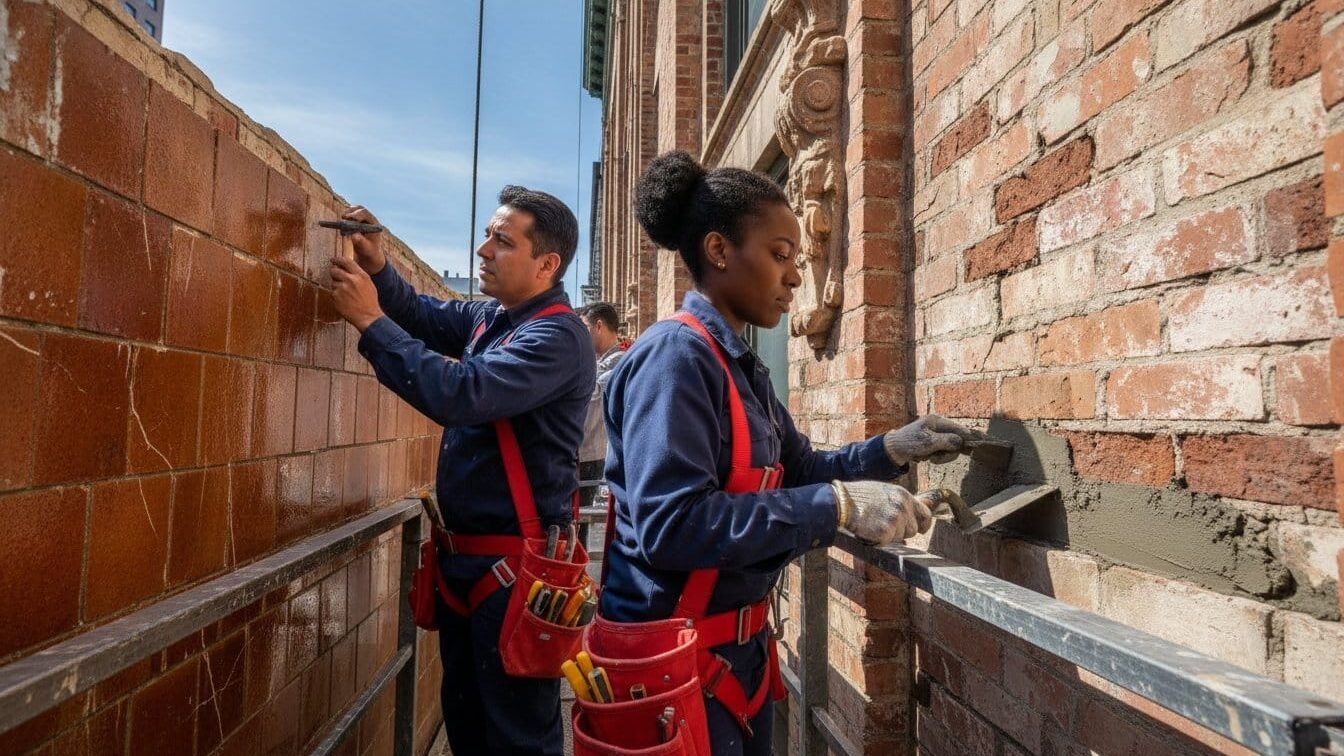
A professional restoration begins with a rigorous condition survey where every single block is “sounded” by a master mason. This manual process involves tapping the surface to listen for the distinct hollow or flat tones that indicate internal webbing failure. Once the damage is mapped, the focus shifts to site security. We coordinate the installation of heavy-duty scaffolding and safety netting, while also managing the necessary NYC DOT sidewalk permits. This ensures that the restoration proceeds without endangering pedestrians or violating city safety protocols. Managing these logistics correctly is the first step in a successful terracotta facade repair NYC project.
Repair vs. Replacement: Making the Call
Deciding whether to patch a block or replace it entirely is a critical decision in any terracotta facade repair NYC project. For minor surface damage or localized spalling, specialized breathable restoration mortars like Jahn are the industry standard. These mortars are engineered to mimic the physical properties of the original fired clay, ensuring that the repair expands and contracts at the same rate as the building. If the internal structure is compromised, however, full replacement is mandatory. Custom-cast terracotta involves long lead times for molding and kiln firing, so early planning is essential to keep the project on schedule.
For intricate ornaments located high on the facade, we often utilize Glass Fiber Reinforced Concrete (GFRC). This material provides an identical visual match to historic terracotta but is significantly lighter. Using GFRC reduces the structural strain on aging steel anchors and simplifies the installation process for complex decorative elements. It’s a durable alternative that preserves the building’s aesthetic while improving overall safety.
Waterproofing and Mortar Selection
The techniques used for brick pointing NYC must be carefully adapted for terracotta joints. Terracotta units are much larger than standard bricks, meaning the joints must handle a greater degree of thermal movement. Using a high-strength Portland cement mortar is a common mistake that leads to “pinching” and cracking the edges of the historic blocks. Instead, we use lime-based or specialized restoration mortars that remain flexible and breathable throughout the year.
The final stage of the process involves applying vapor-permeable protective coatings. These coatings are essential for long-term waterproofing because they allow internal moisture to escape as a vapor while preventing liquid water from entering the block. This breathability is what prevents the catastrophic “ice wedge” effect during New York winters. If you are concerned about the structural integrity of your building’s exterior, contact our team at Brick Tech Contracting Corp to schedule a professional assessment and ensure your facade remains compliant and secure.
Long-Term Maintenance and Choosing an NYC Specialist
Restoring a historic exterior is a significant investment in your property’s future. Once the primary terracotta facade repair NYC work is complete, the focus must shift to long-term preservation. We’ve seen how moisture and freeze-thaw cycles act as the primary engines of decay. Preventing these issues requires more than just a “set it and forget it” mindset. Annual inspections allow us to catch hairline cracks or mortar gaps before they evolve into the structural failures that trigger “Unsafe” FISP classifications. Early detection is your best defense against the high costs of custom masonry replacement.
Cleaning protocols are another critical area where many owners inadvertently cause damage. While it’s tempting to use high-pressure washing to remove urban grime, this can be catastrophic for historic materials. High-pressure water often shatters the fragile ceramic glaze, exposing the porous clay body to the elements. We utilize low-pressure, chemically neutral cleaning methods that protect the integrity of the glaze while restoring the building’s aesthetic appeal. Protecting that original finish is essential for long-term weather resistance.
Creating a Preventive Maintenance Plan
A proactive plan is the most cost-effective way to manage a historic building. We recommend scheduling bi-annual checks of all gutters, scuppers, and drainage systems. If water isn’t moving away from the building, it’s saturating the facade. This saturation leads directly to the “ice wedge” effect and anchor corrosion we discussed earlier. Keeping these systems clear is a simple step that prevents millions of dollars in structural damage over time.
Documentation is equally important for your building’s health. When you record every minor repair and inspection, you provide future FISP inspectors with proof of proactive care. This transparency often leads to smoother filing cycles and fewer administrative headaches. In the high-stakes world of NYC real estate, spending a few thousand dollars on consistent maintenance provides a massive return on investment by extending the life of your building envelope by decades.
Why Brick Tech is NYC’s Trusted Restoration Partner
Choosing the right contractor is about more than just a bid; it’s about finding a partner who understands the weight of NYC’s history. Brick Tech Contracting Corp was founded in 1980. We’ve spent over 40 years mastering the specific environmental challenges of the five boroughs. Our legacy is built on structural integrity and our reputation as a premier waterproofing contractor NYC. We don’t believe in quick fixes that mask underlying issues.
Our approach balances the delicate needs of historic preservation with the rigorous safety standards of modern NYC building codes. We prioritize direct, professional communication to ensure your project stays on timeline and within budget. Whether you’re managing a Manhattan high-rise or a Brooklyn landmark, our team provides the expert guidance you need to keep your building safe, compliant, and beautiful. We view every restoration as a partnership aimed at protecting your most valuable asset.
Securing Your Building’s Future and Legacy
Managing a historic property in New York requires a balance of vigilance and expertise. As Cycle 10 progresses, the risks of internal anchor corrosion and the strict deadlines of FISP make proactive care essential. By addressing hairline cracks early and using breathable restoration materials, you protect your building from the compounding costs of neglect. It’s a strategic move that preserves both the structural integrity and the aesthetic value of your investment. Taking these steps now prevents the “Unsafe” classifications that lead to expensive, long-term sidewalk sheds.
Brick Tech Contracting Corp has been a trusted partner for property owners across all five boroughs since 1980. We specialize in Local Law 11 compliance and expert waterproofing, ensuring your building remains a safe and beautiful part of the city’s skyline. If you’re ready to secure your property’s exterior, we invite you to Request a Professional Facade Assessment from Brick Tech today. Investing in professional terracotta facade repair NYC is the most reliable way to ensure long-term stability and peace of mind. Your building’s architectural legacy is worth the meticulous care that only a seasoned expert can provide.
Frequently Asked Questions
How do I know if my building has terracotta or just decorative stone?
Distinguishing between materials involves looking for crazing or performing a tap test. Decorative stone like limestone is solid and produces a dull thud when struck. In contrast, architectural terracotta is a fired clay product with a hollow interior. If you hear a distinct ringing sound when tapping the block, you’re likely looking at terracotta. This distinction is critical because repair techniques for solid stone differ significantly from hollow clay units.
What is the average cost of terracotta facade repair in NYC for 2026?
Costs for terracotta facade repair NYC vary based on the height of the building, the complexity of the ornaments, and the extent of internal anchor damage. While industry data shows that labor and materials in New York run significantly higher than national averages, every project is unique. Factors such as scaffolding requirements and the need for custom-cast replacements will influence the final budget. We recommend a professional assessment to determine specific needs.
Does Local Law 11 require me to replace all cracked terracotta blocks?
Local Law 11 doesn’t mandate the replacement of every block with a hairline crack. Repairs are required for conditions classified as Unsafe or those that could become hazardous before the next inspection cycle. Many surface issues can be addressed using specialized restoration mortars rather than full replacement. A Qualified Exterior Wall Inspector (QEWI) will determine which blocks pose a safety risk and which require only standard maintenance to remain compliant.
How long do custom terracotta replacement blocks take to manufacture?
Manufacturing custom replacement blocks is a time-intensive process that often requires several months. Each piece must be meticulously measured, molded, and fired in a kiln to match the original specifications. Because of these long lead times, it’s vital to begin the planning phase of your terracotta facade repair NYC project well before your filing deadline. Early coordination ensures that materials are ready for installation when your scaffolding is in place.
Can I use power washing to clean my building’s terracotta exterior?
High-pressure washing can be destructive to historic glazes, but professional cleaning at controlled pressures is a standard part of facade maintenance. Using excessive force can drive water into the porous clay body or shatter the protective ceramic finish. We use gentle, low-pressure methods and neutral cleaners to remove urban pollutants without compromising the material. This approach preserves the protective glaze while restoring the original aesthetic of your building’s exterior.
What happens if I ignore a SWARMP status on my facade inspection report?
Ignoring a Safe With a Repair and Maintenance Program (SWARMP) status is a costly mistake. If the required repairs aren’t completed by the next filing cycle, the Department of Buildings automatically downgrades the building to Unsafe. This change triggers immediate requirements for sidewalk sheds and results in significant monthly penalties. Proactive maintenance is always more affordable than the fines and emergency measures associated with a failure to address SWARMP conditions.
Is it possible to repair terracotta without putting up a sidewalk shed?
Minor maintenance on Safe or SWARMP facades can sometimes be performed using industrial rope access or boom lifts, which may avoid the need for a full sidewalk shed. However, if any condition is classified as Unsafe, NYC regulations strictly require the installation of a sidewalk shed to protect pedestrians. The goal of a professional restoration is to complete repairs efficiently so these protective structures can be removed as quickly as possible.
How does Brick Tech ensure the new repairs match the historic color of my building?
We achieve an accurate match through careful material sampling and custom mortar tinting. Our masons analyze the original glaze and clay body to ensure that restoration mortars or replacement units blend seamlessly with the existing facade. This process respects the architectural history of the building while providing a durable, weather-resistant finish. We focus on maintaining visual consistency across the entire exterior so that repairs are virtually invisible to the naked eye.