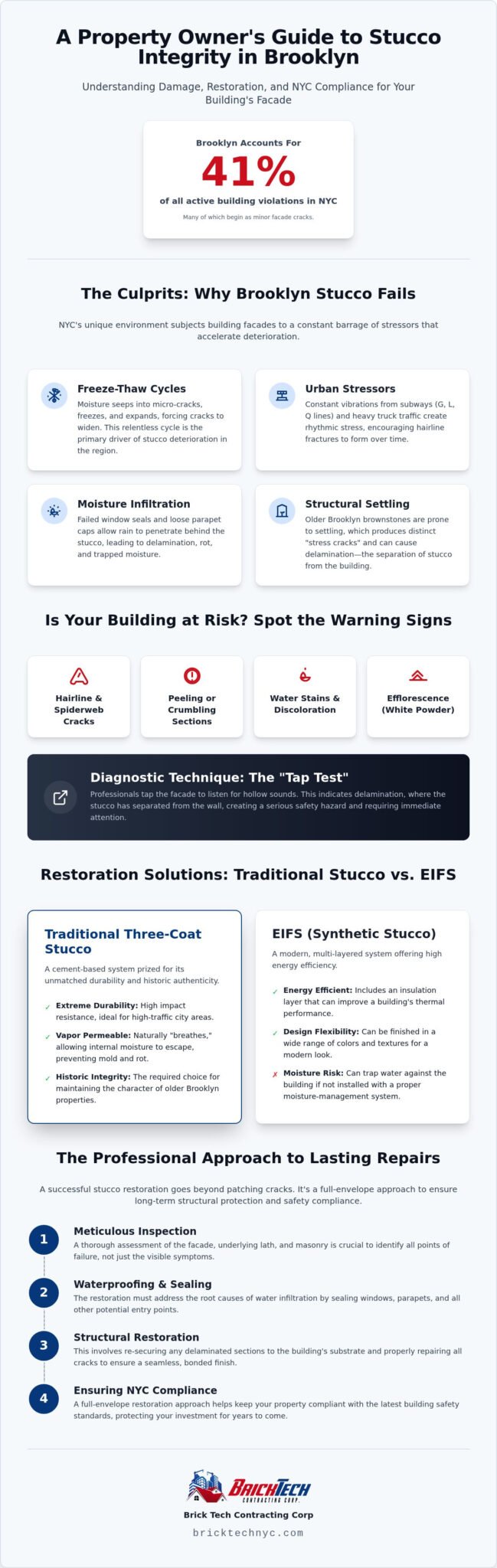
Did you know that Brooklyn currently accounts for 41% of all active building violations in New York City? For many property owners, those violations start as a single, hairline crack in the facade that quickly spirals into a structural nightmare. If you’re noticing peeling textures or water stains on your exterior, you’re likely feeling the pressure of maintaining a property in our demanding climate. Securing professional stucco repair Brooklyn services is the most effective way to stop minor wear from becoming a legal headache or a safety hazard. We understand the stakes of property ownership, and we’re here to provide the stability and expertise your building deserves.
This guide offers a clear roadmap to help you identify damage, understand the differences between traditional stucco and EIFS, and navigate the latest 2026 NYC safety regulations. You’ll learn how to achieve a waterproof, seamless finish that restores curb appeal while providing long-term structural protection. We’ll preview the essential maintenance steps and professional restoration techniques used by seasoned masonry specialists to keep Brooklyn properties resilient. From correcting water infiltration to ensuring compliance with the newest local laws, you’ll find the expert guidance needed to protect your investment for years to come.
Key Takeaways
- Identify the environmental triggers behind stucco damage, including how NYC’s harsh freeze-thaw cycles expand micro-cracks over time.
- Master the “Tap Test” and other professional diagnostic techniques to determine if your facade needs a minor patch or a full-scale replacement.
- Compare traditional three-coat cement systems with modern EIFS to find the most durable and energy-efficient restoration solution for your building.
- Discover why professional stucco repair Brooklyn requires a meticulous inspection of the underlying lath and masonry to ensure a waterproof finish.
- Learn the benefits of a “full-envelope” restoration approach that keeps your property compliant with the latest NYC building safety standards.
Common Causes of Stucco Damage in Brooklyn Buildings
To understand why your facade is failing, you first need to know What is Stucco and how it behaves in a dense urban environment. Stucco is a durable but porous cement-based or synthetic coating designed to protect your building’s exterior. Because it’s porous, it naturally breathes, but this also means it can absorb moisture if the surface isn’t properly maintained. In a city like New York, this material is constantly fighting against environmental stressors that don’t exist in quieter regions.
NYC’s extreme freeze-thaw cycles are the primary driver of deterioration. During our wet winters, moisture seeps into existing micro-cracks in the finish. When the temperature drops, that water freezes and expands, forcing the cracks to widen. This cycle repeats dozens of times each season, eventually compromising the bond between the stucco and the wall. If you don’t invest in timely stucco repair Brooklyn, these small fissures can quickly turn into large, crumbling sections that threaten the building’s safety.
Brooklyn properties face an additional challenge: subway vibrations. If your building is near the G, L, or Q lines, the constant, subtle tremors from passing trains can impact masonry structural integrity. These vibrations create rhythmic stress that encourages hairline fractures to form. You might also notice “efflorescence,” which appears as white, powdery stains on your facade. These are salt deposits left behind when water moves through the masonry and evaporates on the surface. It’s a clear warning that moisture is migrating through your walls and requires professional attention.
The Role of Moisture and Water Infiltration
Water doesn’t always attack from the front. Often, damage starts at the edges where window seals have failed or parapet caps have loosened. These gaps allow rain to get behind the stucco layers, leading to delamination and rot. This is particularly dangerous for EIFS (synthetic) systems, which can trap moisture against the substrate without a proper drainage path. Partnering with a professional waterproofing contractor NYC is a vital preventative step to ensure your building envelope remains airtight and dry.
Structural Settling and Urban Environmental Stress
Old Brooklyn brownstones are prone to structural settling, which produces distinct “stress cracks” that look different from the shallow “spiderweb cracks” caused by sun exposure. Heavy truck traffic on local avenues adds to this strain, shaking the foundations of older structures. Delamination is the separation of stucco from its substrate. When this occurs, the exterior shell is no longer physically attached to the building, creating a risk of falling debris. Reliable stucco repair Brooklyn focuses on re-securing these layers to prevent further structural decay and maintain a safe environment for pedestrians.
Traditional Stucco vs. EIFS: Choosing the Right Restoration
When planning a stucco repair Brooklyn project, the first decision involves identifying whether your building uses traditional cement-based materials or a modern synthetic system. Both offer distinct advantages, but choosing the wrong one can lead to moisture traps or aesthetic mismatches. Traditional stucco consists of a three-coat application: the scratch coat, brown coat, and finish coat. This system is prized for its extreme durability and high impact resistance, making it ideal for high-traffic city sidewalks where physical wear is constant.
In our humid coastal climate, vapor permeability is a non-negotiable factor. Your walls must be able to release internal moisture to prevent mold growth and structural decay. Traditional stucco naturally allows this exchange, while modern synthetic systems must be engineered with specific moisture-management components. If you’re unsure which system currently protects your property, our team can provide a detailed assessment. We offer professional stucco repair and replacement to ensure your facade remains both beautiful and functional.
Traditional Masonry Stucco for Historic Brooklyn Homes
Older properties in neighborhoods like Park Slope or Brooklyn Heights often require traditional cement-based finishes to maintain their historic integrity. These systems rely on a sturdy metal lath or wire mesh foundation to grip the masonry substrate. Because these materials are rigid, they require a skilled hand to match existing textures and colors accurately. Following Historic Stucco Repair Guidelines ensures that the restoration respects the original craftsmanship while addressing modern weatherproofing needs. While traditional stucco is exceptionally breathable, it requires periodic inspections to seal small cracks before the freeze-thaw cycle causes deeper damage.
Modern Synthetic and Acrylic Stucco Solutions
Exterior Insulation and Finish Systems (EIFS) have become the standard for many commercial buildings and newer residential developments. These systems use a foam insulation board that significantly improves a building’s thermal performance, reducing energy costs throughout the harsh NYC winters. Acrylic finishes used in EIFS are more flexible than cement, allowing the facade to expand and contract without developing the “spiderweb” cracks common in older systems. However, EIFS requires a dedicated drainage plane to prevent water from becoming trapped against the structure. Without this layer, moisture can lead to hidden rot that is difficult to detect from the street.
Identifying When to Repair vs. Replace Your Stucco Facade
Determining whether you need stucco repair Brooklyn or a complete replacement depends on the condition of the bond between the material and the building. You can perform a simple “Tap Test” by gently knocking on various areas of the facade. A sharp, solid sound indicates a healthy bond, while a hollow, drum-like echo signals delamination. This means the stucco has separated from the substrate, often due to water trapped behind the layers. When large sections sound hollow, the risk of the material falling increases, making a simple patch job inadequate for long-term safety.
Assessing the width of cracks is another vital diagnostic step. Hairline fractures are often cosmetic, but cracks wider than a quarter inch usually indicate structural movement or significant moisture expansion. When these fissures appear across more than 20% of the surface area, a patch is no longer a cost-effective solution. Following Stucco Restoration Best Practices, we evaluate the underlying lath or masonry to see if it has rusted or decayed. If the foundation is compromised, a full system overhaul provides better protection than repeated, localized fixes that fail to address the root cause.
Signs of Critical Stucco Failure
Look for bulging sections that indicate the stucco has physically pulled away from the building’s frame. Large-scale staining or dark, damp patches suggest deep-seated mold or rot within the wall assembly. In many older Brooklyn buildings, stucco is used alongside other masonry elements. It’s often necessary to integrate these repairs with brick pointing NYC when the mortar joints in adjacent brickwork are also failing. This comprehensive approach ensures the entire building envelope remains waterproof and structurally sound against the elements.
The Aesthetic Factor: Texture and Color Matching
Partial repairs often fail to blend with existing surfaces because weathered stucco changes significantly over time. Achieving a seamless look is difficult because color matching requires factoring in years of NYC soot and sun exposure. To unify the appearance of a repaired facade, we frequently use high-quality coatings like Thorocoat. This breathable, waterproof finish covers both the new patches and the original material. It provides a consistent texture and color that restores your property’s curb appeal while adding an extra layer of weather resistance.
The Professional Stucco Repair Process: Ensuring Longevity
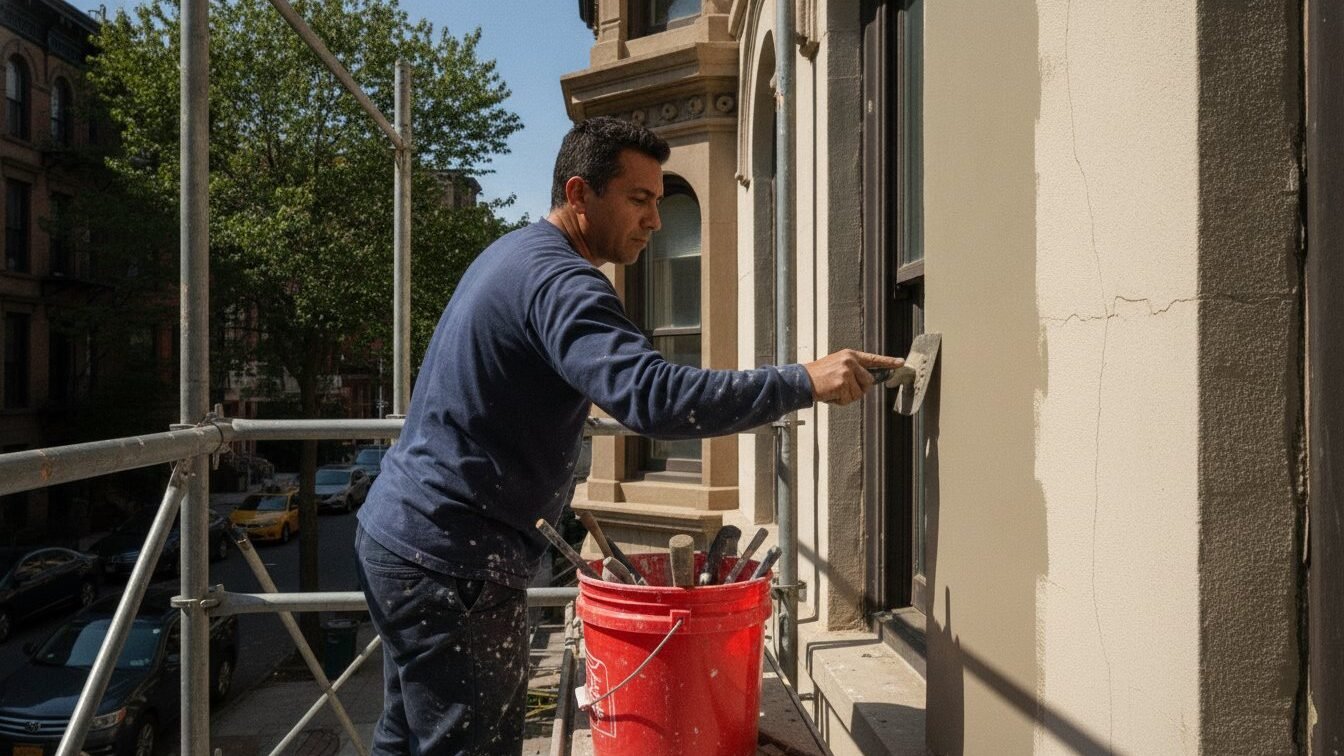
Once the area is cleared, we apply a high-strength bonding agent. This chemical bridge is crucial in our local climate, where rapid temperature changes cause materials to expand and contract at different rates. Without this agent, the new patch would likely separate from the old wall within a single season. We then build the facade back up using a traditional three-coat process. The scratch coat provides the mechanical bond, followed by the brown coat to level the surface, and finally the finish coat where the aesthetic texture is defined. Each layer must cure properly to ensure the structural integrity of the entire system.
Substrate Preparation and Lath Repair
The foundation of any stucco system is the lath or masonry substrate. We carefully inspect the metal mesh for signs of oxidation. Rusted lath is a major concern in Brooklyn because the corrosion can expand and cause “bleed-through” stains or even force the stucco to pop off the wall. We treat or replace compromised lath to stop this cycle of decay. Ensuring a clean, dust-free masonry surface is the most important step for achieving maximum bond strength and long-term durability. We don’t take shortcuts here, because a beautiful finish won’t last on a failing foundation.
Finishing and Weatherproofing Techniques
Achieving an invisible repair means matching the specific “dash,” “sand,” or “smooth” finish characteristic of your neighborhood’s architecture. Our specialists are trained to replicate these historic textures with precision. To add a final layer of resilience, we recommend elastomeric coatings. These advanced finishes act like a flexible skin, stretching to bridge minor future movement without cracking. This proactive approach prevents moisture from finding its way back into your walls. If you’re ready to restore your property’s exterior, our team at Brick Tech Contracting Corp offers the professional expertise required for a seamless, waterproof result.
Reliable Stucco and Masonry Services by Brick Tech Contracting Corp
Brick Tech Contracting Corp has been a cornerstone of the New York City masonry industry since 1980. With over 40 years of hands-on experience, we have a deep understanding of how the local climate erodes even the most robust exteriors. Our team provides stucco repair Brooklyn services that move beyond superficial patches to address the root causes of deterioration. We prioritize long-term resilience by selecting premium, industry-literate materials specifically formulated for the high-humidity and high-vibration environment of the city. Our commitment to excellence ensures that every restoration project provides stability and peace of mind for property owners.
Operating as a full-envelope contractor gives us a distinct advantage over specialized competitors. We don’t view your facade as a series of disconnected parts. Instead, we recognize that a failing roof or a cracked chimney can directly impact the success of your stucco restoration. By managing stucco, brickwork, and roofing services simultaneously, we provide a cohesive defense against the elements. This integrated approach prevents the “blame game” between different trades and ensures that your building’s entire shell is waterproof and structurally sound.
Comprehensive Exterior Care for Brooklyn Properties
For many building owners, a standard stucco repair Brooklyn project is often the catalyst for a more extensive facade restoration NYC plan. We help you navigate these complex projects while ensuring full compliance with Local Law 11 and other NYC building safety standards. Our expertise extends to critical structural components, including parapet wall construction New York, which is essential for preventing water from seeping into the top of your stucco system. We understand the logistical challenges of NYC construction, which is why we follow a steady, methodical workflow designed to minimize disruption for both residential and commercial tenants.
Protect Your Investment with Brick Tech
The long-term ROI of professional masonry maintenance can’t be overstated. A well-maintained facade prevents the need for costly, emergency replacements and protects the building’s market value. We view our work as a partnership with the client, prioritizing transparency and clear communication from the initial consultation to the final coating. Our process begins with a comprehensive site inspection and a detailed project estimate, allowing you to make informed decisions about your property. Contact Brick Tech Contracting Corp today to discuss your Brooklyn stucco needs and secure a lasting solution for your building.
Protect Your Brooklyn Property with Expert Stucco Restoration
Maintaining a building in New York City requires a proactive approach to handle environmental stressors like freeze-thaw cycles and subway vibrations. We’ve explored how identifying early signs of delamination through the “Tap Test” can prevent costly structural failures. Whether your property features historic traditional cement or modern EIFS, choosing the right restoration path is essential for long-term protection. Investing in professional stucco repair Brooklyn ensures your facade remains waterproof and compliant with current safety standards.
Brick Tech Contracting Corp has been family-owned since 1980, providing the stability and meticulous craftsmanship needed for complex NYC projects. As an NYC Licensed and Insured firm, we specialize in facade restoration services and violation removal. We view every repair as a partnership aimed at preserving your building’s integrity and value. Don’t let minor cracks lead to major damage. Get a Professional Stucco Repair Estimate from Brick Tech Contracting Corp today. Your property is your most significant investment, and we’re here to help you protect it with confidence.
Frequently Asked Questions
Is stucco repair a DIY project for Brooklyn homeowners?
Professional stucco repair Brooklyn is not recommended as a DIY project due to the technical complexity of the multi-coat application process. Achieving a waterproof seal and matching historic textures requires specialized tools and years of masonry experience. Mistakes often lead to trapped moisture and structural rot that costs significantly more to fix later. It’s safer to rely on a licensed contractor who understands NYC building codes and material compatibility.
How much does stucco repair cost per square foot in NYC?
Stucco repair costs in New York City vary based on the damage severity and the building’s height. Factors such as the need for scaffolding, sidewalk sheds, and permit fees contribute to the total investment. While basic patches are common, comprehensive restoration involves substrate repair and specialized weather-resistant coatings. We recommend a professional site inspection to receive an accurate, detailed estimate tailored to your property’s specific requirements and structural needs.
Can you repair stucco in the winter in New York?
Winter is the most challenging time for stucco work in New York because the materials require specific temperature ranges to cure properly. If the water in the wet stucco freezes before it dries, the finish will crack and fail almost immediately. Spring and fall offer the moderate temperatures and humidity levels ideal for proper adhesion. We typically schedule major stucco repair Brooklyn projects during these seasons to ensure a durable, long-lasting result.
What is the difference between traditional stucco and EIFS?
Traditional stucco is a rigid, cement-based system applied over a metal lath, known for its high impact resistance and historic look. Exterior Insulation and Finish Systems (EIFS) are synthetic coatings that include a layer of foam insulation for improved energy efficiency. While EIFS is more flexible and resists hairline cracks, it requires a precise drainage plane to prevent moisture buildup. Both systems are effective when installed by experts who understand their specific maintenance needs.
How long does a professional stucco repair last?
A professional stucco repair can last between 20 and 50 years when executed with high-quality materials and proper substrate preparation. The lifespan depends heavily on your maintenance routine, such as cleaning and sealing small cracks before they expand. Using advanced coatings like Thorocoat adds an extra layer of protection against NYC’s harsh weather. Regular inspections help identify minor issues early, ensuring your building’s facade remains durable for decades.
Will the new stucco patch match my existing wall color?
Matching a new patch to an existing wall is one of the most challenging aspects of masonry work. Because older surfaces fade from sun exposure and accumulate city soot, a standard color match rarely looks seamless. We solve this by applying a breathable, waterproof coating over the entire section after the repair is complete. This technique unifies the color and texture, making the repair virtually invisible while providing a fresh, clean appearance.
Do I need a permit for stucco repair in Brooklyn?
You generally need a permit from the NYC Department of Buildings for stucco work that involves structural changes or requires sidewalk protection like sheds. As of 2026, regulations regarding sidewalk shed permits have become stricter, often limited to 90 days to encourage faster repairs. A professional contractor handles the filing process and ensures the work meets all current Local Law requirements. Always verify permit needs before starting to avoid costly city violations.
Can I apply stucco directly over a brick wall?
You can apply stucco over a brick wall if the underlying masonry is structurally sound and free of loose mortar. The brick must be thoroughly cleaned and often requires a bonding agent or a wire lath foundation to ensure the stucco adheres correctly. This is a common way to modernize older Brooklyn buildings or provide an extra layer of waterproofing. However, failing to repair damaged bricks first will eventually cause the new stucco to delaminate.