With the Bronx consistently leading all five boroughs in open building violations, your property’s exterior is under more scrutiny from the NYC Department of Buildings than ever before. You’ve likely noticed small cracks in your mortar and wondered if professional brick pointing Bronx contractors are the only thing standing between you and a costly violation. It’s stressful to deal with water infiltration that ruins interior plaster, especially when you’re trying to avoid the massive expense of a full facade replacement. We understand that for a Bronx property owner, your building isn’t just an asset; it’s a legacy that requires constant protection against the city’s punishing freeze-thaw cycles.
This guide will show you how masonry restoration techniques serve as a first line of defense against decay while keeping you in full compliance with evolving NYC building codes. We’ll help you understand why proactive maintenance is more critical now that Local Law 51 of 2025 has introduced stricter penalties for delayed repairs. You’ll learn the technical benefits of high-quality craftsmanship, how to navigate the current FISP inspection cycle, and the best ways to secure your building’s structural integrity for decades to come.
Key Takeaways
- Understand how mortar acts as a sacrificial barrier to protect your bricks from moisture and structural pressure.
- Learn why the Bronx’s specific freeze-thaw cycles and coastal air make regular masonry inspections a necessity rather than an option.
- Identify the critical warning signs of failure, such as sandy joints or deep gaps, that signal a need for professional brick pointing Bronx services.
- Discover the essential steps of a professional repointing process, from precise mortar removal to meticulous surface cleaning.
- Gain insights on verifying NYC licenses and insurance to ensure your contractor meets the highest standards for safety and compliance.
What is Brick Pointing and Why Does Your Bronx Building Need It?
Brick pointing Bronx services are a fundamental necessity for maintaining the character and safety of the borough’s diverse architecture. While bricks can last for over a century, the mortar joints between them have a shorter lifespan. What is repointing? At its core, it’s the meticulous process of grinding out old, decayed mortar and replacing it with fresh, high-quality material. In the Bronx, many residential and commercial structures feature aging brickwork that has endured decades of exposure to NYC’s unforgiving elements. Without this intervention, the very fabric of your building begins to fail.
Property owners often hear three terms used interchangeably: pointing, repointing, and tuckpointing. Pointing refers to the initial finishing of mortar joints during new construction. Repointing is the corrective work done to fix weathered joints. Tuckpointing is a specialized, aesthetic technique where two different mortar colors are used to create the illusion of perfectly thin, crisp joints. For most Bronx buildings, repointing is the critical service required to restore structural health and stop moisture from penetrating the facade.
The Structural Role of Mortar Joints
Mortar is designed to be a sacrificial element. It’s purposefully softer than the surrounding bricks so it can absorb the natural shifts and structural stresses of the building. This flexibility prevents the bricks from cracking or spalling under pressure. Another vital function is breathability. High-quality mortar allows moisture trapped within the wall to evaporate safely. We’ve seen many Bronx properties damaged by the use of hard cement on historic brickwork. If the mortar is too hard, it traps moisture and forces the bricks to bear too much weight, leading to permanent structural damage.
Cosmetic vs. Structural Benefits
The visual transformation after professional brick pointing Bronx work is undeniable. It restores the building’s original charm and significantly boosts curb appeal, which is a major factor in the resale value of Bronx real estate. However, the structural benefits are even more important. Fresh mortar joints act as a waterproof seal, preventing water infiltration that leads to mold growth and interior wall damage. By addressing these issues early, you avoid the high costs of total facade replacement and ensure your property remains a safe, stable investment for the long term.
The Bronx Climate: NYC Environmental Factors Affecting Your Masonry
The Bronx presents a unique set of challenges for any property owner. Between the humidity rising from the East River and the constant vibration from the 4, 5, and 6 subway lines, your building’s facade is under a level of stress that suburban structures never face. Understanding these environmental factors is the first step in realizing why brick pointing Bronx services are a routine necessity for long-term structural health. Your mortar joints aren’t just sitting there; they’re actively fighting a battle against a specific cocktail of local stressors.
The Impact of NYC Winters
NYC winters are notoriously hard on masonry, making effective masonry care tips essential due to the freeze-thaw cycle. When snow melts or winter rain hits your building, water seeps into the porous mortar joints. As temperatures drop overnight, this trapped water freezes and expands. This physical force, known as ice wedging, creates immense internal pressure that slowly pushes the mortar out of the joint or causes the brick faces to pop off. You’ll often notice the most significant crumbling in the spring, once the ice has melted and the damaged mortar finally falls away. Continuous thermal expansion and contraction remains the primary catalyst for the gradual disintegration of NYC masonry.
Coastal and Urban Degradation
Buildings located near the Long Island Sound or the East River face additional risks from salt-laden air. Salt crystals can lodge themselves within the mortar, attracting more moisture and accelerating the decay process through a cycle of crystallization. In more inland areas of the Bronx, urban pollution from heavy trucking and cross-borough traffic creates a layer of soot and chemicals on the facade. When rain hits this layer, it can form weak acids that eat away at traditional lime mortars, causing them to turn sandy and lose their binding strength.
To combat these specific local issues, following the National Park Service guidelines on repointing is essential for selecting the correct mortar mix that can withstand such chemical and physical stress. Many owners also invest in professional waterproofing services to provide an extra layer of protection against acid rain and coastal moisture. It’s also a common mistake to use high-pressure power washing on a building with aging mortar. Without an expert’s touch, this can strip away what’s left of the joint’s integrity and force water deep into the wall system. If you’re concerned about how the last season affected your facade, it’s wise to have a specialist from bricktechnyc.com perform a visual assessment of your property’s exterior.
Identifying the Signs: When to Call a Bronx Brick Pointing Specialist
After years of enduring the environmental stressors we discussed, your building will inevitably show physical signs of distress. Recognizing these early warning signals is the key to preventing minor maintenance from turning into a structural crisis. Crumbling or sandy mortar is often the first red flag. If you can scrape the mortar away with a fingernail or a key, the binding agents have failed, leaving the bricks unsupported. This degradation creates deep gaps where the mortar is recessed more than 1/4 inch from the brick face, allowing water to pool and accelerate the decay process from within.
You should also look for efflorescence, which appears as white, powdery salt stains on the exterior wall. This isn’t just a cosmetic issue; it’s a clear indicator that water is migrating through the masonry and bringing internal salts to the surface. When this moisture reaches the interior, you’ll see peeling paint, bubbling wallpaper, or damp water stains on the inside of your exterior walls. These interior symptoms often mean the envelope of your property has already been compromised, making professional brick pointing Bronx services an immediate priority.
Visual Inspection Checklist
We recommend property owners perform a basic visual inspection at least twice a year. Start with a ‘scratch test’ on various sections of the facade to check mortar hardness. Look closely for ‘spalling,’ a condition where the face of the brick starts to pop off because of trapped moisture. It’s also vital to check the parapet wall at the top of your building. Because parapets are exposed to the weather on both sides, they often show the first signs of cracking or leaning, which can lead to dangerous debris falling onto the sidewalk below.
Warning Signs of Structural Failure
Some signs indicate more than just surface wear; they point to deep structural instability. Step cracks, which zig-zag following the mortar lines, often suggest that the building is settling unevenly or that the mortar can no longer absorb structural stress. Even more serious is bulging brickwork, where the outer brick skin actually pulls away from the structural backup. Ignoring these advanced signs often leads to costly NYC building violations. Under current FISP regulations, failing to correct unsafe conditions can result in monthly penalties starting at $1,000, and failure to correct SWARMP (Safe with a Repair and Maintenance Program) conditions can lead to fines of $2,000 per month. Addressing these issues with a brick pointing Bronx expert today is the only way to avoid these compounding financial and legal burdens.

The Professional Repointing Process: How It’s Done Right
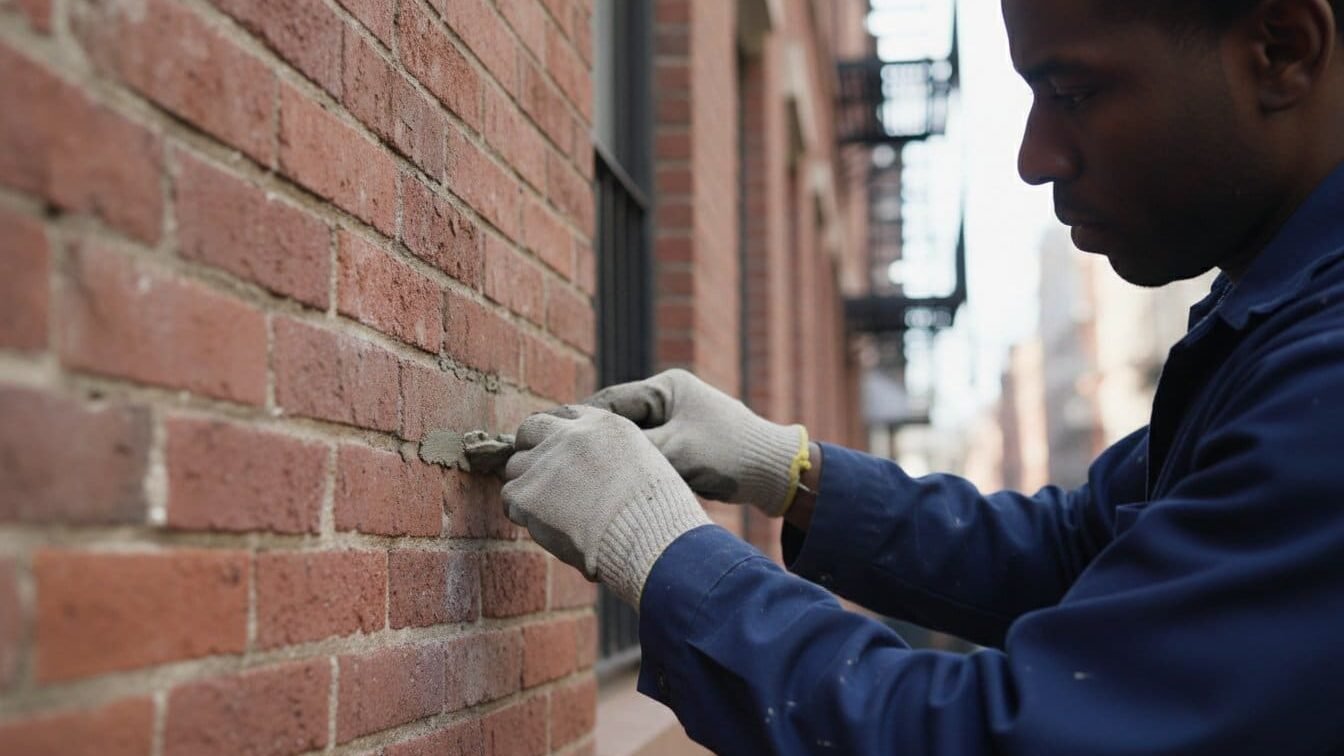
Executing high-quality brick pointing Bronx projects requires more than just filling gaps with wet cement. It’s a methodical restoration process that demands patience and technical precision. When done correctly, repointing doesn’t just look better; it creates a unified structural envelope that can last for several decades. A professional crew follows a specific sequence of steps to ensure the new mortar bonds perfectly with the existing masonry, preventing the premature cracking often seen in DIY or cut-rate repairs.
- Step 1: Preparation and Removal: We begin by carefully removing the old, decayed mortar to a consistent depth, usually between 3/4 and 1 inch. This creates a clean “pocket” for the new material to sit in.
- Step 2: Dust Control and Cleaning: Once the joints are cleared, we use vacuum systems and water to remove all loose debris. A clean surface is essential for maximum bond strength.
- Step 3: Mortar Matching: We analyze the original mortar to match its color, texture, and compressive strength. This ensures the new work blends seamlessly with the old.
- Step 4: Application and Striking: The new mortar is packed into the joints in thin layers. We then “strike” or tool the joints to match the original profile, whether it’s concave, weathered, or flush.
- Step 5: Final Cleanup: We remove any excess mortar from the brick faces and apply breathable, water-repellent sealants to provide an extra layer of protection.
Why Mortar Matching Matters
Using the wrong mortar is one of the most common mistakes in Bronx masonry restoration. If the new mortar is harder than the original brick, it won’t allow for natural thermal expansion. Instead of the mortar absorbing the stress, the bricks themselves will crack or shatter. We take great care to match the historic aesthetics of Bronx buildings, ensuring the sand grain size and pigment are identical to the original facade. This attention to detail prevents irreversible damage to your property’s exterior and maintains its historic value.
Tools of the Trade
The choice of tools depends on the age and condition of your building. While diamond-blade grinding is efficient for modern structures, hand-raking is often necessary for historic or fragile bricks to avoid chipping the edges. For multi-story buildings in the Bronx, we utilize safe, OSHA-compliant scaffolding to ensure our masons have stable access to every inch of the facade. After the work is finished, a thorough post-pointing cleanup ensures that no mortar smears or “ghosting” remains on the brick face. If you want to ensure your property’s restoration is handled with this level of expert care, reach out to bricktechnyc.com to discuss your project today.
Choosing a Reliable Bronx Masonry Contractor
Selecting the right partner for your brick pointing Bronx project is just as critical as the materials used on the facade. You aren’t simply hiring a laborer; you’re choosing a steward for your building’s structural health and market value. Start by verifying that the contractor holds a valid Home Improvement Contractor license from the NYC Department of Consumer and Worker Protection. They must also be registered with the Department of Buildings (DOB) for any structural work. Insurance is non-negotiable. General liability and workers’ compensation coverage protect you from immense financial liability if an accident occurs during the restoration process.
Local experience is the best predictor of success. A contractor who understands brick pointing in NYC will be familiar with the specific clay bricks and lime-based mortars used in historic Bronx neighborhoods. Ask for a portfolio that includes recent project addresses in the borough. We encourage property owners to visit these sites. It’s the best way to inspect the quality of the mortar joints and ensure the crew maintains a clean, professional job site without leaving mortar smears on the brickwork.
What to Look for in a Quote
A professional estimate must be transparent and exhaustive. It should provide a detailed breakdown of the scope, including the grinding depth, the specific mortar type, and the cleanup procedures. Avoid vague proposals that gloss over permit fees or sidewalk protection requirements. In the Bronx, sidewalk sheds are often a legal necessity for facade work, and these costs should be clearly outlined. Your contract should also include a realistic timeline with built-in weather contingencies, as mortar requires specific temperature ranges to cure and bond correctly.
Why Brick Tech Contracting is the Bronx Choice
Brick Tech Contracting Corp has been a trusted name in the local industry since 1980. As a family-owned and operated business, we view our work as a long-term partnership with property owners. We understand the high stakes of NYC building compliance and the physical toll our climate takes on masonry, especially in light of the strict NYC masonry standards. Our team specializes in comprehensive facade restoration NYC services, focusing on durability and structural integrity. We don’t believe in superficial fixes. We prioritize meticulous craftsmanship that protects your investment and ensures your building remains a safe, beautiful part of the Bronx landscape for decades.
Contact Brick Tech for a Professional Bronx Masonry Estimate to discuss your building’s needs with a seasoned expert.
Securing the Future of Your Bronx Property
Maintaining a building in the Bronx requires a proactive approach to exterior care. As we’ve explored, your mortar joints are the first line of defense against NYC’s aggressive weather cycles. By identifying signs of decay early, such as sandy joints or interior dampness, you can prevent minor maintenance from escalating into a full-scale structural failure. Expert masonry services for brick pointing in the Bronx not only restore the aesthetic charm of your facade but also ensure your property remains compliant with strict NYC building codes and protected from the damaging effects of thermal expansion.
Brick Tech Contracting Corp has been a trusted guide for property owners since 1980. We’re a family-owned and operated business specializing in Local Law 11 compliance and comprehensive facade restoration. Our team understands the technical requirements of historic masonry and the emotional stakes of your investment. Don’t wait for a violation or a leak to compromise your building’s integrity. Take the first step toward long-term protection today.
Get a Free Brick Pointing Estimate from Brick Tech Contracting Corp and let our seasoned experts provide the stability and peace of mind your property deserves.
Frequently Asked Questions
How often does a Bronx building need brick pointing?
A Bronx building typically requires brick pointing every 20 to 30 years. While the bricks themselves are durable, the mortar joints are designed to be sacrificial and will weather over time. Buildings near the East River or those facing heavy northern winds may need attention sooner due to increased moisture exposure and salt air degradation.
Can I repoint just one section of my wall?
You can repoint a single section of a wall, a process known as spot pointing. This is an effective way to address localized damage like step cracks or spalling. However, our experts must carefully match the new mortar to the existing facade to ensure a uniform appearance and consistent structural strength across the entire surface of the building.
What is the best time of year for brick pointing in the Bronx?
The best time for brick pointing Bronx projects is during the spring or fall when temperatures are moderate. Mortar requires temperatures above 40°F and below 90°F to cure properly. Working in extreme NYC heat or freezing winter conditions can cause the mortar to dry too quickly or freeze, leading to premature cracking and bond failure.
How long does professional brick pointing last?
Professional brick pointing should last between 25 and 50 years when executed with the correct materials and techniques. The lifespan depends heavily on the depth of the initial mortar removal and the quality of the bond created during application. Regular inspections can help you identify small issues before they compromise the entire facade’s longevity.
Will repointing fix the water leaks in my basement?
Repointing stops water from entering through the facade, but it may not solve all basement leaks. If water is entering through the brickwork above the foundation, brick pointing Bronx services provide an essential seal. However, leaks originating from high water tables or foundation cracks often require dedicated waterproofing services to fully resolve the issue at the source.
What is the difference between pointing and repointing?
Pointing refers to the initial application of mortar during new construction, while repointing is the restoration of those joints. In a repointing project, we grind out the old, decayed material before packing in new mortar. This distinction is important because repointing requires specific preparation steps and cleaning that new construction does not demand.
How much does brick pointing cost per square foot in NYC?
The cost of brick pointing in NYC depends on variables like building height, mortar type, and total square footage. Factors such as the requirement for sidewalk sheds or specialized scaffolding for multi-story Bronx buildings will influence the final budget. Because every property has unique structural needs, a professional on-site assessment is the only way to determine an accurate project scope.
Do I need a permit for brick pointing in the Bronx?
Most brick pointing projects in the Bronx require a permit from the NYC Department of Buildings. This is especially true if the work involves scaffolding or sidewalk protection. Obtaining the necessary permits ensures that your project meets current safety standards and helps you avoid costly building violations or work-stoppage orders that can delay your masonry restoration.