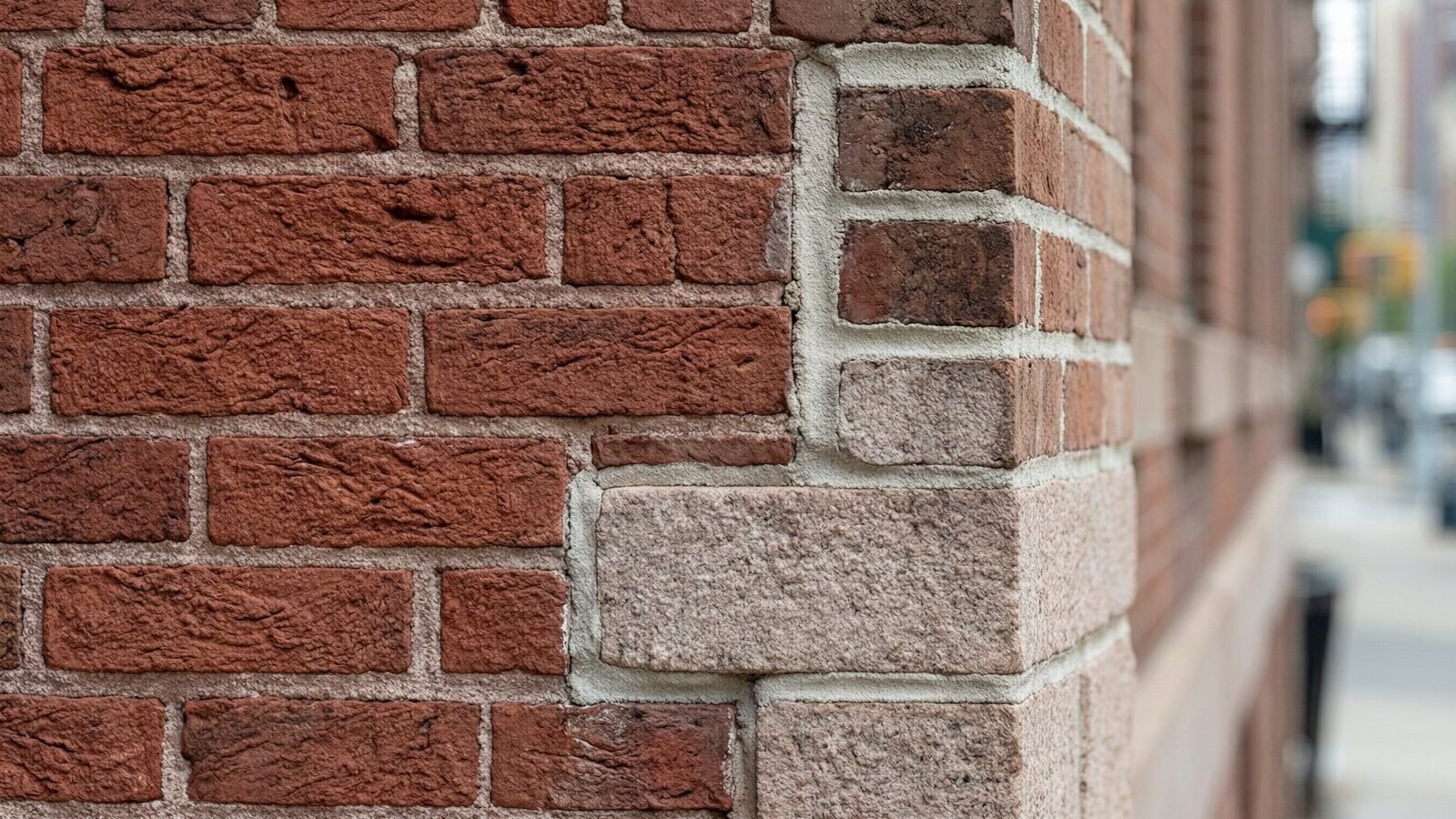
Maintaining a New York City building requires more than fixing visible cracks. Property owners need to understand whether a problem is limited to brickwork or involves the broader masonry system. That distinction matters because the correct repair method depends on the material, the cause of deterioration, and whether the issue is cosmetic, weather-related, or structural.
For brownstones, multifamily buildings, apartment properties, and commercial structures, understanding masonry repair and knowing the difference between brickwork can help prevent unnecessary work, reduce moisture damage, and guide you toward the right professional service.
Key Takeaways
- Brickwork repair focuses specifically on brick units and the mortar joints between them.
- Masonry repair can involve brick, stone, terra cotta, concrete, cast stone, lintels, parapets, and other facade components.
- Crumbling mortar often calls for repointing, while bulging walls or deep structural cracking require broader evaluation.
- Moisture management is essential because water infiltration accelerates brick and mortar deterioration.
- Older and historic NYC buildings require compatible repair materials rather than one standard modern mortar mix.
- Significant movement, displaced masonry, or recurring cracks may require an engineer or qualified facade professional before repair work begins.
Understanding Brickwork and Masonry Materials
The term brickwork refers specifically to walls and facade elements constructed with brick units and mortar joints. Professional brickwork services can include brick replacement, joint repair, repointing, restoration, and other work focused specifically on brick masonry.
Masonry, however, is a broader category that can include:
- Brick
- Natural stone
- Brownstone
- Terra cotta
- Concrete masonry
- Cast stone
- Mortar
- Parapets
- Lintels
- Coping and related facade elements
That means all brickwork is masonry, but not all masonry is brickwork.
A historic brownstone, for example, may include brick backup walls, stone facade elements, decorative masonry, steel lintels, mortar joints, and parapet components. Maintaining these properties often requires an understanding of traditional materials and appropriate historic brownstone restoration techniques.
A problem involving only deteriorated brick joints may require localized brickwork repair, while movement across multiple materials may call for a broader masonry restoration approach.
The Role of Mortar Joints
Mortar plays an essential role in the performance of a masonry wall. It bonds units together, helps accommodate small amounts of movement, and contributes to the wall’s resistance to moisture.
On older buildings, mortar should generally be compatible with the surrounding masonry rather than substantially harder or less permeable.
When mortar joints begin to deteriorate, common signs include:
- Crumbling or powdery mortar
- Recessed joints
- Missing mortar
- Hairline cracking
- Loose brick units
- Water staining near joints
If the deterioration is limited primarily to mortar joints, professional brick pointing services may be an appropriate solution for restoring deteriorated joints and reducing pathways for moisture infiltration.
Is It Brickwork Repair or Masonry Repair?
The easiest way to distinguish between the two is to look at the material and the extent of the damage.
Brickwork Repair May Be Appropriate When:
- Mortar joints between clay bricks are deteriorated
- Individual bricks are cracked or spalled
- Small sections of brickwork are loose
- Localized repointing is needed
- Water is entering through deteriorated brick joints
- Previous mortar repairs have failed
These are typically targeted repairs focused on brick wall restoration itself. Where individual masonry units have deteriorated beyond practical repair, brick repair and replacement may be required rather than simply filling cracks or covering the damaged surface.
Masonry Repair May Be Appropriate When:
- Stone, terra cotta, concrete, or cast stone is damaged
- Cracks pass through multiple materials
- Parapets are deteriorated
- Steel lintels are rusting or displacing surrounding masonry
- Sections of wall are bulging or bowing
- Decorative masonry elements are loose
- Structural movement affects a larger facade area
Broader masonry repair may involve several different materials and repair methods within the same project.
When to Call a Structural Engineer
Some visible defects should not be treated as routine surface repairs.
Professional engineering or structural evaluation may be appropriate when you notice:
- Significant stair-step cracking
- Wide or expanding cracks
- Bulging or bowed walls
- Displaced masonry
- Loose structural components
- Repeated cracking after previous repairs
- Major lintel movement
- Signs of settlement
- Cracks extending through several masonry courses
The repair should address the cause of the movement, not simply cover the visible crack. Patching a structural crack without understanding why it formed can conceal the symptom while the underlying condition continues to develop.
Common Signs of Building Distress
Early recognition can make the difference between a localized repair and a more extensive restoration project.
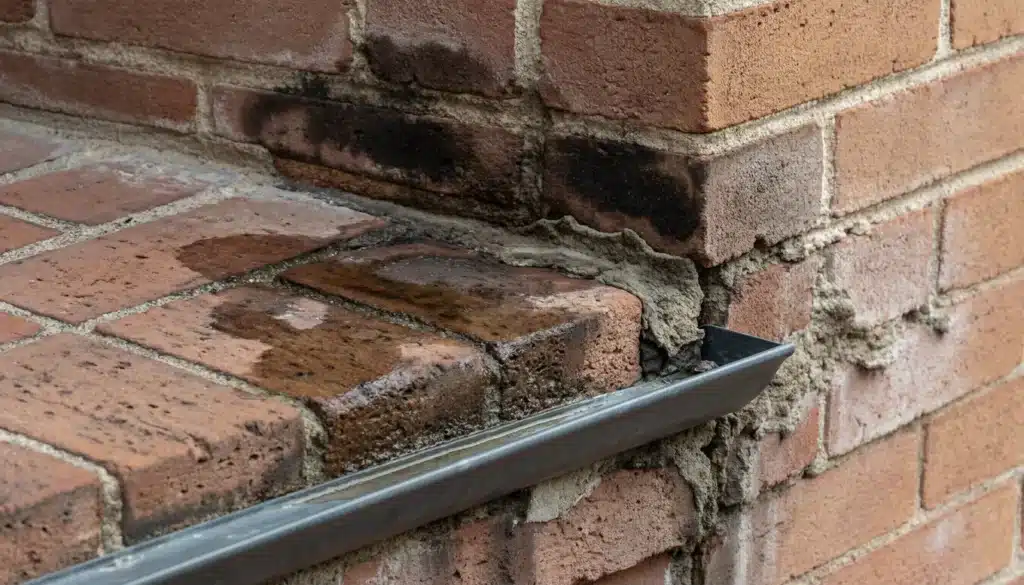
Efflorescence
White, powdery deposits on the surface of brick or stone usually indicate moisture is moving through the masonry and carrying soluble salts with it.
The deposit itself is often less important than identifying where the moisture is entering.
Spalling
Spalling occurs when the surface of brick or stone flakes, chips, or breaks away.
Common contributing factors include:
- Freeze-thaw cycles
- Persistent moisture exposure
- Incompatible mortar
- Improper coatings
- Salt crystallization
- Long-term weathering
Because spalling can expose the softer interior of a masonry unit to additional weathering, understanding the causes and appropriate methods of spalling brick repair can help property owners address the underlying moisture problem as well as the damaged brick.
Cracking
Cracks may appear vertically, horizontally, diagonally, or in a stair-step pattern.
Some cracks are minor, while others can indicate settlement, thermal movement, lintel problems, or structural stress. Changes in width, length, or direction should be monitored carefully.
Rusting Lintels
Steel lintels above windows and doors can corrode over time.
As steel rusts, it expands and can push surrounding masonry outward, causing cracking, displacement, or bulging above openings.
Missing or Deteriorated Mortar
Missing mortar creates direct pathways for rainwater to enter the wall. Once moisture penetrates deeper, freeze-thaw cycles and corrosion of embedded metal can make the problem more serious.
Managing Water Infiltration
Water is one of the most common contributors to masonry deterioration in NYC.
A small opening in mortar, flashing, coping, or a window joint can allow repeated water entry. During winter, that moisture may freeze and expand, increasing stress on already weakened materials.
Property owners should inspect:
- Window sills
- Window perimeter sealant
- Roof flashing
- Parapet coping
- Gutters and roof drains
- Mortar joints
- Wall penetrations
- Roof-to-wall connections
Window sills should direct water away from the wall rather than allowing it to collect along the facade.
Roof and parapet conditions also deserve attention because water entering near the top of a building can travel downward and appear far from its actual entry point.
When recurring leaks are associated with exterior masonry, professional waterproofing services can help address vulnerable exterior areas as part of a broader moisture-management strategy.
Brickwork vs. Masonry Repair: Quick Comparison
| Repair Type | Typical Materials Involved | Common Problems | Typical Repair Approach |
|---|---|---|---|
| Brickwork Repair | Brick and mortar | Spalling brick, failed joints, localized cracking | Brick replacement, repointing, joint repair |
| Masonry Repair | Brick, stone, terra cotta, concrete, cast stone | Structural cracks, parapet failure, lintel issues, material deterioration | Restoration, stabilization, replacement, repointing |
| Waterproofing-Related Repair | Brick, mortar, flashing, coping | Recurring leaks, staining, trapped moisture | Joint repair, flashing correction, moisture management |
| Structural Masonry Repair | Multiple facade materials | Bulging, movement, displaced masonry | Professional evaluation and structural repair |
The correct service depends on the cause and extent of the problem rather than simply what the visible surface looks like.
For example, a cracked brick does not automatically mean the brick itself caused the problem. Movement in the wall, corrosion of embedded steel, deteriorated mortar, or persistent moisture may be responsible. Diagnosing the cause before selecting the repair method helps reduce the likelihood of recurring damage.
Historic and Landmark Building Considerations
Historic buildings require historical masonry care because older masonry materials often behave differently from modern materials.
A replacement mortar that is too hard can place stress on softer historic brick. Similarly, aggressive cleaning methods or inappropriate coatings may trap moisture or damage the masonry surface.
If a property is located within a designated historic district or is an individual landmark, exterior work may also be subject to Landmarks Preservation Commission requirements.
The NYC Landmarks Preservation Commission provides guidance for property owners regarding permits and exterior work on designated landmark buildings and properties within historic districts.
Repairs to historic masonry should therefore consider:
- Original material type
- Existing mortar composition
- Joint profile
- Brick hardness
- Color and texture
- Moisture movement
- Historic appearance
- Applicable preservation requirements
Material compatibility is particularly important. The objective should be repairing masonry damage in the deteriorated area without creating a new material conflict that damages the original masonry later.
Parapets and Other Masonry Components
The distinction between brickwork and masonry repair becomes especially important around parapets.
A parapet may contain brick, mortar, coping stones, flashing, embedded steel, and waterproofing components. Damage that initially looks like deteriorated brickwork may actually originate from failed coping or water entering through the top of the wall.
Signs of parapet trouble include:
- Loose bricks
- Open mortar joints
- Cracked coping
- Bulging sections
- Rust staining
- Missing masonry
- Water staining below the roofline
- Failed flashing
Because parapets are exposed to weather from several directions, problems should be evaluated as a complete assembly rather than treating only the most visible crack.

NYC Facade Inspection and Safety Considerations
Facade maintenance becomes especially important on taller buildings.
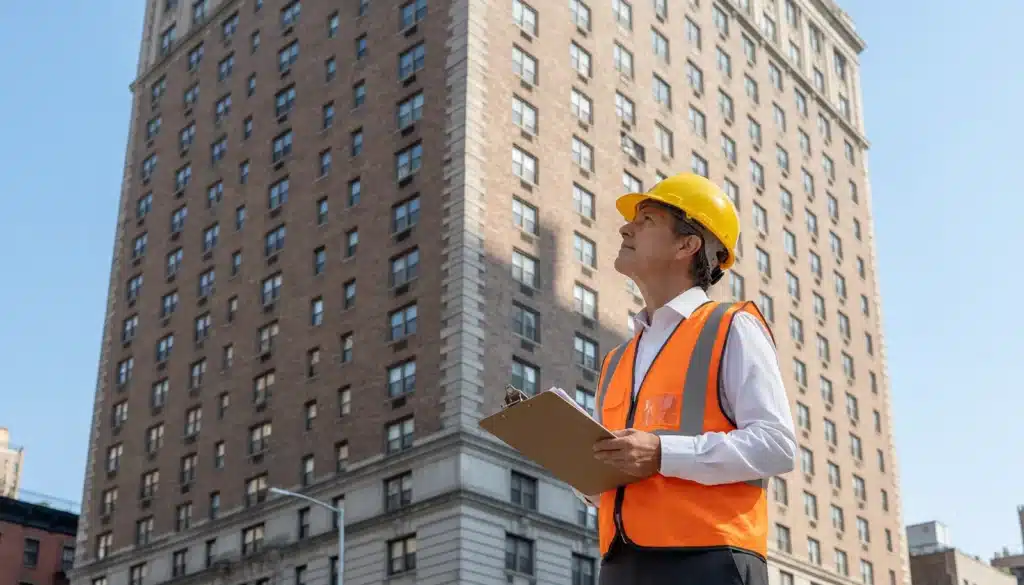
New York City’s Façade Inspection & Safety Program applies to buildings greater than six stories and establishes periodic inspection requirements for exterior walls and appurtenances.
Even when a building is not subject to those periodic filing requirements, property owners should treat loose masonry, unstable parapets, bulging walls, and falling exterior materials seriously.
Routine observation between professional inspections can help identify developing conditions before they become larger safety or repair concerns.
Choosing the Right NYC Masonry Contractor
Not every contractor has the same level of vintage building expertise with older NYC masonry, brownstones, parapets, lintels, or larger building facades.
Before hiring, ask about:
- Experience with comparable NYC buildings
- Insurance appropriate for facade work
- Familiarity with historic masonry
- Mortar matching methods
- Brick replacement procedures
- Parapet and lintel experience
- Waterproofing knowledge
- Previous projects involving similar building types
A qualified contractor should be able to explain why a specific repair method is appropriate rather than simply recommending a general patch.
Questions to Ask Before Hiring
Consider asking:
- What is causing the visible damage?
- Is this primarily a brickwork issue or a broader masonry problem?
- Will structural evaluation be required?
- What mortar or repair material will be used?
- How will the new material match the existing masonry?
- How will water infiltration be addressed?
- Will permits or approvals be necessary?
- What areas of the wall will be removed or replaced?
- How will debris and adjacent property be protected?
The more clearly the contractor explains the scope, the easier it is to compare estimates and avoid incomplete repairs.
Maintenance and Long-Term Planning
Routine facade maintenance can reduce the likelihood of emergency repairs.
Property owners should perform periodic visual checks and keep records of:
- Crack locations
- Changes in crack size
- Mortar deterioration
- New efflorescence
- Water stains
- Lintel rust
- Brick spalling
- Parapet conditions
- Previous repairs
Photographs are especially useful because they allow you to compare conditions over time.
Seasonal inspections after winter and major storms can also help identify weather-related changes before they become more serious. If mortar deterioration becomes widespread, reviewing the signs that an NYC building needs brick repointing can help property owners recognize when routine monitoring should progress to professional evaluation.
Frequently Asked Questions
How do I know whether I need brick repair or masonry repair?
If the issue is limited to brick units or mortar joints, brickwork repair may be sufficient. If damage involves stone, concrete, lintels, parapets, structural movement, or several facade materials, a broader masonry repair approach may be needed.
How often should brick mortar be inspected?
Mortar should be checked regularly as part of normal facade maintenance, particularly after severe weather. The actual need for repointing depends on joint condition rather than a fixed number of years.
Why is my brickwork spalling?
Spalling often occurs when moisture enters the brick and contributes to deterioration through freeze-thaw activity, salt movement, incompatible mortar, or trapped moisture.
Can I paint masonry to stop water leaks?
Painting over masonry is not a reliable substitute for correcting the source of water infiltration. Some coatings can also interfere with moisture movement through the wall. Leaks should be traced to their source and repaired appropriately.
What is the difference between tuckpointing and repointing?
Repointing removes deteriorated mortar and replaces it with compatible new mortar. Tuckpointing traditionally refers to a decorative joint-finishing technique that creates the appearance of fine, uniform joints.
When should masonry cracks be professionally evaluated?
Cracks should be evaluated promptly when they are widening, recurring, associated with bulging, passing through multiple masonry units, or accompanied by other signs of movement.
Are brickwork and masonry restoration the same thing?
No. Brickwork restoration focuses specifically on brick and mortar, while masonry restoration may involve multiple facade materials and structural components.
Conclusion
Understanding the difference between masonry versus brickwork repair helps NYC property owners choose the right solution before damage progresses. Deteriorated mortar, individual spalled bricks, and localized joint failure may require targeted brickwork services, while bulging walls, failing lintels, parapet deterioration, stone damage, or structural movement often call for a broader masonry approach.
The most important step is identifying the underlying cause rather than repairing only the visible symptom. Moisture entry, incompatible materials, corrosion, and structural movement can all produce similar-looking facade problems but may require very different repair solutions.
For professional assistance, Brick Tech Contracting Corp provides brickwork, masonry repair, brick pointing, brick replacement, waterproofing, parapet repair, facade restoration, and exterior construction services throughout the NYC area. Our team works with a wide range of New York building types, from historic brownstones to multifamily and commercial properties.
Whether your building needs localized brick repair or a more comprehensive masonry restoration plan, Brick Tech Contracting Corp can help evaluate visible deterioration, identify areas requiring attention, and recommend an appropriate repair approach designed to protect your property’s exterior for the long term.