In New York City, the most expensive part of your building’s exterior work isn’t usually the mortar or the stone; it’s the complex web of scaffolding and compliance that surrounds it. You’ve likely felt the frustration of seeing a simple repair estimate balloon into a massive project once sidewalk sheds and DOB permits enter the equation. Managing the facade restoration cost NYC property owners face requires more than just a contractor’s quote. It demands a strategic understanding of how building height, material choices, and strict Local Law 11 regulations dictate your final bill.
We understand that protecting your investment means balancing immediate structural needs with long-term financial stability. This guide provides a clear roadmap for your 2026 budgeting, moving past the “quick fix” mentality to focus on resilient craftsmanship that lasts for decades. You’ll learn how to differentiate between cosmetic patches and necessary structural restoration, while gaining insights into per-square-foot masonry rates and access logistics. We’ll also cover FISP Cycle 10 compliance to ensure your building remains safe and legal without unexpected financial surprises. By the end of this guide, you’ll have the confidence to select a partner who prioritizes transparency and avoids the common change-order traps that plague NYC construction projects.
Key Takeaways
- Understand the “NYC Multiplier” and how building density and logistical access often outweigh material costs in your project budget.
- Learn how FISP Cycle 10 requirements and “Unsafe” or “SWARMP” designations directly impact your facade restoration cost NYC by dictating mandatory repair timelines.
- Identify the monthly rental costs and permit requirements for sidewalk sheds and scaffolding that frequently inflate project estimates.
- Discover how square-foot masonry rates and labor-intensive brick pointing are calculated to help you avoid common change-order traps.
- Recognize the long-term ROI of structural restoration, which protects your building’s integrity while potentially lowering insurance premiums and increasing property value.
What Defines Facade Restoration Costs in NYC?
Calculating a facade restoration cost NYC project requires a shift in perspective. You aren’t just paying for a fresh look; you’re investing in the long-term structural integrity of your property. While a cosmetic repair might address a single loose brick, a full restoration involves a comprehensive overhaul of the building’s envelope. This process includes stripping away failing materials, replacing damaged structural components like lintels, and reapplying advanced waterproofing systems. It’s the difference between a temporary patch and a generational solution.
Restoration vs. Repair: Understanding the Scope
Minor masonry repairs typically focus on isolated issues, such as filling a few visible cracks or replacing a handful of spalled bricks. In contrast, a full restoration is a holistic approach. It addresses the root cause of deterioration rather than just the symptoms. Choosing to “patch” a building might seem like a budget-friendly move today, but it often leads to higher costs over time. You’ll likely face repeated mobilization fees and scaffolding rentals every few years as the underlying issues continue to migrate. A complete restoration resets the clock on your building’s exterior, providing peace of mind for decades.
The Role of Building Age and Materiality
NYC’s architectural diversity means that no two projects are the same. A 19th-century brick facade requires a vastly different technical approach than a modern rainscreen system. Older buildings often feature load-bearing masonry that relies on specific lime-based mortars. If a previous contractor used modern, high-strength Portland cement on these softer historic bricks, it can cause the brick faces to pop off. Matching historic mortar is essential for both structural health and aesthetic consistency. Professional brick pointing NYC ensures that new mortar is chemically and physically compatible with the original materials, preventing the moisture traps that lead to expensive structural damage later.
The Cost Breakdown: Pricing by Service and Material Type
Most professional estimates for exterior work are modular. Contractors typically calculate the facade restoration cost NYC property owners will pay by evaluating the volume of materials and the total labor hours required for specific tasks. For standard masonry, this usually translates to a square-foot rate or a “per brick” cost for individual replacements. However, these figures are rarely flat. The final quote depends heavily on the condition of the underlying substrate and the specific architectural features of your building.
Labor is the primary driver of any restoration budget. Meticulous brick pointing NYC services require technicians to grind out failing mortar to a precise depth without nicking the surrounding brick. This is a slow, methodical process. If your building shows signs of “bowing” or “bulging,” you’re likely facing structural brick replacement rather than simple repointing. This involves dismantling and rebuilding sections of the wall to restore its vertical plane and structural integrity. Using specialty materials, such as custom-colored mortars or matching historic stone, will also add a premium to your total investment.
Brick Masonry and Repointing Rates
Standard pointing focuses on the outer layer of the joint, while deep-joint tuckpointing requires significantly more labor to ensure a lasting structural bond. The type of mortar used also influences the price. While Type N is standard for many modern buildings, historic properties often require Type O or K lime-based mortars. These softer mixtures allow older bricks to expand and contract without cracking, preventing the need for expensive repairs just a few years down the line. If you’re unsure which material your building requires, a thorough facade assessment is a logical first step.
Historic Brownstone and Stucco Premiums
Restoring a landmarked property requires a different level of expertise. Historic brownstone restoration NYC demands artisan-level labor to replicate the original stone’s texture and color using specialized cementitious patching compounds. Similarly, Commercial stucco repair NYC involves a multi-coat process. Rather than a simple surface patch, a durable restoration includes a wire lath for reinforcement followed by scratch, brown, and finish coats. These layered systems provide the weather resistance necessary to protect your building’s interior from the city’s harsh environment.
Logistical Factors that Drive Up NYC Estimates
While the cost of bricks and mortar is relatively predictable, the logistical “soft costs” of working in a dense urban environment often represent the largest variable in a facade restoration cost NYC estimate. In a city where space is at a premium, simply getting your crew to the work surface is a massive undertaking. Accessing the exterior of a building requires a complex infrastructure of engineered systems that must prioritize pedestrian safety and regulatory compliance above all else. These logistical hurdles don’t just add time; they add significant layers to the project budget.
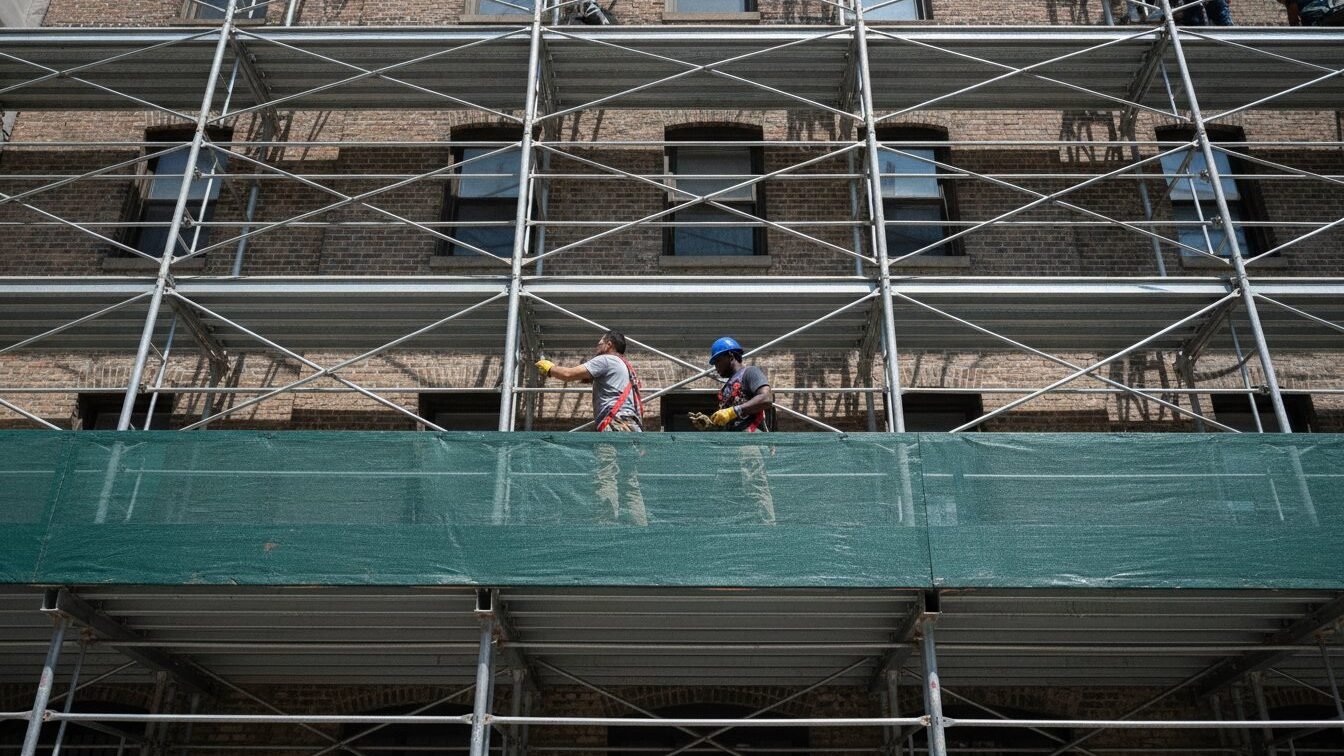
Access equipment is typically the first major expense property owners encounter. Whether it’s pipe scaffolding, heavy-duty sidewalk sheds, or suspended platforms, these systems require professional engineering and certification. As building height increases, so do the costs. Higher elevations lead to higher insurance premiums for the contractor, which are naturally reflected in the quote. Labor speed also drops at higher altitudes; it takes longer to transport materials and personnel to the upper floors of a high-rise than it does on a three-story brownstone. Additionally, staging a site in Manhattan requires navigating narrow streets and strict parking regulations, often resulting in higher mobilization fees compared to the outer boroughs.
Scaffolding and Sidewalk Shed Logistics
Sidewalk sheds are a ubiquitous part of the city landscape, but for a property owner, they represent a constant “burn rate.” These structures carry monthly rental fees that continue as long as the shed remains in place. If weather delays or material shortages extend the project timeline, the shed costs continue to accumulate. You must also account for:
- DOT Permit Fees: The Department of Transportation charges for the occupation of public sidewalk space.
- Building Complexity: Facades with setbacks, deep cornices, or balconies require custom scaffolding configurations. These non-standard setups take longer to install and strike, increasing total labor hours.
- Maintenance: Sheds must be inspected and maintained to ensure they remain structurally sound and well-lit, adding minor but recurring costs.
Permits, Engineering, and Filing Fees
Before the first chisel hits the mortar, you’ll face a series of administrative expenses. The NYC Department of Buildings (DOB) requires filing fees that are generally based on the total project value. Most structural restorations also require the oversight of a Professional Engineer (PE) or a Registered Architect (RA) who must design the repair plan and sign off on the final completion. For high-rise projects, the city often mandates a dedicated Site Safety Manager. This individual ensures that every aspect of the job site meets stringent safety codes, providing an essential layer of protection for the public and your investment, though it adds a daily line item to the budget.

Navigating Compliance: Local Law 11 (FISP) and LPC Costs
In NYC, compliance isn’t a suggestion; it’s a major budgetary driver. The Facade Inspection Safety Program (FISP), formerly Local Law 11, mandates that buildings over six stories undergo a professional inspection every five years. This cycle dictates the timing and the total facade restoration cost NYC owners must prepare for. If your building is classified as “Unsafe,” you face immediate, non-negotiable expenses. This includes the rapid installation of sidewalk sheds and monthly fines from the Department of Buildings (DOB) until the hazards are mitigated. Even a “SWARMP” status (Safe With a Repair and Maintenance Program) carries a financial burden; it requires you to fix specific issues before the next cycle to avoid an automatic “Unsafe” designation.
Failing to address these requirements leads to exponential cost increases. Beyond the repair work itself, you’ll pay for the Qualified Exterior Wall Inspector (QEWI) to conduct the critical examination and file the necessary reports. For detailed guidance on meeting these mandates, see our resource on Local Law 11 facade repair NYC. Proactive owners view these cycles as a roadmap for maintenance rather than a surprise expense.
FISP Cycle 10 Compliance Strategies
Cycle 10 inspections began in 2025 and continue through 2029. Savvy property managers use these windows to bundle mandatory inspections with planned restoration work. This strategy eliminates the need for separate mobilization fees and reduces the time your building spends shrouded in scaffolding. Delaying repairs between cycles is a common trap. What starts as a minor masonry crack in Cycle 9 often becomes a structural emergency by Cycle 10, significantly inflating the labor and material costs required to achieve a “Safe” filing.
Landmark Districts and Historic Preservation
If your property sits within a designated landmark district, the Landmarks Preservation Commission (LPC) adds another layer of oversight. This usually increases the facade restoration cost NYC projects incur due to rigorous material matching requirements. You can’t simply use off-the-shelf mortar or modern bricks. The LPC requires custom-blended mixtures and specific masonry units that replicate the original 19th or early 20th-century aesthetic.
The approval process itself impacts your overhead. Waiting for an LPC Certificate of Appropriateness can extend your project timeline by weeks or months, during which scaffolding rental costs continue to climb. Partnering with a contractor who understands these historic boards is essential. We can help you navigate these regulations to ensure your building remains compliant and historically intact. Contact us today for a FISP compliance assessment and restoration estimate.
Maximizing Your Investment: Choosing a Strategic Partner
Selecting the right contractor is the most critical decision in managing your facade restoration cost NYC. While the temptation to accept the lowest bid is strong, it often leads to the highest final price tag. Low-ball estimates frequently hide gaps in the scope of work that eventually reappear as expensive change orders once the scaffolding is up. A reliable partner provides a comprehensive quote that accounts for the realities of your building’s condition, ensuring that the budget you set at the start remains the budget you pay at the finish.
A well-executed restoration is a capital improvement that offers a tangible return on investment. Beyond the obvious aesthetic upgrade, a structurally sound building envelope often leads to lower insurance premiums and increased property value. Engaging a professional waterproofing contractor NYC ensures that your masonry remains resilient against wind-driven rain and moisture. These specialized services extend the life of your restoration, protecting the internal steel and preventing the cycle of decay from restarting. Since 1980, Brick Tech has operated with a focus on these long-term outcomes, viewing every project as a partnership to protect your building’s future.
Vetting Your NYC Masonry Contractor
In a city as litigious and regulated as New York, you can’t afford to hire a contractor without proper credentials. Verify that your partner carries NYC-specific General Liability and Workers’ Compensation insurance that specifically covers exterior work at height. You should also check their track record with the Department of Buildings (DOB). A contractor experienced in NYC sidewalk violation removal and FISP compliance will know how to close out permits correctly. Ensure your contract is transparent and detailed, specifically addressing how “unforeseen conditions,” like hidden structural decay found after stripping old mortar, will be handled.
Long-term Maintenance and Prevention
The most effective way to control your facade restoration cost NYC is to prevent the need for a total overhaul. Small, proactive steps can delay massive capital projects by a decade or more. We recommend a simple maintenance strategy:
- Annual Inspections: Catching a single cracked coping stone or a failing sealant joint today prevents thousands of dollars in water damage tomorrow.
- Power Washing: Removing pollutants and biological growth prevents the chemical breakdown of your mortar and brick faces.
- Minor Repointing: Addressing small areas of erosion keeps the building envelope watertight and prevents moisture from reaching the structural frame.
Maintaining your building’s exterior is an ongoing commitment to safety and value. If you’re ready to move past quick fixes and invest in lasting structural integrity, we’re here to guide you through the process. Request a transparent facade restoration estimate from Brick Tech and let our decades of experience work for your property.
Secure Your Building’s Future for 2026 and Beyond
Managing the facade restoration cost NYC property owners face in the coming years requires a proactive strategy that prioritizes structural health over surface-level fixes. We’ve explored how logistical access and FISP Cycle 10 compliance requirements act as the primary drivers of your project budget. By addressing water infiltration early and choosing materials that respect your building’s architectural history, you’re doing more than just meeting a legal mandate. You’re preserving a vital asset in a challenging urban environment.
Since 1980, our family-owned team has served the five boroughs as dedicated specialists in Local Law 11 and FISP repairs. Whether you manage a modern commercial property or require our A+ rated expertise for historic brownstone restoration, we focus on the meticulous craftsmanship that ensures long-term resilience. Don’t let unpredictable change orders or compliance deadlines compromise your investment. Partner with a team that values transparency and structural integrity above all else.
Get a Professional Facade Restoration Estimate from NYC’s Masonry Experts
Your building’s exterior is its first line of defense. Let’s work together to ensure it remains a safe, stable, and valuable part of the New York City landscape for decades to come.
Frequently Asked Questions
How much does it cost to restore a brownstone facade in NYC?
Restoring a brownstone involves stripping failing surface layers and applying specialized cementitious compounds to replicate the original stone. The total investment depends on the extent of the deterioration and the level of detail required by the Landmarks Preservation Commission (LPC). Since these projects require artisan-level labor to match historic textures and colors, they carry a higher premium than standard brick masonry work.
Do I need a permit for facade repair in New York City?
Yes, most exterior work requires a permit from the NYC Department of Buildings (DOB). If your property is located in a landmarked district, you’ll also need approval from the LPC before work can begin. While minor “ordinary maintenance” might be exempt, structural tasks like lintel replacement, parapet rebuilding, or full repointing always require official filing to ensure safety and compliance.
How long does a typical facade restoration project take?
Project timelines vary based on building height and the complexity of the masonry. A standard mid-rise project often takes several months, accounting for the time needed for scaffolding installation and mandatory DOB inspections. Weather is also a significant factor; masonry work must pause during extreme cold or heavy rain to ensure mortar cures correctly and maintains its structural integrity.
What is the difference between brick pointing and facade restoration?
Brick pointing is the specific act of replacing the outer layer of mortar joints to keep a wall watertight. Facade restoration encompasses a broader, structural category that includes pointing, as well as facade repair techniques such as replacing damaged bricks, repairing parapets, and addressing the underlying substrate. The building restoration approach aims to reset the building’s entire lifespan rather than just fixing localized cosmetic issues.
How does Local Law 11 affect my building’s repair budget?
Local Law 11 (FISP) forces property owners into a strict five-year repair and inspection cycle. It directly impacts the facade restoration cost NYC buildings face by requiring mandatory QEWI inspections and immediate fixes for “Unsafe” conditions. Proactive budgeting for these cycles prevents the accumulation of heavy DOB fines and the higher costs associated with emergency structural repairs.
Will insurance cover the cost of facade restoration?
General property insurance typically views facade decay as a maintenance issue rather than a covered loss. While policies might cover sudden damage from a storm or a specific impact, they rarely pay for the gradual deterioration of mortar or stone. It’s best to consult your specific policy and focus on preventative maintenance to avoid large, unexpected out-of-pocket expenses.
Why are sidewalk sheds so expensive to rent in NYC?
Sidewalk sheds require significant overhead, including professional engineering drawings and high-liability insurance for the rental company. You’re also paying for DOT permits to occupy public space and recurring monthly rental fees that continue as long as the structure is standing. Efficient project management is essential to minimize the time these sheds are in place and keep your budget under control.
How can I reduce the cost of my facade restoration project?
You can lower long-term costs by bundling mandatory FISP inspections with necessary restoration work to save on mobilization and scaffolding fees. Implementing a preventative maintenance plan, such as annual power washing and localized repointing, is another effective strategy. Choosing an experienced contractor who provides a detailed, transparent contract helps you avoid the hidden costs of unexpected change orders later.