What if the most critical element of your new outdoor space is the part you’ll never actually see? Many property owners view a new patio or walkway as a simple aesthetic upgrade, but in the five boroughs, a successful project is actually a structural engineering task disguised as landscaping. You’re likely looking for a beautiful, level surface that enhances your property value, yet the fear of shifting stones and pooling water is a constant worry for those who overlook what happens underground.
We understand that you need more than just a visual improvement; you need a surface built for longevity and resilience. This guide will help you master paver installation NYC by teaching you how to select the right materials, ensure proper drainage compliance, and find a contractor who values craftsmanship over quick fixes. We’ll explore the technical details of sub-base preparation and the essential maintenance steps that keep your investment secure for years to come. By focusing on structural integrity and weather resistance, you can ensure your outdoor space remains a durable asset for your property.
Key Takeaways
- Compare the durability and cost-effectiveness of concrete, natural stone, and porcelain to choose the best material for your property’s specific needs.
- Discover how expert paver installation NYC utilizes a multi-layer sub-base and edge restraints to prevent shifting during the local freeze-thaw cycle.
- Learn to identify the specialized licensing and insurance credentials required for masonry work to ensure your project meets city standards.
- Understand the critical role of proper drainage systems in preventing water damage and maintaining a level, safe outdoor surface.
- Implement a strategic maintenance plan involving professional power washing and sealing to extend the lifespan of your masonry and preserve its appearance.
Transforming Urban Spaces with Professional Paver Installation NYC
Property owners in the five boroughs often view their outdoor areas as precious extensions of their living space. A high-quality paver installation NYC project reflects highquality paver work, serving as a sophisticated modular masonry system designed for driveways, patios, and walkways. Unlike a single monolithic slab of poured concrete, a paver system consists of individual units that work together to create a durable, flexible surface. This modular nature is specifically suited for the unique demands of an urban environment where ground movement and utility access are constant factors.
Pavers offer several distinct advantages over traditional poured concrete in a city setting. While concrete is prone to unsightly cracking due to temperature fluctuations and settling, pavers possess inherent flexibility. They can shift slightly without breaking, maintaining their structural integrity over decades. If a utility line requires repair beneath your patio, individual pavers can be removed and reinstated seamlessly. This eliminates the need for the messy jackhammering and mismatched patches associated with concrete repairs. Beyond functionality, the aesthetic variety of pavers provides a premium look that significantly boosts property appraisal and curb appeal in competitive NYC real estate markets.
Urban durability is the primary requirement for any material used in our local climate. NYC surfaces must withstand heavy foot traffic, de-icing salts, and the weight of delivery vehicles. Selecting the right materials ensures your investment survives these pressures without losing its luster or becoming a safety hazard.
Common Applications for NYC Properties
In the limited footprint of a typical Brooklyn or Queens backyard, residential patios serve as vital outdoor living rooms. Professional installation maximizes every square inch, creating level surfaces for dining and relaxation. For heavy-duty driveways, pavers are the superior choice because they distribute vehicle weight across the entire system, preventing the ruts and depressions often seen in asphalt. In commercial settings, we prioritize ADA compliance and slip-resistance. Ensuring that high-traffic walkways remain level and safe is essential for protecting business owners from liability and providing accessibility for all New Yorkers.
Why Professional Masonry Skills Matter
There’s a significant difference between a general landscaper and a dedicated masonry contractor when it comes to paver work. A mason understands the structural physics of the ground and the building itself. Our experience with brick pointing NYC informs how we handle edges and transitions. We know that the point where your new pavers meet your building’s facade is a critical junction for waterproofing. A professional ensures these transitions are seamless, preventing water from pooling against your foundation or compromising your building’s exterior envelope. This technical approach guarantees that your outdoor space isn’t just beautiful, but also a permanent improvement to your property’s structural health.
Comparing Paver Materials: Concrete, Natural Stone, and Porcelain
Selecting the right material for your paver installation NYC project requires a balance between your aesthetic vision and the harsh realities of our local climate. Every material we install must endure heavy salt application, intense summer heat, and the relentless pressure of the winter freeze-thaw cycle. We evaluate these options based on their compressive strength, which measures a material’s ability to withstand weight without crushing. This factor is especially critical for driveways where vehicle loads are constant. If you’re weighing your options, consulting with a professional paver installer can help you determine which material provides the best long-term value for your specific property layout.
Concrete Pavers: The Versatile NYC Standard
Concrete pavers are the workhorse of urban masonry. They’re manufactured under intense pressure to achieve a compressive strength often exceeding 8,000 psi, making them significantly stronger than standard poured concrete. Modern manufacturing allows these units to mimic the textures of natural stone or even wood while maintaining precise dimensions for interlocking patterns. These interlocking joints provide superior stability, distributing weight across the entire surface to prevent individual stones from sinking. We often recommend permeable concrete pavers for property owners concerned about storm-water management, as they allow water to filter into the ground rather than pooling on the surface.
Natural Stone: Bluestone and Granite Elegance
Porcelain Pavers: The Modern High-Durability Alternative
Porcelain pavers have emerged as a high-tech solution for the most demanding urban environments. Because they’re fired at extremely high temperatures, they’re non-porous and virtually immune to moisture absorption. This makes them completely resistant to freeze-thaw damage and chemical staining from de-icing salts. Porcelain is also exceptionally fade-resistant, retaining its original color even after years of direct UV exposure. These pavers are often thinner than concrete options, which means they require specialized installation techniques. We typically install them using high-bond thin-set mortars or pedestal systems, which are particularly effective for leveling surfaces on rooftop patios and balconies.
The NYC Factor: Drainage, Sub-Base, and Weather Resilience
The success of any paver installation NYC project depends entirely on how the system handles the local “freeze-thaw” cycle. In our region, the ground undergoes dozens of these cycles every winter. When moisture remains trapped beneath your pavers, it freezes and expands, exerting thousands of pounds of pressure that can heave even the heaviest stones. Without a foundation designed specifically for this expansion, a perfectly level patio will become a tripping hazard within just two seasons. We view the sub-base not just as a support layer, but as a critical drainage engine that keeps your property stable.
We prevent structural failure by focusing on the “pitch” of the surface. Every installation must slope away from your foundation at a rate of at least one-quarter inch per foot. Because we also serve as a waterproofing contractor NYC, we understand that ground-level water management is your building’s primary shield. If water isn’t directed away from the facade, it eventually finds its way into the basement or compromises the structural footing. Proper grading ensures that your new outdoor space protects your building rather than threatening it. Property owners who notice white streaks or damp patches on their exterior walls should review the signs of water damage brick wall structures commonly exhibit, as poor ground-level drainage is often the root cause of moisture infiltration in the facade above.
The Science of a Stable Sub-Base
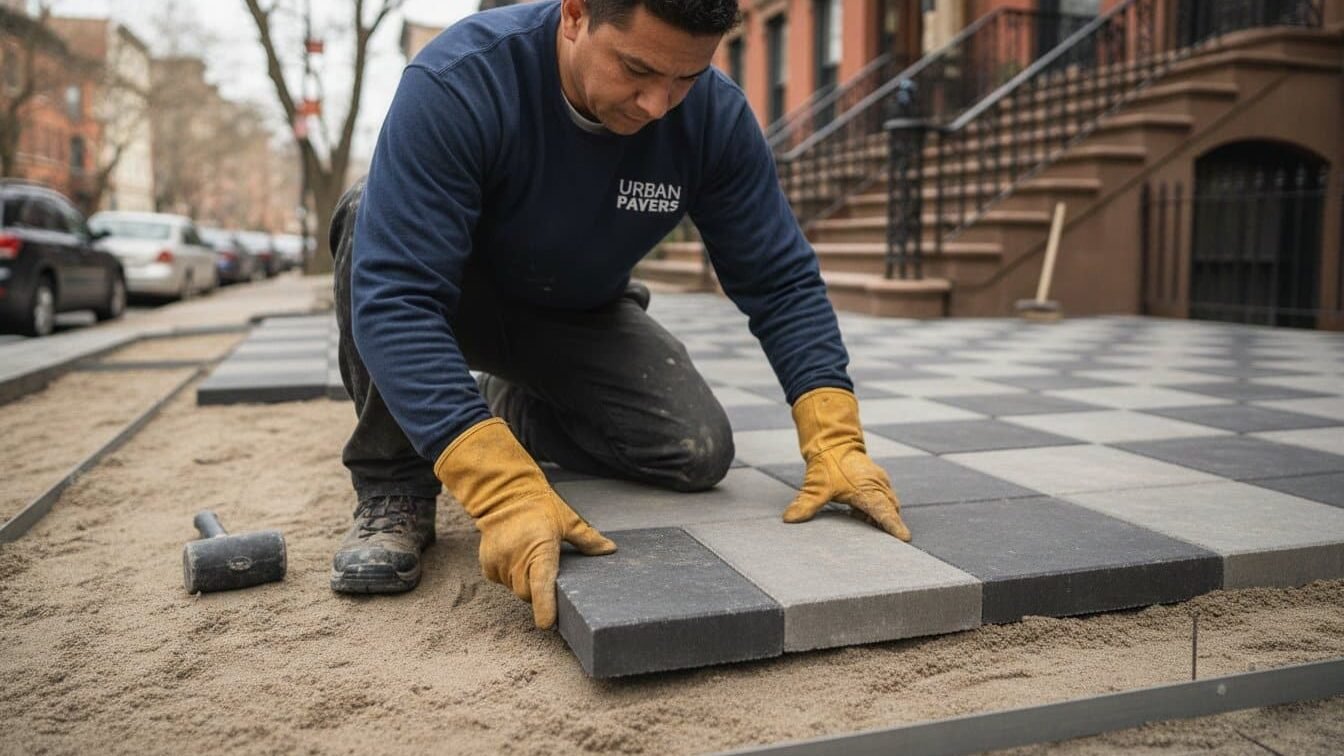
A resilient surface starts deep underground. For heavy-duty applications like driveways, we install a sub-base of 6 to 12 inches of densely graded, compacted gravel. This depth is mandatory to provide the structural strength needed to support vehicle weight without sagging. We also incorporate heavy-duty geotextile fabrics between the native soil and the gravel base. This fabric acts as a filter, preventing fine soil particles from migrating upward and destabilizing the stone foundation over time. To finish the installation, we use polymeric sand in the joints. This specialized sand hardens when misted with water, creating a flexible “lock” that prevents weed growth and resists washout while allowing the pavers to expand and contract naturally with the temperature.
Urban Drainage Solutions
Managing runoff is particularly challenging in the tight confines of Brooklyn or Queens backyards where space is at a premium. When there’s nowhere for water to go naturally, we implement engineered drainage solutions like French drains or channel drains. These systems capture sheet flow and direct it toward designated discharge points or dry wells. For properties with restricted sewer access, dry wells provide an underground reservoir that allows water to collect and slowly permeate back into the earth. Many modern property owners are now choosing permeable paver systems. These installations support NYC’s broader green infrastructure goals by filtering storm-water directly through the joints, significantly reducing the strain on our city’s aging sewer system during heavy rainfall.

Hiring a Paver Contractor: NYC Standards and Considerations
Selecting a contractor for your paver installation NYC project requires a higher level of scrutiny than a standard home renovation. In a city where property lines are tight and regulations are dense, you need a partner who understands the legalities as well as the masonry. Many property owners make the mistake of hiring a general landscaper for what is essentially a structural engineering task. We recommend verifying that your contractor carries insurance specifically rated for masonry and excavation. Standard “General Liability” often excludes the specific risks associated with heavy stone work and ground stabilization, leaving you vulnerable if a neighbor’s foundation is affected during your project.
One reliable proxy for technical competence is a contractor’s experience with NYC sidewalk violation removal. The Department of Transportation (DOT) enforces incredibly strict standards for sidewalk pitch, thickness, and expansion joints. If a firm can consistently pass DOT inspections, they possess the precision required for a high-end paver system. You should always insist on a written contract that details specific excavation depths and material grades. If a bid seems unusually low, it’s often because the contractor plans to skip the deep compaction or geotextile layers mentioned earlier. Correcting a sunken patio or a driveway that has developed ruts is far more expensive than investing in a professional installation from the start.
Permits and NYC Compliance
Most residential paver projects don’t require a Department of Buildings (DOB) permit if they’re limited to surface replacement. However, if your project involves significant grade changes or the installation of new drainage systems that connect to city sewers, professional filing may be necessary. Property owners in historic districts must also navigate Landmark Preservation Commission (LPC) regulations. These rules often dictate the color, texture, and material of pavers to ensure they match the neighborhood’s historic character. We also suggest establishing “neighborly” construction agreements before work begins. Clear communication about equipment access and work hours prevents property line disputes and ensures a smoother project timeline.
Evaluating Contractor Portfolios
When reviewing past work, look beyond the initial “wow” factor of a new patio. Examine photos for straight lines and tight, consistent joints. Gaps between stones are a sign of poor craftsmanship and will eventually lead to weed growth and shifting. Most importantly, ask for references from projects completed at least three years ago. A paver system that remains perfectly level after three NYC winters is the ultimate proof of a stable sub-base. A contractor who understands the full building envelope will also ensure that your new pavers don’t interfere with your building’s existing waterproofing or facade integrity. If you’re ready to upgrade your property with a surface built for the long term, contact Brick Tech Contracting Corp to discuss your project requirements.
Long-Term Maintenance and Structural Protection
Protecting your investment doesn’t end when the last stone is laid. Even the most robust paver installation NYC project requires a proactive maintenance strategy to survive the city’s environmental stressors. We view maintenance as a form of structural insurance. Regular power washing NYC is essential for more than just curb appeal. It removes corrosive de-icing salts, heavy metal dust from urban traffic, and organic growth that can take root in the joints. If left unchecked, these elements can degrade the surface of concrete pavers or cause natural stone to spall and flake.
Sealing is your primary defense against moisture infiltration. For the NYC climate, we recommend breathable, silane or siloxane-based sealers. These products penetrate deep into the material to create a hydrophobic barrier while allowing moisture vapor to escape from the sub-base. It’s best to wait at least one full season after installation before the first sealing to allow any efflorescence, or natural salt migration, to work its way out of the stones. Once sealed, your pavers will resist oil stains and salt damage much more effectively.
You should also stay vigilant for early signs of failure. If you notice individual units shifting, it often indicates that the edge restraints have loosened or the sub-base has been compromised. Standing water is a clear sign that the pitch has settled or the drainage system is clogged. Catching these issues early prevents a localized problem from turning into a full-scale failure that threatens your property’s foundation.
Cleaning and Resealing Protocols
We suggest an annual maintenance checklist for every property owner. Each spring, inspect the joints for missing polymeric sand. This sand is the “glue” that maintains the system’s structural integrity. If it washes away, the pavers lose their ability to distribute weight, leading to cracks and sinking. For driveways, use specialized degreasers to remove oil stains immediately, as petroleum products can soften some concrete paver binders. On shaded patios, a mild antimicrobial wash prevents moss and algae from creating slippery, hazardous surfaces.
Integrated Exterior Care
A truly resilient property is managed from the ground up. This is why your paver contractor should also understand the complexities of parapet wall construction New York and facade health. Your building’s exterior works as a single system. If your ground-level drainage is failing, it puts extra pressure on your foundation’s waterproofing. Conversely, a failing roof or parapet can cause water to cascade down the facade and wash out the sub-base of your new patio. Before beginning any paver installation NYC, we recommend a comprehensive exterior evaluation. This ensures that your new outdoor space is integrated into a total protection strategy, keeping your entire building safe, dry, and structurally sound for decades.
Secure Your Property’s Long-Term Value
A successful paver installation NYC project is a significant investment that requires a focus on what lies beneath the surface. By prioritizing a deep, compacted sub-base and selecting materials like high-strength concrete or non-porous porcelain, you ensure your outdoor space survives the city’s harsh environmental demands. Remember that professional masonry expertise is the key to preventing shifting stones and drainage failures that could eventually threaten your building’s foundation.
As you plan your next exterior upgrade, consider the value of a partner who understands the full structural envelope of your property. Brick Tech Contracting Corp has been serving all five boroughs since 1980 as NYC licensed and insured masonry experts. We specialize in structural integrity and waterproofing, ensuring that every stone we lay contributes to your building’s long-term protection and curb appeal. You don’t have to navigate these technical requirements alone.
Request a Professional Paver Installation Estimate from Brick Tech Contracting Corp today. We look forward to helping you build a beautiful, level, and resilient space that you’ll enjoy for many years to come.
Frequently Asked Questions
Do I need a permit for paver installation in NYC?
Most residential projects on private property don’t require a DOB permit if you’re simply replacing existing surface materials. However, if your project involves significant grade changes or the installation of new drainage systems that connect to city sewers, professional filing may be necessary. Property owners in historic districts should also check with the Landmark Preservation Commission to ensure their chosen materials meet specific neighborhood aesthetic standards.
How long does a typical paver patio installation take in Brooklyn or Queens?
A standard backyard patio installation typically takes between three to seven working days. The timeline depends heavily on site accessibility, as many Brooklyn and Queens properties have narrow entryways that require manual material transport. This estimate includes the time needed for deep excavation, sub-base compaction, and the final application of polymeric sand. Weather conditions also play a significant role in determining the final completion date.
Are pavers better than concrete for NYC driveways?
Pavers are often the superior choice for local driveways because of their inherent flexibility. Unlike a single concrete slab that can crack during winter temperature swings, individual pavers shift slightly without breaking. They also offer higher compressive strength, which is essential for supporting heavy vehicle weight. If a repair is ever needed, you can replace individual units instead of jackhammering the entire driveway, saving both time and effort.
How much does paver installation cost per square foot in NYC in 2026?
Pricing for paver installation NYC varies significantly based on the chosen material and the complexity of the site’s excavation. High-end natural stone or porcelain typically carries a higher initial investment than standard concrete pavers. Labor costs in the five boroughs are also influenced by site access and local regulations. We recommend requesting a detailed site evaluation to receive an accurate estimate tailored to your property’s specific structural requirements.
Can pavers be installed over an existing concrete patio?
Which paver material is the most slip-resistant for NYC winters?
Textured porcelain pavers often provide the highest slip-resistance ratings, making them ideal for icy NYC winters. Look for materials with a high “R-rating” or Coefficient of Friction to ensure safety. Concrete pavers with exposed aggregate also offer excellent traction. While natural stones like granite are durable, they should be honed or thermal-finished to ensure they don’t become dangerously slick when wet or covered in frost.
How do I prevent weeds from growing between my pavers?
The most effective way to prevent weed growth is through the proper application of polymeric sand. This material hardens when activated by water, creating a durable seal that blocks seeds from taking root in the joints. It’s also important to maintain the integrity of this seal over time. If you notice the sand level dropping, replenishing it promptly will keep your patio looking clean and prevent organic material from accumulating between the stones.
What is the best way to clean pavers in a high-pollution urban environment?
Regular cleaning with a pH-neutral detergent and a stiff brush is the best way to manage urban soot and grime. For deeper cleaning in high-pollution areas, professional power washing removes embedded metallic dust and exhaust residues that can stain the surface. Avoid using harsh acidic cleaners, as these can etch the surface of natural stone or weaken the binders in concrete pavers. Periodic sealing also makes the surface much easier to rinse clean.