Could a single overlooked crack in your building’s facade lead to a financial penalty that dwarfs the actual cost of restoration? With the implementation of Local Law 51 in early 2026, NYC property owners face steeper fines than ever for delayed maintenance. We understand that managing a commercial property in this city is a constant balancing act between maintaining structural integrity and staying ahead of aggressive building codes. Whether you are dealing with water infiltration or preparing for a FISP filing, finding a specialist for commercial stucco repair NYC is no longer just about aesthetics; it’s about survival in a strict regulatory environment.
This guide provides the clarity you need to select a masonry partner who truly understands the technical differences between EIFS and traditional stucco systems. You’ll learn how to navigate the 10th Cycle filing windows and the new policies designed to reduce long-term scaffolding to ensure your property remains compliant and protected. We will walk you through the essential criteria for choosing a contractor who prioritizes long-term resilience over quick fixes, helping you improve property value while securing total peace of mind.
Key Takeaways
- Learn why a valid NYC Department of Buildings license and specialized high-rise insurance are non-negotiable requirements for any commercial masonry partner.
- Discover how to distinguish between minor surface cracks and deep structural deterioration to determine if you need localized commercial stucco repair NYC or a full facade restoration.
- Understand the impact of NYC’s aggressive freeze-thaw cycles on stucco and why proactive waterproofing is essential for long-term structural protection.
- Gain a step-by-step overview of the professional inspection and site protection process required to keep pedestrians safe and your project in compliance with local codes.
- See how partnering with an established, family-owned firm with over 40 years of local experience ensures transparent project management and lasting results.
Identifying Critical Stucco and Masonry Issues in NYC Commercial Buildings
NYC commercial masonry encompasses everything from the decorative storefronts of SoHo to the expansive high-rise facades of Midtown. While many owners view their building’s exterior as a cosmetic feature, it actually serves as the primary defense for the internal structure. Understanding What is Stucco? and how it interacts with the local environment is the first step in effective property management. In our city, the climate is particularly aggressive. Frequent freeze-thaw cycles force moisture into microscopic pores in the masonry. When that water freezes, it expands, creating internal pressure that eventually leads to spalling and deep fissures.
Common Signs of Stucco Failure
Identifying trouble before it becomes a safety hazard requires a keen eye. Bulging or “pillowing” sections of stucco usually indicate that the material has detached from its substrate, often due to trapped moisture. You should also look for cracks larger than 1/16 of an inch. These gaps are wide enough to allow wind-driven rain to penetrate the building envelope. Another common warning sign is efflorescence, a white, powdery salt deposit left behind after water evaporates. While the powder itself is harmless, its presence confirms that water is moving through your masonry and leaching out minerals. Ignoring these signs increases the eventual cost of commercial stucco repair NYC.
The Role of Masonry in Local Law 11 Compliance
For buildings over six stories, masonry health is a legal mandate under the Facade Inspection & Safety Program (FISP). Any significant stucco or brick defect can cause an inspector to classify your property as “Unsafe,” triggering a cascade of requirements for sidewalk sheds and immediate repairs. Proactive maintenance is the most reliable way to ensure your building remains “Safe” or “Safe with a Repair and Maintenance Program” (SWARMP). If you’re currently preparing for the 10th Cycle filing windows, reviewing a comprehensive Local Law 11 facade repair NYC guide will help you understand the specific standards required to stay in compliance. Investing in timely masonry care protects both your capital and your reputation as a responsible property owner.
What to Look for in a Commercial Masonry Contractor New York
Selecting the right partner for your building is a high-stakes decision. In New York, the regulatory environment is unforgiving. A contractor must hold a valid NYC Department of Buildings (DOB) license to pull the necessary permits for any significant project. Without this, your project is illegal from day one. Beyond basic licensing, verify their insurance coverage specifically for high-rise masonry. Given New York’s “Scaffolding Law,” you need a contractor with robust General Liability and Workers’ Compensation policies. This protects you from the absolute liability standards that apply to gravity-related injuries on a job site, which is a critical concern for any property owner.
Safety certifications are another non-negotiable factor. Every crew member should have completed OSHA 30 training, and specialized scaffolding safety certifications are mandatory for facade work. When you’re vetting candidates for commercial stucco repair NYC, ask for a local portfolio. A contractor who understands the logistics of the five boroughs knows how to manage street closures, pedestrian protection, and the specific permitting requirements of the NYC Facade Inspection & Safety Program (FISP). This local expertise prevents project delays and ensures that your building remains in good standing with the city.
Technical Expertise and Specialized Services
Many modern NYC buildings utilize Exterior Insulation and Finish Systems (EIFS). You need a specialist who understands the drainage requirements of EIFS compared to traditional cement-based stucco. For those managing historic properties, knowledge of Landmark Preservation Commission (LPC) standards is essential. Properties such as landmarked brownstones require the same careful approach to masonry as commercial facades; if you own such a building, a detailed resource on historic brownstone restoration NYC can help you understand the specific LPC requirements and preservation techniques involved. Often, a project requires more than just one service. A versatile contractor who excels at brick pointing NYC alongside stucco work provides a more cohesive restoration of the building envelope, ensuring every joint and surface is weather-tight.
Project Management and Transparency
Transparency in the bidding process reveals a contractor’s true professionalism. A “low-ball” estimate often indicates a lack of understanding regarding the project’s complexity or an intent to use sub-par materials. A realistic quote for commercial stucco repair NYC should detail the specific steps of the restoration, from substrate preparation to final coating. You should also expect a clear communication protocol, including regular progress reports to keep you informed of the project’s status. Finally, confirm the warranty terms. A confident contractor stands behind their work with guarantees that cover both material performance and craftsmanship. If you’re ready to discuss your building’s specific needs, you can consult with an experienced facade specialist to get an accurate assessment.
Stucco Repair vs. Full Facade Restoration: Choosing Your Scope
Deciding whether to patch a few visible cracks or invest in a full facade restoration is a critical financial choice for any property owner. The decision starts with a thorough assessment of the substrate. If the underlying masonry is sound, localized commercial stucco repair NYC is often a viable, cost-effective solution. However, if the substrate is crumbling or the bond between the stucco and the building has failed, surface-level patches won’t hold. A professional sounding test is the only way to confirm if the material is securely attached or if hidden voids are allowing water to pool behind the exterior skin.
Aesthetic consistency is another major factor in choosing your project scope. Localized patching is efficient for minor damage, but matching the color and texture of aged stucco is notoriously difficult. For high-profile commercial properties, mismatched patches can create a “checkerboard” effect that diminishes curb appeal and tenant satisfaction. Full resurfacing provides a uniform, professional appearance while creating a seamless waterproofing barrier. This level of care is often necessary to comply with NYC facade inspection laws, which require the building envelope to be free of defects that could lead to unsafe conditions. Investing in a comprehensive restoration doesn’t just clear violations; it significantly boosts property value and long-term tenant retention.
EIFS vs. Traditional Stucco Repair
Repairing synthetic EIFS (Exterior Insulation and Finish Systems) requires a completely different technical approach than traditional cementitious stucco. Many older EIFS installations in New York lack proper moisture drainage systems, which leads to trapped water and substrate rot. When we perform commercial stucco repair NYC on these buildings, we focus on restoring the system’s ability to breathe and drain. Applying specialized Thorocoat services can provide an additional layer of breathable, waterproof protection. This high-performance coating is specifically designed to bridge hairline cracks and resist the city’s harsh environmental pollutants.
Comprehensive Exterior Maintenance
Rarely does a facade issue exist in total isolation. During an inspection, it’s common to find that chimney repair or parapet wall construction is needed to fully secure the building’s top edge. Bundling these services into a single project is a strategic way to manage costs and minimize the time scaffolding stays on your property. It’s also the ideal time to address ground-level compliance. If you’re facing DOB summonses for your walkways, integrating NYC sidewalk violation removal into your maintenance plan ensures your entire property is safe, compliant, and free of active penalties by the time the crew demobilizes.

The Commercial Stucco Repair Process: A Step-by-Step Overview
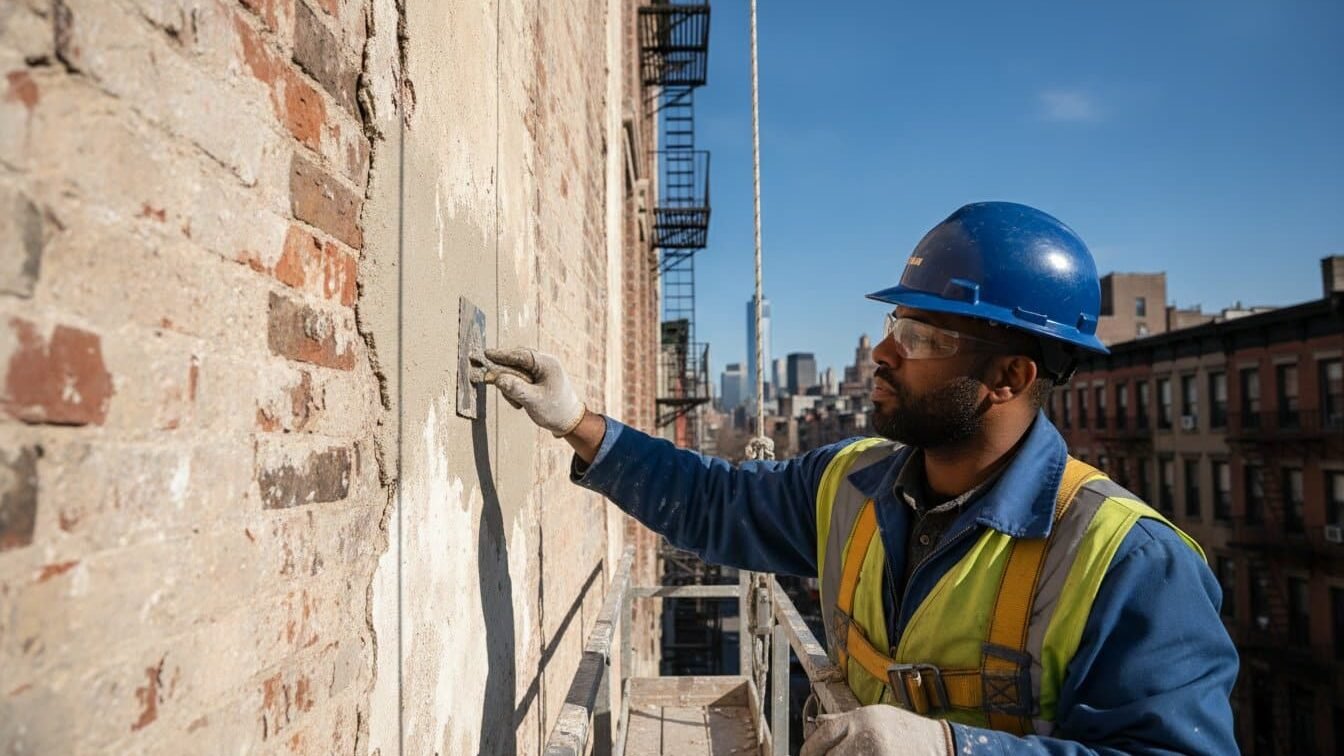
A successful facade project relies on a methodical, multi-stage approach. We don’t just patch over problems; we address the root cause of deterioration to ensure long-term stability. The process begins with a professional inspection and sounding of the facade surfaces. By physically tapping the masonry, we identify hollow areas where the stucco has detached from the substrate. This diagnostic phase ensures that the scope of your commercial stucco repair NYC is accurate and addresses hidden vulnerabilities before they become safety hazards.
Once we identify the damage, we move into site preparation. This involves erecting safe scaffolding and implementing rigorous site protection to safeguard pedestrians and windows. We then remove all loose masonry and prepare the substrate to ensure a perfect bond for new materials. Following this, we apply specialized primers and multiple stucco layers, building a resilient exterior from the inside out. The final stage involves sealing and waterproofing the entire surface. This provides maximum durability against the city’s harsh weather and prevents future moisture intrusion.
Scaffolding and Permitting in NYC
Waterproofing and Finishing Touches
The final protective layer is what distinguishes a temporary fix from a long-term solution. We utilize high-performance coatings that act as a flexible shield, preventing future stucco cracks by expanding and contracting with the building. After the coatings cure, we perform a thorough power washing and final cleanup to restore your building’s aesthetic appeal. Every project concludes with a meticulous final inspection. This ensures every detail meets NYC building codes and provides you with the structural security you expect. If your building requires professional attention, schedule a facade inspection with our expert team today.
Why Brick Tech is New York’s Trusted Commercial Masonry Partner
Brick Tech Contracting Corp has been a fixture in the New York construction landscape since 1980. With forty-six years of experience serving the five boroughs, we’ve developed a deep institutional knowledge of the city’s specific masonry challenges. We don’t just provide a service; we act as a long-term partner for property owners and managers. Our family-owned structure ensures that every project receives the personal attention and accountability it deserves. Whether you’re managing a single storefront or a sprawling high-rise, our focus remains on structural integrity and the longevity of your investment.
Navigating the complexities of the Facade Inspection & Safety Program (FISP) requires more than just technical skill; it requires a contractor who understands the shifting regulatory landscape. We have a proven track record of bringing buildings into compliance during the most demanding inspection cycles. When you need commercial stucco repair NYC to satisfy a DOB mandate or clear an “Unsafe” status, you can rely on our expertise to handle the physical restoration with precision. We understand the high stakes of NYC building violations and work diligently to ensure your property remains protected and compliant.
Our Local Expertise and Heritage
Our deep understanding of NYC’s unique architectural history allows us to address masonry challenges that younger firms might overlook. We prioritize a relationship-first approach to commercial property maintenance, viewing our work as a guardianship of the city’s skyline. Our founding in 1980 established a legacy of craftsmanship that has allowed us to witness and adapt to four decades of evolving NYC building codes and architectural trends. This historical perspective is invaluable when restoring landmarked facades or integrating modern EIFS solutions into older structures. For residential property owners navigating similar preservation challenges, our expertise extends to historic brownstone restoration NYC projects, where the same commitment to period-accurate craftsmanship and LPC compliance applies.
Your All-in-One Exterior Solution
We provide a comprehensive range of services to maintain your building’s entire exterior envelope. We handle everything from intricate chimney restoration and parapet wall construction to NYC sidewalk violation removal, providing a single point of contact for all your masonry needs. Our commitment to durability means we use only high-quality materials and proven techniques, ensuring that our repairs stand up to the city’s aggressive weather cycles. Don’t wait for minor cracks to become major liabilities. Contact us today for a professional facade evaluation and let our experts help you secure your property’s future.
Securing Your Building’s Future and Compliance
Maintaining a commercial property in New York City requires a strategic approach to masonry care. We’ve explored how early detection of facade issues and understanding the nuances of FISP compliance can save you from aggressive DOB penalties. Selecting a partner who understands the technical requirements of commercial stucco repair NYC ensures that your building remains weather-tight and structurally sound for decades to come.
Brick Tech Contracting Corp brings the reliability of a family-owned business established in 1980 to every project. We are fully licensed and insured for commercial high-rise work, specializing in the complex DOB and DOT compliance standards that define our local industry. By prioritizing durability and transparent project management, we help you protect your investment while improving property value. Our 46 years of experience across the five boroughs provides the peace of mind that your facade is in expert hands.
Don’t let minor deterioration lead to costly structural failure or legal complications. Taking action now ensures your facade remains a point of pride rather than a liability. Request a Professional Facade Evaluation from Brick Tech to begin your partnership with a trusted local guide. Your building deserves the protection of seasoned craftsmanship and a commitment to excellence.
Frequently Asked Questions
How much does commercial stucco repair cost in New York City?
Project costs are determined by the total surface area of the damage and the condition of the underlying substrate. While minor surface crack injections are less intensive, a project requiring the removal of delaminated layers and substrate preparation requires a larger investment. Factors like scaffolding requirements, site protection for pedestrians, and the complexity of the building’s architectural details also influence the final budget. We provide detailed evaluations to ensure you understand the specific needs of your building envelope.
How long does a typical facade restoration project take?
A standard restoration can range from two weeks for localized repairs to several months for a full high-rise project. Timelines are heavily influenced by the speed of the NYC Department of Buildings (DOB) permitting process and current weather conditions. We prioritize efficient staging and methodical project management to ensure that construction doesn’t unnecessarily linger on your property. Our goal is always to restore structural integrity while minimizing the duration that scaffolding remains on-site.
What is the difference between EIFS and traditional stucco?
Traditional stucco is a hard, cement-based material applied over a metal lath, while EIFS (Exterior Insulation and Finish Systems) is a multi-layered synthetic system that includes an insulation board. EIFS is typically more flexible and offers better thermal resistance, but it requires specialized drainage systems to prevent water from becoming trapped behind the foam layers. Choosing the right approach for commercial stucco repair NYC depends entirely on your building’s original construction and its current moisture levels.
Do I need a permit for stucco repair on my NYC commercial building?
Most facade work in New York City requires a permit from the DOB, especially if the project necessitates a sidewalk shed or pipe scaffolding. Structural repairs and significant changes to the building’s exterior appearance always fall under permit requirements. Commercial property owners should always verify these requirements with a licensed professional to avoid costly stop-work orders and administrative fines. We handle the necessary paperwork to ensure your project remains fully compliant with local regulations.
How often should a commercial building facade be inspected?
Under the latest FISP updates, the mandatory inspection cycle for buildings over six stories has shifted to an interval of between six and twelve years. Owners of buildings less than 40 years old may now utilize visual inspections every three years to monitor conditions, potentially delaying comprehensive hands-on inspections for up to 12 years. Despite these longer windows, performing routine maintenance between cycles is essential to avoid the steep penalties introduced by Local Law 51 in early 2026.
Can stucco repair be done during the winter months in NYC?
Winter repairs are possible but require specialized climate control measures like heated enclosures and thermal blankets to ensure proper curing. Stucco materials must be applied and cured within specific temperature ranges, typically above 40 degrees Fahrenheit, to maintain their structural integrity. Performing commercial stucco repair NYC during the coldest months often increases project complexity and staging costs due to these environmental requirements. We typically recommend scheduling major restorations during the spring or fall for optimal results.
What happens if I ignore a sidewalk violation or facade defect?
Does Brick Tech handle Local Law 11 (FISP) repairs?
Yes, we are specialists in FISP repairs and have been helping owners achieve compliance since 1980. We understand the specific requirements for the 10th Cycle filing windows and work closely with engineers to ensure all repairs meet the city’s rigorous safety standards. Our team manages every aspect of the process, from initial site protection to the final filing of the completion report. We take pride in our family-owned commitment to keeping NYC buildings safe and violation-free.