Most property owners think mortar is just the glue between bricks, but in the relentless climate of New York City, your choice of joint finish is actually your building’s first line of defense against structural decay. You’ve likely looked at your facade and felt overwhelmed by the technical jargon in a masonry quote. It’s frustrating when you want to protect your investment but aren’t sure if you’re choosing a style that honors your building’s history or one that invites water inside. This guide simplifies the process by mastering the technical details of key pointing, ensuring your brickwork remains weather-resistant and structurally sound for decades.
We’ll break down the differences between joint styles, explain why NYC’s 45 inches of annual rainfall makes precision finishing a necessity, and give you the tools to evaluate restoration quotes with confidence. By the end, you’ll understand how this specific technique creates a moisture-shedding profile that keeps your interior dry and your exterior resilient against the 2026 standards of urban maintenance. Whether you own a historic Brooklyn brownstone or a Manhattan commercial property, getting the joints right is the most cost-effective way to secure your building’s future.
Key Takeaways
- Understand how key pointing creates a mechanical bond and a moisture-shedding profile that protects your building’s structural integrity.
- Learn why selecting the correct mortar, such as Type N or Type O, is vital for ensuring long-term durability in the harsh NYC climate.
- Discover the practical differences between recessed key joints and raised tuckpointing to choose the best style for your historic facade.
- Identify the critical signs of mortar failure and how precision joint finishing can prevent water infiltration in vaults and retaining walls.
- Gain the technical knowledge needed to evaluate masonry quotes effectively and ensure your restoration project meets 2026 NYC standards.
What is Key Pointing? Defining the Masonry Technique
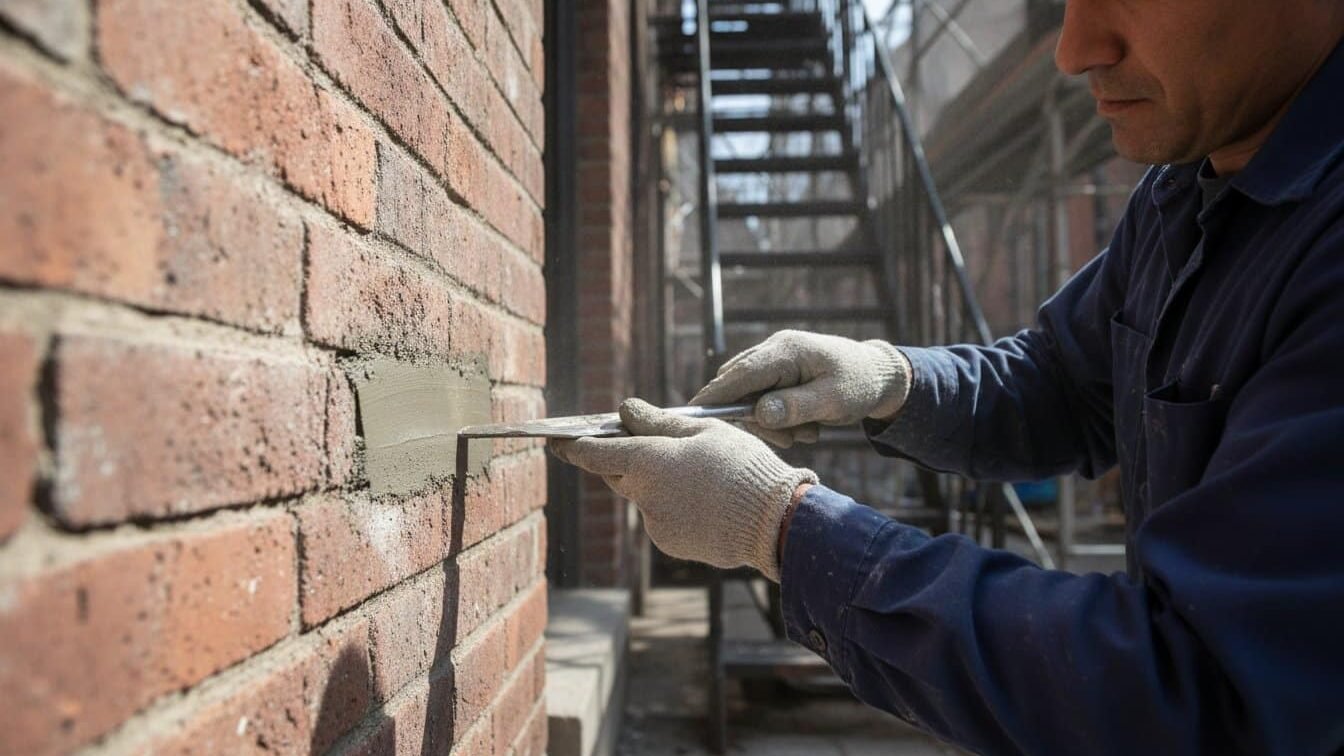
Key pointing is a specialized masonry finish where a technician creates a specific indentation, or “key,” within the mortar joint. While many property owners use the term “pointing” as a general verb for any mortar repair, key pointing refers to this distinct, recessed profile. It’s a technique that requires a steady hand and a deep understanding of how mortar behaves under pressure. Understanding What is Repointing in a broader sense helps clarify why this specific finish is often the gold standard for high-end restoration. It isn’t just about filling a gap; it’s about engineering the joint to perform better over time.
The “key” serves a vital structural purpose by providing a mechanical bond for subsequent mortar layers. In professional facade restoration, we don’t just slap mortar onto the surface. We create this recessed groove to anchor the material deeply into the bed. This mechanical lock is what prevents the mortar from delaminating or popping out when New York City’s temperatures swing from freezing to sweltering. Without a proper key, the bond relies entirely on suction, which often fails under the stress of urban vibrations and wind-driven rain.
The Anatomy of a Mortar Joint
A mortar joint is the flexible buffer between rigid brick units. It’s designed to absorb the movement of the building while keeping the interior dry. The profile of this joint dictates how the building handles light and moisture. By using key pointing, masons create deep shadow lines that define the masonry and add a sense of visual depth to the facade. The “key” is the recessed groove that anchors the finish and ensures the mortar remains stable within the joint bed. This geometry helps guide water away from the vulnerable edges of the brick, reducing the risk of spalling during winter months.
Why NYC Architects Specify Key Pointing
Architects across Brooklyn and Manhattan frequently specify this technique to maintain historical accuracy on pre-war buildings. Many of the city’s most iconic brownstones and brick facades were originally finished with these precise, deep joints. Beyond the look, there are clear structural benefits for high-exposure facades near the waterfront. Proper keying ensures that the mortar sheds water efficiently, which is a critical part of maintaining weather-resistance in a city that sees over 45 inches of annual rainfall. Furthermore, following these specific jointing methods is often a requirement for compliance with NYC facade restoration standards for landmarked properties, as it honors the original craftsmanship while providing modern durability.
Technical Execution: Tools and Materials for 2026
Precision in key pointing depends entirely on the marriage of the right tool and the perfect mortar consistency. Unlike standard repointing, which might use a basic tuck pointer, this technique requires a specialized keying tool or jointer to compress the mortar and create the signature recessed profile. This compression is vital for longevity. It forces the mortar into the brick pores, creating a dense surface that resists the freeze-thaw cycles common in New York. If the tool is chosen incorrectly, you risk leaving voids where water can settle and eventually cause the mortar to pop out during a cold Brooklyn winter.
The Jointer’s Toolkit
Masons typically choose between sled jointers and hand jointers based on the specific requirements of the facade. Sled jointers feature a long, runner-like guide that allows the technician to strike horizontal joints with perfect straightness across long spans. Hand jointers offer more finesse for vertical head joints or tight areas around window lintels. Regardless of the type, the tool’s width must match the brick gap exactly. Using a tool that is too wide will smear mortar onto the brick face; one that is too narrow won’t provide the necessary compression. We meticulously maintain our tool edges to prevent ragged lines that can trap dirt and moisture.
Mortar Mix and Consistency
Selecting the right mortar is a science, especially when dealing with NYC’s historic building stock. We generally prefer Type N or Type O mortar for residential and historic brickwork. Type N offers excellent workability and strength for general exterior walls, while Type O is a softer mix designed specifically to protect older, more fragile bricks. Using a high-portland cement mix is a common mistake that leads to disaster. It creates a joint harder than the brick itself, which causes the brick edges to crack and spall over time. For more technical details on matching materials to older structures, the NPS Guide to Repointing provides essential standards for historic preservation.
NYC’s high humidity levels also dictate our workflow. We must strike the joint at the exact moment the mortar is “thumbprint hard.” If we strike too early, the mortar smears; too late, and the “key” won’t form properly. Pre-hydrating the mortar is another critical step, as it ensures the mix doesn’t lose its moisture too quickly to the surrounding bricks. This attention to detail ensures the joint remains weather-resistant for decades. If you’re concerned about the state of your building’s exterior, a professional assessment from Brick Tech Contracting Corp can help determine the best material match for your specific property.
Key Pointing vs. Tuckpointing: Choosing the Right Style
Choosing between joint styles is more than an aesthetic decision; it’s a choice about how your building manages moisture. Tuckpointing is often misunderstood as a general term for repair, but it’s actually a decorative method that uses two different colors of mortar to create the illusion of perfectly straight, thin joints. Key pointing differs because it focuses on the physical indentation within the joint bed rather than a superficial bead of color. While tuckpointing provides a formal, high-contrast look, key pointing offers a more rugged and historically authentic texture that suits many of NYC’s traditional brick facades.
The Water Shedding Hierarchy
The shape of the mortar joint determines how effectively your facade sheds New York’s 45 inches of annual rainfall. Concave and keyed joints are widely considered the most durable because their curved or recessed profiles prevent water from sitting on the lower edge of the brick. In a harsh freeze-thaw environment like New York, flat or “recessed” joints that aren’t properly angled can be a liability. When water pools on these small ledges, it seeps into the brick and expands as it freezes, leading to surface cracking. A properly keyed joint is the building’s first line of defense against spalling because it directs moisture outward and away from the brick’s vulnerable core.
Cost and Longevity Factors
Property owners must balance their aesthetic desires with long-term maintenance budgets. Tuckpointing is significantly more labor-intensive because it requires the mason to apply a base mortar and then a secondary, thin line of contrasting material. When evaluating brick pointing rates, remember that complexity directly influences the final quote. Key pointing is generally more cost-effective for large-scale restorations, yet it still demands a high level of skill to ensure the depth is consistent across the entire facade.
Longevity is tied to how the joint is struck. If a key is too deep or left with ragged edges, it can actually trap soot and moisture, which accelerates decay. We prioritize a clean, compressed finish that seals the joint while maintaining the desired architectural shadow lines. This approach ensures you aren’t paying for frequent touch-ups every few years. Investing in the right style now prevents the structural headaches that come from choosing a joint profile that can’t stand up to the city’s elements.

When to Request Key Pointing for Your NYC Building
Recognizing when your building needs intervention is the difference between a routine maintenance project and an emergency structural repair. In New York City, the constant vibration from subways and heavy traffic, combined with extreme temperature shifts, puts immense pressure on mortar joints. If you notice mortar crumbling or falling out in chunks, it’s a clear signal that the weather-resistance of your facade is compromised. This is the ideal time to request key pointing to restore the mechanical bond and prevent water from reaching the building’s interior.
Beyond the facade, this technique plays a vital role in NYC sidewalk violation removal, particularly for properties with sub-sidewalk vaults or masonry retaining walls. These structures are under constant hydrologic pressure. A precision-keyed joint ensures that these underground or earth-facing walls remain watertight, helping you clear DOT violations and protect your basement from seepage. Property owners should prioritize these repairs as they prepare for the next Local Law 11 (FISP) inspection cycle. Addressing joint failure early ensures your building receives a “Safe” rating, avoiding the costly scaffolding and penalties associated with “SWARMP” or “Unsafe” classifications.
Signs of Joint Failure
Before mortar actually falls out, your building often provides subtle warnings. One of the most common is efflorescence, which appears as white, powdery salt stains on the brickwork. This indicates that water is moving through the wall and evaporating on the surface, leaving minerals behind. You should also listen for “hollow” sounds when tapping the mortar with a tool, as this suggests the bond has detached from the brick. If you see vegetation or moss growing within the joints, it means the mortar is retaining enough moisture to support life, which will rapidly accelerate the decay of the surrounding masonry.
The Consultation Process
When you meet with a contractor, clarity is your best tool for ensuring a high-quality result. We recommend requesting a “mock-up” section. This allows you to approve the specific depth and texture of the key pointing style before the full project begins. It’s also the time to ensure the contractor understands the specific parapet wall construction New York requirements, as these roof-level walls are often the most exposed to the elements and require the most durable joint finishes. Reviewing a contractor’s portfolio of NYC landmarked buildings will give you peace of mind that they respect the technical and aesthetic standards of the five boroughs.
Don’t wait for a Department of Buildings inspector to point out the flaws in your facade. Taking proactive steps today ensures the longevity of your investment and the safety of the public. If you’ve spotted any of these warning signs on your property, contact Brick Tech Contracting Corp for a professional evaluation of your masonry needs.
Brick Tech’s Approach to Professional Brick Pointing
Brick Tech Contracting Corp has spent over four decades refining the art of masonry across the five boroughs. Since our founding in 1980, we’ve focused on techniques that offer more than just a temporary aesthetic fix. We understand that property owners in New York face unique environmental challenges, from coastal salt air to heavy urban pollution. Our technicians receive specialized training in key pointing to ensure every joint contributes to the building’s structural stability. This meticulous approach to joint finishing reflects our commitment to protecting NYC’s architectural legacy through expert craftsmanship and reliable results.
We treat every masonry project as a critical component of a building’s overall safety and value. By integrating our pointing expertise with our services as a waterproofing contractor NYC, we create a comprehensive barrier against moisture infiltration. A perfectly executed key pointing finish serves as the primary defense in a waterproofing strategy that prevents internal water damage and long-term decay. Our professional guarantee ensures that durability meets aesthetic excellence on every job, providing property owners with the peace of mind that comes from a job done correctly the first time.
Custom Mortar Matching
No two buildings in New York are exactly alike, and a “one-size-fits-all” mortar is a recipe for disaster. We use lab-tested mixes to ensure that our mortar is chemically and physically compatible with your aged masonry. This prevents the common mistake of using modern, hard mortars that can cause older, softer bricks to crack and spall during the freeze-thaw cycle. We take pride in matching the specific color, texture, and aggregate of historic brownstone and brick. This dedication preserves the authentic “New York look” that defines the city’s most prestigious neighborhoods and maintains the historical value of your investment.
Start Your Restoration Project
Delaying necessary masonry work is a risk that leads to significantly higher expenses down the road. Early intervention remains the most effective way to avoid the significant facade restoration cost NYC spikes that happen once structural damage becomes advanced or unsafe. We provide detailed, transparent estimates tailored to the unique requirements of your five-borough property, ensuring there aren’t any surprises during the project. Contact Brick Tech Contracting Corp for a professional masonry consultation to secure your building’s future today.
Secure Your Building’s Future with Precision Masonry
Mastering the technical details of key pointing is essential for any NYC property owner who wants to combine historic charm with long-term weather resistance. Choosing the correct joint profile isn’t just about aesthetics; it’s a strategic investment in your building’s structural health. By using specialized tools and lab-tested mortar mixes, you ensure that your facade remains resilient against the city’s unique environmental demands and heavy annual rainfall.
Since 1980, Brick Tech Contracting Corp has served the five boroughs as a reliable expert in facade restoration and Local Law 11 compliance. We specialize in expert mortar matching for historic properties, ensuring that every repair is both durable and aesthetically seamless. Don’t wait for moisture damage to escalate into a costly structural failure or a safety violation. Request Your NYC Brick Pointing Estimate Today to partner with a team that prioritizes the longevity of your investment. Protecting your property is a partnership, and we’re ready to help you maintain a safe, dry, and beautiful exterior for decades to come.
Frequently Asked Questions
What is the difference between pointing and repointing?
Pointing refers to the initial process of finishing mortar joints during new construction, while repointing is the act of repairing or replacing deteriorated mortar in existing masonry. In NYC, most property owners actually need repointing to restore their building’s weather-resistance. This process involves carefully removing damaged mortar and applying a new finish, such as key pointing, to ensure the structural integrity of the facade remains intact.
How often does an NYC brick building need repointing?
Most brick buildings in the five boroughs require repointing every 20 to 30 years, though environmental factors can shorten this timeline. Properties located near the waterfront or those facing high wind exposure often see mortar decay much faster. Regular inspections help identify when joints have recessed more than half an inch, which is the standard signal that it’s time for professional maintenance to prevent water infiltration.
Can I do key pointing myself as a DIY project?
We don’t recommend DIY for this specific technique because it requires specialized tools and a deep understanding of mortar chemistry. Improperly struck joints can trap moisture against the brick, leading to irreversible spalling and structural damage. Professional masons ensure the mortar mix is softer than the historic brick, a balance that’s difficult for amateurs to achieve without lab-tested materials and years of hands-on experience.
Why is key pointing more expensive than standard flush pointing?
Key pointing involves a higher level of labor and technical precision than a simple flush finish. The mason must use specialized jointers to compress the mortar into a specific recessed profile, which takes more time and skill to execute consistently across a large facade. This added effort pays for itself through superior water-shedding capabilities and the distinct architectural shadow lines that enhance the property’s value.
Does key pointing help prevent water damage in NYC basements?
Yes, a properly executed finish is a critical component of your building’s waterproofing system. By creating a dense, moisture-shedding profile, it prevents water from seeping through the wall and migrating down into basements or sub-sidewalk vaults. This is especially important for NYC properties where groundwater and driving rain can easily penetrate compromised mortar joints, leading to damp interiors and mold growth over time.
What happens if I ignore crumbling mortar joints?
Ignoring damaged joints allows water to enter the building envelope, where it expands during freeze-thaw cycles and shatters the brick from the inside out. This leads to spalling, where the brick face literally pops off, requiring much more expensive facade restoration than a standard repointing job. Eventually, the structural integrity of the wall is compromised, potentially leading to unsafe conditions and heavy fines from the city.
Is key pointing required for Local Law 11 compliance?
While the law doesn’t mandate a specific aesthetic style, it does require that all mortar joints be structurally sound and watertight. During a FISP inspection, any crumbling or missing mortar will result in a SWARMP or Unsafe classification. Using a high-quality finish ensures your building passes inspection by providing the durability and weather-resistance that NYC inspectors look for when evaluating facade safety and public protection.
How long does a professional brick pointing job last in New York City?
A professional job using high-quality materials and proper striking techniques can last between 25 and 50 years. The longevity depends heavily on the quality of the mortar match and the mason’s ability to compress the joints correctly. When you invest in expert craftsmanship, you’re securing your building’s exterior for decades, significantly reducing the frequency of major repairs and protecting the underlying masonry units from the city’s harsh elements.