In the high-stakes world of NYC real estate, a grimy exterior is more than just a cosmetic failure; it’s a direct threat to your bottom line. Professional commercial facade cleaning Manhattan services have evolved into a critical diagnostic tool rather than a simple aesthetic choice. You’re likely already concerned about the 2026 FISP deadlines and the tightening regulations of Local Law 48, which now limits sidewalk shed permits to just 90 days. It’s a stressful environment where neglected masonry leads to expensive repairs and steep penalties that can easily reach $1,000 per month for uncorrected unsafe conditions.
We understand that protecting your investment requires more than a surface-level approach. This guide will show you how professional cleaning preserves masonry integrity, ensures successful Local Law 11 inspections, and helps you navigate the new mandates of Local Law 51. We will break down the essential maintenance strategies for 2026, focusing on specialized washing techniques and the logistical planning required to keep your building compliant, safe, and attractive to high-value tenants. By focusing on longevity and structural health, you can turn routine maintenance into a powerful asset protection strategy.
Key Takeaways
- Understand how professional commercial facade cleaning Manhattan services act as a vital diagnostic tool to uncover hidden structural defects before they lead to FISP violations.
- Learn why soft washing and low-pressure chemical cleaning are the preferred choices for preserving the delicate integrity of historic Manhattan brick and brownstone.
- Discover the critical link between surface maintenance and Local Law 11 compliance, ensuring your building remains “Safe” or “SWARMP” during the 2026 inspection cycles.
- Navigate the complex logistics of 2026 NYC regulations, including the new 90-day limits on sidewalk shed permits and the penalties for delayed facade repairs.
- Gain insights into how regular cleaning prevents the chemical degradation caused by diesel soot and carbon, ultimately extending the lifespan of your masonry and waterproofing.
Understanding Manhattan’s Atmospheric Soiling & Facade Degradation
Manhattan’s air is a complex cocktail of pollutants. For property managers, commercial facade cleaning Manhattan is an essential component of commercial building maintenance and a vital preservation strategy. High-traffic areas are bombarded with diesel soot, carbon particulates, and road salts. These elements don’t just sit on the surface. They migrate into the pores of your masonry, where they begin to degrade the stone and mortar from the inside out.
When sulfur dioxide from vehicle exhaust mixes with moisture, it creates a mild acidic solution. On limestone or marble facades, this leads to the slow dissolution of the stone’s surface. On historic brick, it weakens the bond between the clay and the mortar. This process is often accelerated by the “freeze-thaw” cycle. Grime acts like a sponge, trapping moisture against the facade. When that water freezes, it expands, causing microscopic fractures that eventually turn into spalling brick or deep cracks that compromise the building’s envelope.
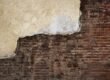
Carbon crusting is a primary threat to Manhattan building aesthetics and structural health, forming a hardened layer of pollutants that traps moisture and acids directly against the masonry surface.
The Impact of Diesel Exhaust and Urban Particulates
Heavy Manhattan traffic releases micro-particles that bond with porous masonry. Sulfur dioxide reacts with the calcium in stone to form destructive sulfate salts. While modern glass-and-steel towers deal with surface-level grime, historic brick buildings face a deeper challenge. The pollutants penetrate the substrate, making commercial facade cleaning Manhattan projects a necessity for preserving the structural envelope. Utilizing Professional Cleaning Methods ensures these contaminants are removed before they cause permanent damage to the building’s face.
Biological Growth: When Manhattan Grime Becomes Organic
In the narrow, shaded canyons of Manhattan, facades often host more than just soot. Algae, lichen, and moss thrive in damp, dark sections of a building. These organisms are dangerous because their root systems can physically penetrate mortar joints. This biological intrusion often necessitates extensive brick pointing to restore the building’s weather-tight seal. Bio-films also create a persistent moisture barrier that prevents the masonry from breathing, leading to internal decay of the structural wall. Regular cleaning removes these organic threats before they can take root and cause expensive structural failures.
Professional Cleaning Methods: Soft Washing vs. High-Pressure Systems
Selecting the right technique for commercial facade cleaning Manhattan projects requires a deep understanding of masonry science. Property managers often mistakenly believe that higher pressure equals a better clean. In reality, applying 4,000 PSI to a 100-year-old brick facade can strip away the protective “fire-skin” of the masonry. Once this hard outer layer is compromised, the softer interior of the brick becomes a sponge for moisture, leading to rapid decay and expensive restoration needs.
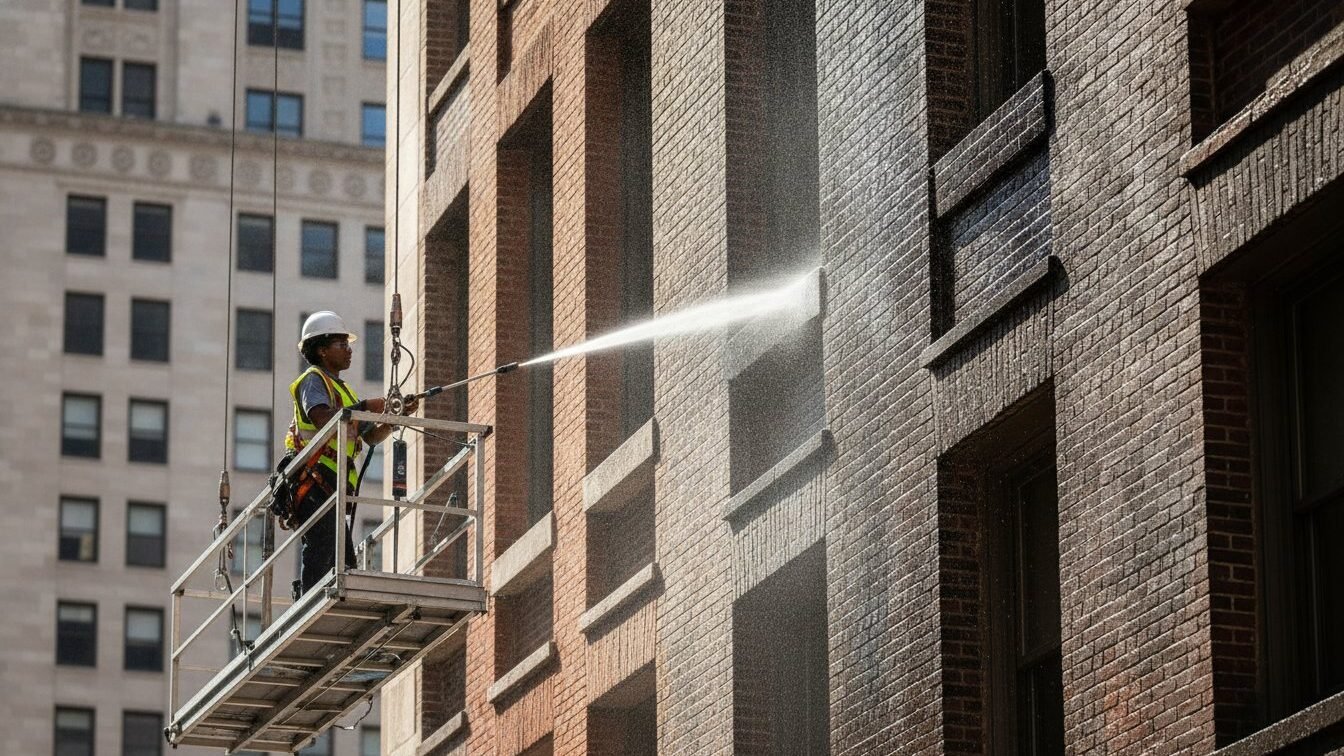
We prioritize material-specific detergents and eco-friendly surfactants that break the bond between urban grime and the building substrate. This chemical approach allows for effective cleaning at much lower pressures. For Manhattan high-rises, the logistics are equally critical. Our teams utilize specialized equipment, ranging from high-reach boom lifts for mid-size buildings to rope access systems for skyscrapers, ensuring every square inch is reached without compromising safety or sidewalk access. This methodical approach is essential for maintaining Local Law 11 Compliance and preventing “Unsafe” designations during FISP cycles.
The Science of Soft Washing for Sensitive Facades
Soft washing utilizes low-pressure delivery systems, typically under 100 PSI, to apply specialized cleaning solutions. These surfactants dwell on the surface to emulsify diesel soot and biological growth. This method is the industry standard for delicate terra-cotta, limestone, and historic brickwork where mechanical force would cause spalling. Beyond the masonry, soft washing protects sensitive building components like window gaskets and silicone seals, which high-pressure streams can easily dislodge or tear.
When to Utilize Commercial Power Washing
While soft washing is preferred for historic stone, standard power washing has its place on durable Manhattan surfaces. We use it primarily for non-porous granite bases, concrete parking structures, and sidewalk areas where stubborn efflorescence or deep-seated carbon deposits require more mechanical energy. For NYC common brick types, we strictly maintain PSI thresholds between 400 and 600 to ensure the surface remains intact while removing pollutants. If you’re unsure which method your building requires, a professional facade restoration assessment can identify the safest path forward.
The Link Between Facade Cleaning and Local Law 11 Compliance
Manhattan’s Department of Buildings (DOB) doesn’t just look for structural stability; they look for visibility. During a Facade Inspection Safety Program (FISP) cycle, a dirty building is a serious liability. Thick layers of carbon and soot can easily hide hairline fractures, rusted lintels, or failing mortar joints. If a Qualified Exterior Wall Inspector (QEWI) can’t see the substrate, they can’t accurately sign off on its safety. This often leads to a “SWARMP” or even an “Unsafe” designation simply because the inspector must assume the worst when evidence is obscured by grime.
Investing in commercial facade cleaning Manhattan services before your official filing is a strategic financial move. It allows for highly accurate facade restoration NYC assessments. When the surface is clear, you can address minor repairs immediately. This prevents them from escalating into the $1,000 monthly penalties for uncorrected unsafe conditions or the mandatory sidewalk shed requirements that come with an “Unsafe” rating. A clean building ensures that the true condition of the masonry is transparent, allowing for a smoother and more predictable inspection process.
Preparing for the Next FISP Inspection Cycle
2026 stands as a pivotal year for Manhattan property managers. With new regulations like Local Law 51 imposing stricter penalties for delayed repairs, your preparation window is closing. A QEWI relies on a clean facade to perform a thorough close-up inspection from a scout or boom. In one instance, a routine cleaning for a client revealed a significant lean in a parapet wall that was completely hidden by decades of urban grime. By identifying this early, the owner avoided a major DOB violation and the immediate installation of a costly sidewalk shed, which can cost up to $100 per linear foot just for the initial setup.
Cleaning as a Preventive Maintenance Strategy

Planning Your Manhattan Facade Project: Permits and Logistics
Executing a successful commercial facade cleaning Manhattan project involves far more than just choosing a cleaning method. In the dense urban environment of NYC, the street-level logistics are often as complex as the masonry work itself. You must secure specific Department of Buildings (DOB) permits for scaffolding, aerial lifts, and even water runoff. City regulations are strict regarding environmental compliance; you can’t simply let chemical-laden water flow into the sewer system without proper containment or filtration. The complexity of these projects demands precise coordination between the restoration contractor and Manhattan property management to sync window closures, street permits, and building access points.
Safety Standards and Pedestrian Protection
In high-traffic neighborhoods like Midtown or the Financial District, pedestrian protection is the top priority. We implement temporary sidewalk sheds and safety netting to protect the public from falling debris or overspray. Under Local Law 48, effective January 12, 2026, new sidewalk shed permits are limited to a 90-day duration, making efficient project management more critical than ever. Our teams strictly adhere to OSHA standards for rope access and aerial lift operations, ensuring that every technician is properly harnessed and that street-level risks are mitigated through clear signage and physical barriers.
Scheduling and Minimal Tenant Disruption
Commercial office towers usually require off-peak or weekend scheduling to minimize the impact on business operations. We prioritize early morning or weekend shifts when foot traffic is lowest and tenants are less likely to be disturbed by noise or window access requirements. Maintaining high tenant satisfaction depends on clear communication regarding project timelines and expected disruptions. A major benefit of our integrated service model is the ability to handle NYC sidewalk repair concurrently with your facade project. Since a sidewalk shed is already required for overhead work, we can remove sidewalk violations at the same time, eliminating the need for a second mobilization and reducing overall project costs.
If you’re planning for the upcoming FISP cycle, contact us for a professional facade consultation to ensure your logistical plan is as solid as your masonry.
Why Brick Tech is Manhattan’s Trusted Facade Partner
Brick Tech Contracting Corp has served as a cornerstone of the NYC restoration industry since 1980. When you hire us for commercial facade cleaning Manhattan, you aren’t just hiring a crew with a power washer; you’re partnering with seasoned masonry experts who understand the structural bones of your building. We know that urban grime often masks deeper issues like failing mortar joints or rusted structural steel. Our family-owned approach prioritizes the long-term stability of your investment over quick, superficial fixes. We provide a critical bridge between routine maintenance and complex Local Law 11 repairs, ensuring your asset remains protected through the 2026 FISP cycle and beyond.
A Holistic Approach to Exterior Care
Cleaning is the essential first step in any comprehensive maintenance plan. It’s the only way to accurately evaluate a facade restoration cost NYC for your upcoming budget. Our commercial facade cleaning Manhattan teams understand the chemical interplay between pollutants and historic substrates, from porous brownstone to dense commercial brickwork. This expertise allows us to prepare surfaces perfectly for subsequent waterproofing or Thorocoat applications. Without this professional level of cleaning, protective coatings often fail to bond, leading to premature leaks and stone decay. Manhattan owners trust us because we can identify and remove sidewalk violations while simultaneously restoring the building’s aesthetic and structural integrity.
Requesting Your 2026 Facade Assessment
A professional site visit from Brick Tech is a comprehensive diagnostic event rather than a simple sales call. We provide detailed masonry reporting and transparent estimates that reflect the true condition of your property. We don’t believe in hidden fees or superficial assessments that lead to change orders later. Instead, we offer a partnership rooted in transparency and technical excellence. As you prepare for the 2026 deadlines, having a reliable expert in your corner can mean the difference between a “Safe” filing and a costly “Unsafe” rating. We take pride in our localized Manhattan expertise and our commitment to excellence on every project, regardless of the building’s size or age. Contact Brick Tech for a comprehensive Manhattan facade cleaning quote and take the first step toward securing your building’s future.
Securing Your Manhattan Asset for the 2026 FISP Cycle
Protecting a high-value property in NYC requires a shift from reactive repairs to proactive preservation. Professional commercial facade cleaning Manhattan is the first line of defense against the corrosive effects of urban pollutants and the strict oversight of the Department of Buildings. By utilizing material-specific cleaning methods, you don’t just improve your building’s curb appeal; you ensure that critical structural defects are visible before they escalate into costly violations or “Unsafe” designations.
Managing the logistics of a facade project in 2026 demands an expert partner who understands both the masonry and the mandate. Brick Tech Contracting is a family-owned business since 1980, and we stand as NYC licensed and insured masonry experts. We are specialists in Local Law 11 compliance, dedicated to helping property managers navigate complex FISP requirements with transparency and precision. Don’t wait for a late-filing penalty or a mandatory sidewalk shed to take action. It’s time to invest in the longevity and safety of your building envelope.
Get a Professional Facade Cleaning Quote from Brick Tech Contracting and ensure your property remains a safe, compliant, and pristine asset for decades to come.
Frequently Asked Questions
How often should a commercial building facade in Manhattan be cleaned?
It can if the pressure is too high or the technician is inexperienced. Historic Manhattan brick and brownstone have a protective outer layer that high-pressure water can strip away. We utilize soft washing or low-pressure chemical cleaning to safely lift grime without compromising the substrate. Keeping pressure between 400 and 600 PSI is typically safe for most NYC common brick types while still providing a deep clean.
Do I need a permit for commercial facade cleaning in NYC?
You don’t usually need a specific “cleaning permit,” but the project logistics require several others. If you use a sidewalk shed or scaffolding, you must have a DOB permit for those structures. You also need to comply with DEP regulations regarding water runoff and wastewater filtration. Coordination with the Department of Transportation is often necessary if equipment like boom lifts occupies the street or sidewalk during the work.
Can facade cleaning help my building pass a Local Law 11 inspection?
Yes, because it allows the inspector to see the actual condition of the masonry. A dirty facade can hide cracks, spalling, or failing mortar, leading a QEWI to designate a building as “Unsafe” out of caution. Professional commercial facade cleaning Manhattan services reveal these issues early. This gives you time to perform minor repairs before the official filing, avoiding the $1,000 monthly penalties for uncorrected unsafe conditions.
What is the difference between soft washing and pressure washing for buildings?
Soft washing relies on specialized chemical detergents and low pressure, typically under 100 PSI, to break down contaminants. It’s ideal for delicate materials like limestone and terra-cotta. Pressure washing uses mechanical force to blast away dirt. While effective for concrete sidewalks and granite bases, high-pressure systems are often too aggressive for the historic brickwork found throughout Manhattan’s commercial districts, as they can cause permanent surface erosion and mortar damage.
How does Manhattan diesel soot affect the lifespan of my building’s exterior?
Diesel soot contains acidic compounds that chemically react with masonry materials. When soot bonds with moisture, it creates sulfuric acid, which eats away at limestone and weakens mortar joints. This process leads to carbon crusting, which traps moisture against the building envelope. Performing commercial facade cleaning Manhattan projects regularly prevents this acidic buildup. Over time, this avoids the spalling and structural instability that necessitates expensive restoration work and compromises your waterproofing.
Can you clean my building windows at the same time as the masonry facade?
Yes, and it’s often the most efficient way to manage exterior maintenance. Since we already have the access equipment like rope systems or boom lifts in place, performing window cleaning alongside masonry washing saves on mobilization costs. This integrated approach ensures the entire building envelope is refreshed simultaneously. It also prevents masonry cleaning runoff from streaking newly cleaned windows, resulting in a superior final finish for your property.
What safety measures are required for facade cleaning in high-traffic Manhattan areas?
Safety is paramount in dense urban environments. We utilize sidewalk sheds, safety netting, and clear street-level signage to protect pedestrians from falling debris or overspray. Technicians follow strict OSHA guidelines for fall protection and rope access. Additionally, we implement water containment systems to manage runoff, ensuring compliance with environmental laws while preventing slippery conditions on active Manhattan sidewalks. This methodical approach protects both the public and your building’s reputation.