A leaning or cracked chimney isn’t just a cosmetic flaw; it’s a structural liability that can threaten your building’s safety and lead to expensive fines from the NYC Department of Buildings. For many property owners, the sight of crumbling mortar or water stains on interior walls brings a justified fear of chimney collapse or deep structural damage. When you need professional chimney repair NYC, understanding the difference between a minor fix and a full masonry restoration is the first step toward peace of mind.
It’s natural to feel overwhelmed by the technical demands of NYC building codes and the city’s aggressive freeze-thaw cycles that punish older brickwork. You want a home that’s safe, compliant, and visually restored without the stress of hidden costs. This guide provides a clear path to achieving those goals by teaching you how to spot damage early and maintain your chimney’s structural integrity. We’ll explore essential repair techniques, local compliance standards, and the long-term benefits of expert masonry care to ensure your building remains protected for years to come.
Key Takeaways
- Learn why NYC’s freeze-thaw cycles lead to chimney spalling and how to identify early signs of moisture damage before they become structural failures.
- Discover how professional chimney repair NYC services, such as brick pointing and crown restoration, seal masonry against the elements to extend its lifespan.
- Understand the “percentage of failure” metric used to determine whether your chimney needs targeted mortar repairs or a full structural rebuild.
- Stay compliant with NYC Department of Buildings regulations to avoid costly fines and prevent falling debris from triggering hazardous sidewalk violations.
- Find out why partnering with a masonry specialist with over 40 years of local experience is essential for protecting your property’s long-term value.
Understanding NYC Chimney Deterioration: Why Local Masonry Fails
Your building’s chimney is a critical masonry ventilation structure that faces the most extreme weather conditions of any exterior component. Because it sits high above the roofline, it lacks the protection of neighboring buildings and is constantly battered by wind, rain, and snow. In New York, these environmental factors create a perfect storm for masonry decay, often necessitating professional chimney repair NYC services to prevent total structural failure.
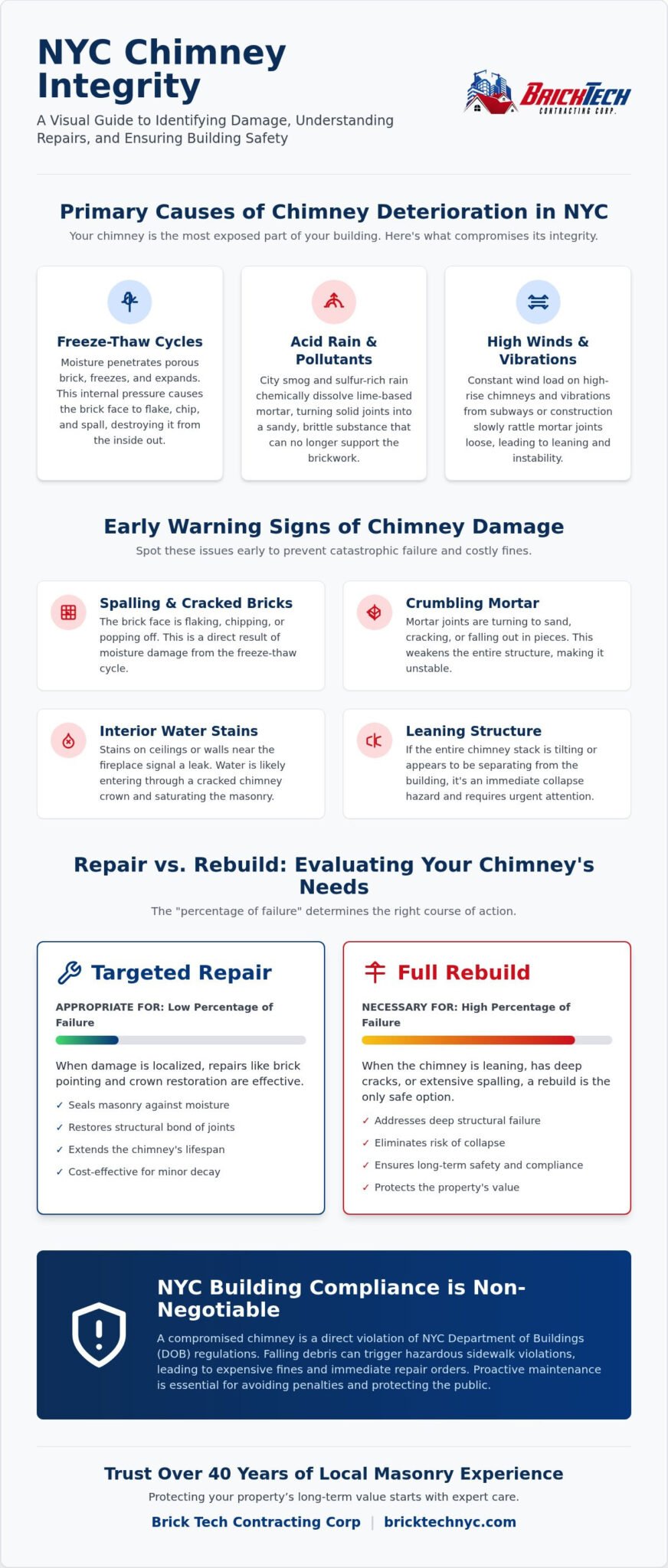
One of the most common signs of distress is chimney spalling. This occurs when the surface of the brick begins to flake, chip, or break away entirely. Spalling is usually the result of the NYC freeze-thaw cycle. During our winters, moisture seeps into the porous brick and mortar joints. When temperatures drop, that water freezes and expands, exerting internal pressure that literally shreds the masonry from the inside out. Over hundreds of cycles, what started as a hairline crack becomes a significant structural void.
Urban pollutants and acidic rain further complicate this process. Many historic NYC buildings use lime-based mortar, which is particularly susceptible to the corrosive effects of city smog and sulfur-rich precipitation. These chemicals dissolve the bonding agents in the mortar, turning once-solid joints into a sandy, brittle substance that can no longer support the weight of the bricks above. This chemical breakdown accelerates the loss of structural integrity, especially in older neighborhoods like Brooklyn Heights or the Upper West Side.
The Role of Moisture Infiltration
Water is the primary enemy of any masonry structure. It often enters through the chimney crown, the concrete slab at the very top. If the crown develops even microscopic cracks, it allows water to saturate the entire chimney column. This saturation doesn’t stay outside; it often travels downward, causing unsightly water stains on interior ceilings and walls. Investing in professional waterproofing services is a proactive way to seal these entry points and preserve your chimney’s longevity.
Structural Stress in High-Rise Environments
New York’s vertical landscape introduces unique physical stresses. High-rise chimneys face intense wind loads that create constant lateral pressure. Additionally, the city is never truly still. Vibrations from nearby subway lines or heavy construction projects on your block can slowly rattle mortar joints loose. If you notice your chimney is leaning or showing deep vertical cracks, it has become an immediate safety priority. Addressing these issues early with expert chimney repair NYC prevents the risk of falling debris and ensures your building remains compliant with local safety standards.
Essential Chimney Repair Services: From Brick Pointing to Crown Restoration
Maintaining a safe chimney requires more than a quick visual check; it demands a suite of specialized masonry services designed to combat New York’s harsh environment. While the exterior brickwork provides the structural shell, the entire system relies on the integrity of the mortar, the crown, and the flue. When these components fail, professional chimney repair NYC becomes necessary to prevent water from compromising the building’s interior. These services work together to create a watertight seal from the roofline to the flue opening.
Professional Brick Pointing for Chimneys
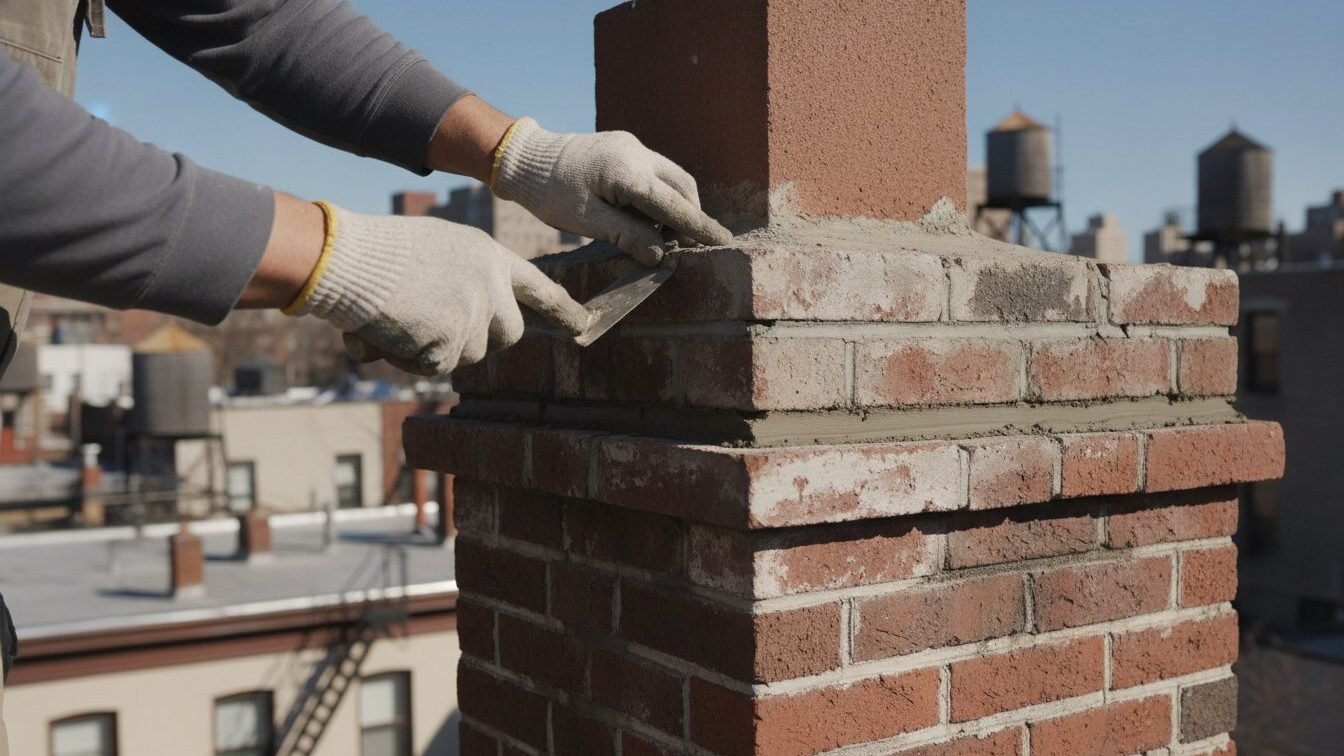
The most frequent requirement for local chimneys is repointing. This process involves carefully removing damaged mortar and replacing it with fresh material to restore the structural bond. Achieving high-quality brick pointing NYC on elevated chimneys requires extreme precision. Because chimneys are exposed on all four sides, the mortar must be perfectly packed to withstand high winds. For historic brownstones, we prioritize matching the original mortar color and composition. Using the wrong type of hard Portland cement on soft, historic bricks can cause the bricks to crack. Professional masonry ensures the new mortar breathes at the same rate as the surrounding masonry, preventing future spalling.
Chimney Crown and Cap Maintenance
Property owners often confuse the chimney crown with the chimney cap, but they serve different roles. The crown is a masonry slab, usually made of concrete, that covers the top of the chimney. Vertical cracks or moss growth on the crown are clear indicators that water is soaking into the structure. We resurface or rebuild these crowns with a slight slope to shed water away from the flue.
The chimney cap is a metal guard installed over the flue opening. It acts as a shield against rain, debris, and nesting pests. In the NYC salt-air environment, especially near coastal areas of Brooklyn and Queens, selecting a corrosion-resistant material like stainless steel or copper is vital for longevity. Beyond the exterior, we also inspect the flue liner to ensure toxic gases are safely exhausted. Adhering to NYC chimney regulations regarding flue health is not just about compliance; it’s a fundamental fire safety requirement for any occupied building.
If you’ve noticed crumbling mortar or interior water stains, it’s a good idea to have a seasoned specialist at Brick Tech Contracting Corp evaluate the condition of your masonry before minor cracks turn into a costly rebuild.
Repair vs. Rebuild: Evaluating Your NYC Chimney’s Structural Integrity
Deciding between a targeted fix and a total reconstruction is a technical evaluation based on the “percentage of failure” within your masonry. If more than 25% of the mortar joints are crumbling, simple patching becomes a temporary band-aid. For property owners seeking chimney repair NYC, we look at the depth of the damage. When mortar has eroded more than half an inch deep, the structural bond is compromised. At this stage, a partial rebuild is often more cost-effective than constant patching that fails after a single winter cycle.
NYC logistics also play a significant role in your decision. The height of the building and the accessibility of the chimney impact repair budgets more than the materials themselves. Setting up scaffolding or using specialized rigging for a chimney on a tall building is a major operational expense. It’s often smarter to perform a comprehensive restoration while the equipment is in place rather than returning for minor repairs every two years. This long-term approach protects your investment and ensures the structure remains stable against high-altitude wind loads.
When Minor Repairs Are Sufficient
Superficial hairline cracks don’t always mean a catastrophe is coming. If the bricks remain solid and the mortar is mostly intact, we can often use high-quality masonry sealants or light repointing to stop moisture. Regular maintenance is the best way to avoid a total rebuild. We often use power washing services to clean the facade first. This reveals hidden cracks that were previously masked by soot or carbon buildup. Following safety benchmarks from the Chimney Safety Institute of America ensures these minor interventions meet the highest industry standards.
Signs a Full Chimney Rebuild is Necessary
Some signs indicate that the structure is beyond a simple fix. A leaning chimney or visible separation from the building’s facade is a structural emergency. This suggests the internal tie-ins or the foundation of the chimney have failed. If spalling has reached the core of the brickwork, the masonry can no longer bear its own weight. An internal flue collapse is another critical red flag. When the interior liner fails, it can push against the exterior brickwork, causing the whole structure to bulge. In these cases, a rebuild from the roofline up is the only way to ensure the safety of your building and the public below.
NYC Building Compliance and Safety: Inspections and Local Regulations
NYC building owners face some of the strictest exterior safety regulations in the world. The Department of Buildings (DOB) classifies chimneys as critical exterior structures, meaning their neglect can lead to severe legal and financial penalties. For buildings over six stories, chimneys are a focal point of the Facade Inspection & Safety Program (FISP), formerly known as Local Law 11. If an inspector identifies loose bricks or crumbling mortar, your building could be slapped with an “Unsafe” or “Safe with a Repair and Maintenance Program” (SWARMP) rating. These designations require immediate action and documented proof of resolution.
A failing chimney is a public safety hazard. If masonry debris falls to the street, it can trigger an immediate requirement for NYC sidewalk violation removal to clear the hazard and secure the area. Hiring a licensed and insured contractor for chimney repair NYC is non-negotiable. Only professionals with the right liability coverage and DOB registration can perform this work without exposing the property owner to massive legal risks and potential insurance denials.
The Inspection Process
A thorough assessment starts with more than just a glance from the roof hatch. While visual inspections are a baseline, complex structures often require drone-based photography or scaffold-based close-up views to see the full extent of the damage. A professional mason looks specifically for flashing failure at the roofline, voids in the mortar, and deep structural cracks that may not be visible from the ground. This documentation is essential not only for safety but also for insurance claims and building sales, providing a clear record of structural health.
Avoiding DOB Violations
To stay ahead of city inspectors, it’s vital to integrate chimney care into your broader parapet wall construction and maintenance plan. These two structures often share the same exposure to the elements and deteriorate at similar rates. When a violation is issued, the timeline for correction is usually tight, often requiring repairs within 30 to 90 days to avoid recurring fines. Proactive maintenance ensures you never have to deal with the stress of an emergency DOB mandate or the high cost of expedited structural repairs.
If you’re facing a FISP deadline or have received a notice regarding your exterior masonry, contact the experts at Brick Tech Contracting Corp to schedule a professional evaluation and ensure your building remains compliant.
Choosing a Professional NYC Chimney Mason: The Brick Tech Advantage
When you’re faced with the need for chimney repair NYC, the contractor you choose determines whether your masonry lasts for decades or fails after the next winter. Many property owners make the mistake of hiring a general handyman for these tasks; however, chimneys require a specialized understanding of structural loads and historic material compatibility. At Brick Tech Contracting Corp, we’ve been a family-owned fixture in the city’s masonry industry since 1980. This 40-year legacy gives us a deep understanding of New York’s unique architectural landscape, from historic Brooklyn brownstones to modern Manhattan high-rises.
Our commitment to excellence goes beyond simple aesthetics. We prioritize matching the specific mortar composition of your building to ensure the new work breathes and expands at the same rate as the original structure. This attention to detail prevents the cracking and spalling often caused by improper material choices. We don’t just view a chimney as an isolated vent; we see it as a critical component of your building’s exterior shell. Our expertise allows us to provide comprehensive care that connects your chimney’s health to your overall facade restoration and waterproofing needs.
Our Approach to Chimney Restoration
We begin every project with a meticulous site assessment to identify the root causes of masonry failure. We don’t just patch the visible cracks; we look for the source of moisture infiltration or structural shifting that caused the damage in the first place. By using high-quality materials specifically engineered for the city’s aggressive freeze-thaw cycles, we ensure your chimney remains weather-resistant for the long term. You’ll experience transparent communication and professional project management from the first day on-site until the final cleanup is complete. We believe in building lasting relationships with our clients through honesty and hard work.
Protecting Your NYC Property Investment
Investing in professional masonry restoration is one of the most effective ways to increase your property’s value and curb appeal. A restored chimney serves as a sign of a well-maintained building, providing peace of mind to owners and potential buyers alike. More importantly, proactive maintenance prevents the kind of emergency structural failures that lead to high-cost rebuilds and Department of Buildings violations. By securing your chimney now, you protect your interior walls from water damage and ensure your building remains a safe, compliant asset.
Ready to secure your chimney and protect your masonry? Contact Brick Tech Contracting Corp for a free estimate.
Secure Your Building’s Future with Expert Masonry Care
A safe chimney is the result of consistent maintenance and a deep understanding of New York’s specific environmental challenges. By identifying signs of spalling and addressing crumbling mortar early, you prevent the high costs of structural rebuilds and ensure your building remains compliant with DOB regulations. Protecting your masonry isn’t just about curb appeal; it’s a vital part of structural waterproofing and long-term property safety. When you choose professional chimney repair NYC, you’re investing in the longevity of your building’s exterior shell.
Brick Tech Contracting Corp has been family-owned and operated since 1980. We specialize in NYC DOB compliance and masonry restoration, providing expert brick pointing and waterproofing services that stand up to the city’s harshest weather. Our team is dedicated to preserving the architectural integrity of your building while ensuring total peace of mind for every property owner. Don’t wait for a minor crack to become a major structural violation.
Get Your Free NYC Chimney Repair Estimate Today and take the first step toward a safer, leak-free home. We look forward to partnering with you to protect your investment for years to come.
Frequently Asked Questions
How much does chimney repair cost in NYC?
Costs for chimney repair in New York City vary significantly based on the height of the structure, the extent of masonry damage, and accessibility requirements. Minor repairs like crown sealing or small repointing tasks are generally affordable, while structural rebuilds from the roofline up require a larger investment. Because every NYC building has unique architectural challenges, we recommend a professional site assessment to provide an accurate estimate tailored to your specific masonry needs.
How often should I have my NYC chimney inspected for masonry damage?
You should have your chimney inspected at least once a year to identify early signs of weather-related wear. NYC’s aggressive freeze-thaw cycles can cause rapid deterioration in mortar joints and brick surfaces. Annual checks allow you to catch hairline cracks before they lead to interior water damage or structural instability. If your building is over six stories, these inspections are often a mandatory part of your FISP compliance cycle to ensure public safety.
Can I repair my own chimney bricks or mortar?
DIY chimney repairs are generally discouraged in NYC due to the high stakes of structural safety and local building codes. Using the wrong mortar type can trap moisture and cause historic bricks to shatter, leading to more expensive damage. Additionally, working at heights on NYC rooftops requires specialized safety equipment and insurance coverage. A professional mason ensures that the repair matches the existing structure while meeting all Department of Buildings safety standards.
Does a cracked chimney crown always mean I need a rebuild?
A cracked crown doesn’t always necessitate a full rebuild, but it does require immediate attention to prevent structural saturation. If the cracks are superficial, we can often resurface the crown with a high-quality masonry sealant or a new concrete wash. However, if the cracks have allowed water to reach the internal flue or the core of the masonry, a partial rebuild might be the only way to ensure long-term stability and protection.
How long does a typical chimney repointing project take in NYC?
Most chimney repointing projects are completed within two to five days, depending on the chimney’s size and the complexity of the staging. If the chimney is on a tall building requiring specialized rigging or scaffolding, the setup time may add a day or two to the schedule. Our team works efficiently to minimize disruption to your property while ensuring every mortar joint is meticulously cleaned and repacked for maximum durability and weather resistance.
Will my chimney repair match the existing historic brickwork?
Yes, matching historic masonry is a core part of professional chimney repair NYC services. We take great care to source bricks that match the color, texture, and size of your original structure. We also custom-blend mortar to replicate the historic composition and hue, which is essential for preserving the aesthetic value of brownstones. This attention to detail ensures that the restoration is structurally sound and visually seamless with the rest of your facade.
What happens if I ignore a leaning chimney in New York City?
Ignoring a leaning chimney is a serious safety risk that can lead to a sudden collapse and potential injury to pedestrians. In NYC, a leaning structure is considered a structural emergency and will likely trigger an immediate DOB violation. Beyond the legal fines, a leaning chimney allows water to pour into your building’s framework, causing rot and mold. Addressing the lean early through professional restoration is far less expensive than dealing with a collapse.
Are chimney repairs covered by NYC property insurance?
Coverage typically depends on the cause of the damage and your specific policy terms. While standard maintenance and wear-and-tear are usually not covered, damage resulting from sudden events like a lightning strike or a severe storm might be eligible for a claim. We provide the detailed documentation and photo evidence required by insurance adjusters to help you navigate the process. Always check with your provider to understand your coverage for exterior masonry and structural repairs.