In New York City, the mortar between your bricks is often less expensive than the permits, scaffolding, and regulatory compliance required to install it. If you’ve recently looked at a crumbling facade and felt overwhelmed by the wide range of quotes from contractors, you aren’t alone. Most property owners find it difficult to determine fair brick pointing rates when every building presents its own set of structural and legal challenges. It’s stressful to balance the need for quality craftsmanship with the fear of being overcharged or falling out of compliance with the Department of Buildings.
This guide provides a realistic look at the factors driving costs in 2026, from the impact of historical district requirements to the strict timelines imposed by Local Law 51. You’ll discover what a professional quote should actually include and how to identify a mason who prioritizes your building’s long-term integrity. We’ll explore how building height and current safety mandates, such as upgraded sidewalk shed lighting, influence your total investment. By the end of this article, you’ll have the knowledge to plan your restoration project with precision and the confidence to hire an expert who understands the unique demands of the five boroughs.
Key Takeaways
- Learn why professional masonry restoration is a critical investment that prevents water infiltration and protects your property’s long-term structural integrity.
- Budget accurately by recognizing that average brick pointing rates in NYC typically range from $15 to $35 per square foot for standard residential projects.
- Identify the primary factors that drive your quote, including scaffolding accessibility, DOB permit requirements, and historic district mortar specifications.
- Discover how to vet masonry bids by looking for essential documentation such as valid NYC DOB registration and comprehensive insurance coverage.
- Understand the value of hiring an established expert who prioritizes durable, weather-resistant results over the risks of a “quick fix.”
Understanding Brick Pointing Rates: Why Price Isn’t Everything
Maintaining a brick facade in New York City is a specialized task that requires more than a bucket of mortar and a trowel. To understand What is brick repointing, you must view it as a surgical procedure for your building’s exterior. It involves the meticulous process of raking out failed, crumbling mortar joints to a specific depth and replacing them with fresh, weather-resistant material. While property owners often focus solely on competitive brick pointing rates, choosing a contractor based on the lowest bid can be a costly mistake. Cheap labor frequently results in shallow joints or improper mortar mixes. These shortcuts lead to water infiltration, interior mold, and eventually, severe structural damage that costs significantly more to repair than the initial savings were worth.
A professional masonry restoration project is an investment in your property’s longevity. Beyond the immediate benefit of stopping leaks, high-quality pointing preserves the structural integrity of the entire wall system. When mortar joints are sound, they distribute the weight of the building evenly and allow the masonry to breathe. This prevents the bricks themselves from cracking or spalling, which are far more expensive issues to fix. In the competitive NYC real estate market, a well-maintained facade also provides a substantial return on investment by upholding the building’s curb appeal and resale value.
The Difference Between Pointing and Tuckpointing
Many owners use these terms interchangeably, but they serve different purposes in the world of masonry. Structural repointing is the essential repair of damaged joints to restore the facade’s integrity. The process requires removing old mortar to a depth of at least half an inch to ensure the new material bonds correctly. In contrast, tuckpointing is a decorative technique that uses two different colors of mortar to create the illusion of perfectly thin joints. For the vast majority of NYC brownstones and apartment buildings, true repointing is the required standard to ensure the building remains watertight and compliant with local safety codes. Cosmetic fixes won’t stop the structural decay caused by our harsh local climate.
Why NYC Mortar Fails Faster
New York’s environment is uniquely hostile to masonry. The constant freeze-thaw cycles of our winters cause moisture trapped in small cracks to expand, effectively pushing the mortar out from within. Urban pollutants and salt air in coastal areas like Brooklyn or Queens further accelerate this chemical breakdown. If you notice sandy debris on your sidewalk or white powdery stains on your walls, you should consult a signs your NYC building needs brick repointing now checklist to assess the damage. Proactive maintenance prevents the type of facade failure that triggers expensive Department of Buildings violations. When comparing brick pointing rates, always prioritize a contractor who understands these local environmental stressors and uses the correct mortar strength for your specific building age.
Average Cost to Repoint Brick in New York City
Owners are often surprised to find that “spot pointing” small areas can carry a significantly higher per-square-foot cost. This is due to a standard mobilization fee that covers the contractor’s overhead, including transporting equipment, securing permits, and setting up safety zones. If you’re only repairing twenty square feet of masonry, that fixed cost is spread over a tiny area, driving up the rate. In many cases, it’s more cost-effective to address an entire facade at once rather than paying for multiple mobilization fees over several years.
Rates by Building Type: Brownstones vs. High-Rises
The type of building you own dictates the complexity of the labor. For a standard 3-story Brooklyn brownstone, a front facade repointing project typically ranges between $10,000 and $25,000. This price often includes the specialized labor required to work with historic materials. When dealing with landmarked properties, adhering to historic preservation standards is essential. These guidelines often require the use of specific lime-based mortars that are softer than modern Portland cement to prevent damage to aged bricks. Commercial warehouses or large apartment complexes may see lower rates per square foot due to the economy of scale, but the total project cost rises with the need for heavy scaffolding.
Chimney Repointing and Specialized Masonry Rates
Chimneys are the most exposed part of any building and often fail first. Repointing a standard residential chimney in NYC usually costs between $1,000 and $3,500. This premium reflects the high-risk nature of the work and the specialized equipment needed to reach these heights safely. To get the best value, many owners bundle this service with chimney crown repair or waterproofing. If you’re concerned about the state of your masonry, Brick Tech Contracting Corp offers expert assessments to help you prioritize the most critical repairs first.
Key Factors That Influence Your Brick Repointing Quote
While square footage provides a baseline, several variables unique to the five boroughs can shift brick pointing rates significantly. A professional quote isn’t just about the volume of mortar used; it’s about safety, compliance, and material science. If your building is taller than six stories, you’re likely dealing with the Facade Inspection and Safety Program (FISP), formerly known as Local Law 11. These regulations mandate periodic inspections and prompt repairs, which often require specialized insurance and higher safety standards that a standard residential mason might not provide. The complexity of the work increases alongside the height of the wall.
The physical state of your facade also plays a role in the final number. Simple mortar loss is straightforward to rake out and replace. However, if water has already penetrated the wall and caused bricks to flake or crumble, a condition known as spalling, you’ll need brick replacement alongside repointing. Addressing these issues early prevents the need for full facade reconstructions, which are far more invasive and expensive. A seasoned expert will evaluate the depth of the damage before providing a final estimate to ensure the repair is structural, not just cosmetic.
Scaffolding and Sidewalk Bridges
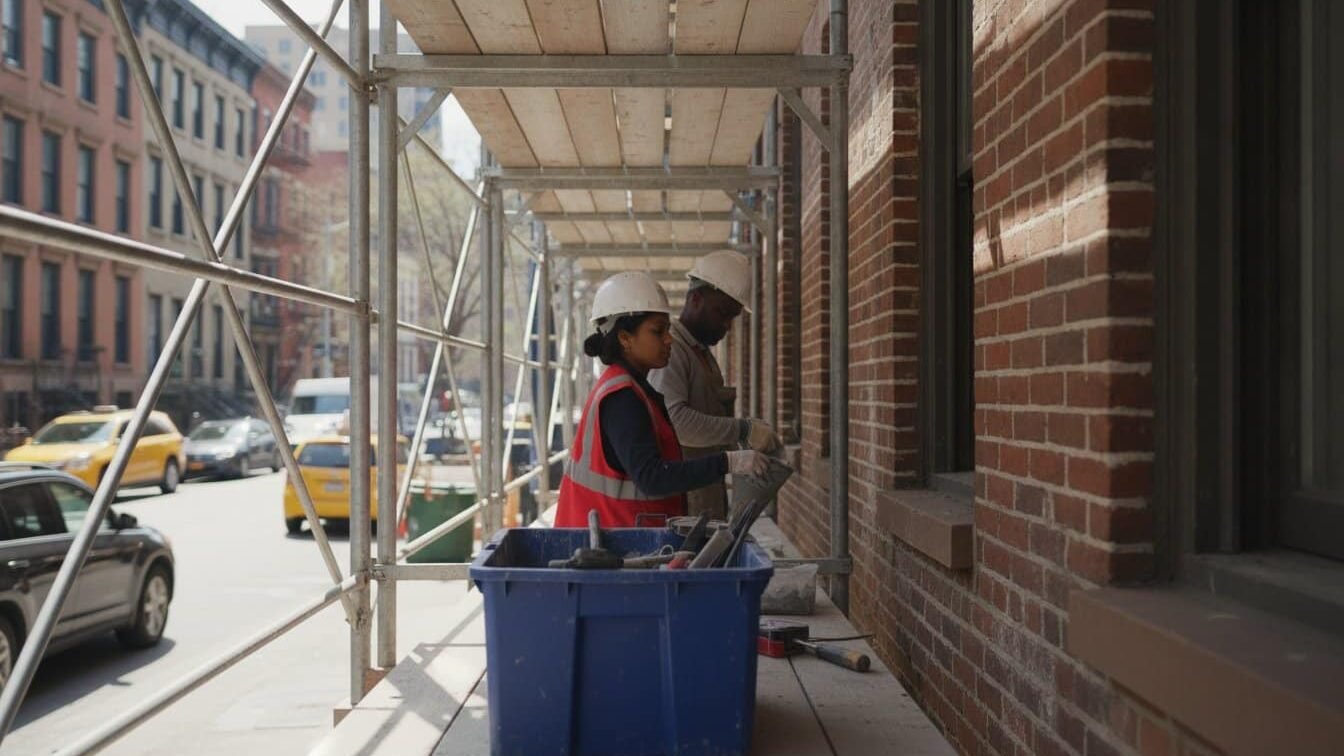
Accessibility is the single largest hidden cost in New York City masonry. The Department of Buildings (DOB) requires strict sidewalk protection to keep pedestrians safe from falling debris during any facade work. This means most projects require a sidewalk bridge or heavy-duty pipe scaffolding. For smaller buildings, pipe scaffolding is common, while high-rises may utilize hanging scaffolding, also known as suspended platforms. Scaffolding can often account for 20% to 30% of an NYC pointing project budget. These structures require their own permits and monthly rental fees, which is why grouping repairs into a single project is often more financially sound than performing piecemeal work over several years.
Historic Preservation and Material Matching
If your property sits within a Landmark Preservation Commission (LPC) district, your brick pointing rates will reflect the need for custom material matching. Historic NYC bricks are often softer than modern counterparts. Using standard Portland cement, which is extremely hard and rigid, can cause historic bricks to crack as the building settles or temperatures change. Instead, masons must use custom-mixed lime-based mortars that mimic the original chemical composition and color. For a deeper look at what goes into a professional restoration, consult our essential guide to brick pointing NYC. Using the correct materials ensures your building remains protected and compliant with historic preservation standards.

How to Evaluate a Masonry Quote: Red Flags and Green Lights
When you receive multiple estimates for your facade restoration, it’s tempting to look straight at the bottom line. However, highly competitive brick pointing rates can sometimes signal that a contractor is cutting corners on labor, material quality, or insurance. A low bid becomes the most expensive option if the work fails within three years or if an uninsured worker is injured on your property. Evaluating a quote requires looking past the price to the specific details of the proposed work and the professional credentials of the firm.
A professional quote serves as a roadmap for the project. It should clearly outline the depth of the mortar removal, the cleaning process, and the specific materials to be used. A reliable expert provides peace of mind by offering a clear warranty on their craftsmanship, ensuring that your investment is protected for decades. Before signing any contract, verify that the company holds a valid NYC Home Improvement Contractor license and is registered with the Department of Buildings. These aren’t just suggestions; they’re legal requirements for performing masonry work in the five boroughs. For a comprehensive overview of what separates qualified specialists from the rest, our guide to brick pointing contractors in New York City walks through the essential vetting steps every property owner should follow.
What Should Be Included in a Professional Quote?
A comprehensive estimate leaves no room for guesswork. It must include a plan for power washing the masonry both before the work begins and after the new joints have cured. This ensures proper adhesion and a clean finish. The quote should also specify the mortar type and the desired joint profile, such as concave or V-joints. Site protection is equally critical. Your contractor should list how they’ll protect windows, air conditioning units, and the sidewalk from dust and debris. Finally, debris removal should be explicitly included so you aren’t left with a mess once the scaffolding comes down.
Red Flags to Watch For
Be wary of any contractor who suggests “buttering” or “smearing” new mortar over old, crumbling joints. This is a purely cosmetic fix that will fail quickly because the new material cannot bond to the dust underneath. Another major red flag is the lack of a physical NYC office address. A contractor without a local presence may be impossible to reach if a leak develops after the first heavy storm. Finally, avoid anyone who demands a large cash deposit upfront without a signed, detailed contract. Legitimate firms operate with transparency and professional billing cycles. If you want a quote that reflects 45 years of local expertise, contact Brick Tech Contracting Corp for a professional estimate today.
Why NYC Owners Trust Brick Tech for Durable, High-Value Masonry
Since our founding in 1980, Brick Tech Contracting Corp has served as a cornerstone of the New York City masonry industry. With over 45 years of experience, we’ve seen every environmental challenge the five boroughs can throw at a building’s facade. Our team doesn’t believe in superficial fixes that only mask underlying structural issues. Instead, we focus on comprehensive facade restoration that prioritizes your property’s safety and longevity. This approach ensures that your building remains weather-resistant and structurally sound for the next generation of owners. We take pride in our reputation as the reliable expert that property owners can turn to when they need results that last.
We understand that navigating NYC’s regulatory environment is a major pain point for property owners. That’s why we specialize in NYC sidewalk violation removal and ensuring full compliance with local building codes. Whether you’re managing a historic brownstone or a large commercial facility, we handle the technical requirements and the administrative hurdles with equal precision. Our commitment to transparency means you’ll receive fair brick pointing rates that reflect the actual scope of work required to do the job right. You won’t find hidden fees or vague line items in our quotes; we provide clarity so you can budget with total confidence.
The Brick Tech Advantage: Family-Owned Reliability
We view every project as a partnership rather than a simple transaction. This relationship-oriented mindset means we’re invested in the long-term health of your investment. Our expertise extends beyond standard repointing to include parapet wall construction, waterproofing services, and chimney repair. We combine technical precision with a deep understanding of New York’s unique masonry challenges. By providing a wide range of exterior maintenance solutions, we help you address multiple issues during a single mobilization, saving you time and reducing the overall cost of ownership. Our crews are hardworking and dedicated to maintaining the meticulous standards that have defined our business for four decades.
Get a Professional Assessment Today
The first step toward a durable facade is an accurate evaluation of your building’s current condition. Our team is equipped to handle the complexities of NYC permitting, including the installation of required sidewalk bridges and scaffolding systems. We provide detailed, honest assessments that help you plan your budget with confidence. Don’t let a small crack turn into a major structural failure or a costly DOB violation. Request a Quote from Brick Tech Contracting Corp today and partner with a reliable expert who knows New York masonry inside and out.
Secure Your Building’s Future with Expert Masonry Care
Gaining a clear view of the variables that influence brick pointing rates is the essential first step toward a successful facade restoration. Factors such as scaffolding logistics, historic material matching, and Local Law 11 compliance often impact your final quote more significantly than the raw cost of materials. Choosing high-quality craftsmanship now prevents the accelerated decay and expensive structural repairs that inevitably follow a superficial fix. By prioritizing durability and thorough contractor vetting, you ensure your property remains a safe, valuable asset within the competitive New York City market.
Brick Tech Contracting Corp has served the five boroughs since 1980, providing the stability and expert guidance property owners need. We specialize in comprehensive facade restoration, Local Law 11 compliance, and NYC sidewalk violation removal. Our team manages the complexities of city permits and safety mandates so you can focus on your property’s future. When you’re ready to protect your investment with a partner who truly understands urban masonry, we’re standing by. Get a Professional Brick Pointing Estimate for Your NYC Property and gain the confidence that comes with a structurally sound building.
Frequently Asked Questions
How much does it cost to repoint a whole brick house in NYC?
The cost to repoint a full house in New York City typically depends on the total square footage and the number of exposed walls. For a standard two-story rowhouse with a single facade, property owners often see industry ranges between $5,000 and $12,000. Larger three-story brownstones or corner properties with side walls can reach $25,000 or more because of the increased surface area and scaffolding requirements. These brick pointing rates reflect the specialized labor needed to navigate the city’s unique logistical and regulatory challenges.
Is brick pointing the same as repointing?
While these terms are used interchangeably in casual conversation, they refer to different parts of the masonry process. Pointing is the act of placing mortar into the joints and finishing them, while repointing is the comprehensive repair process of raking out failed mortar before replacing it. In the context of NYC facade restoration, most property owners are actually looking for repointing services to address structural decay and water infiltration. Both steps are essential for ensuring a weather-resistant and durable finish.
How long does a professional brick pointing job take?
A standard residential facade project in the five boroughs usually takes between three and seven working days to complete. Larger apartment buildings or commercial properties often require several weeks, especially when the project includes complex sidewalk bridges or pipe scaffolding. The timeline also depends on the weather, as mortar requires specific temperature ranges to cure properly. A reliable expert will provide a clear schedule that accounts for these variables while prioritizing the safety of your investment.
Can I repoint my own brick wall to save on labor rates?
Attempting DIY masonry repair in NYC is generally discouraged because of the high risk of structural damage and safety hazards. Professional brick pointing rates cover the cost of specialized equipment, high-grade materials, and the insurance required to work at heights. Improper techniques can trap moisture inside your walls, which leads to brick spalling and expensive interior damage. Furthermore, most city projects require DOB-compliant sidewalk protection that only a licensed contractor can provide and manage.
Why are brick pointing rates higher for historic brownstones?
Historic brownstones carry higher rates because they require specialized lime-based mortars and adherence to Landmark Preservation Commission standards. Modern Portland cement is too hard for historic bricks and can cause them to crack or “spall” as the building settles. Masons must meticulously match the color and chemical composition of the original mortar to ensure structural compatibility and aesthetic accuracy. This level of technical precision and the delicate labor involved drive the increased investment required for these properties.
Does insurance cover the cost of brick pointing?
Standard property insurance policies typically don’t cover brick pointing because it’s classified as routine maintenance. Most insurers view crumbling mortar as the result of decades of natural wear and tear rather than a sudden, covered peril. However, if your facade was damaged by a specific event like a fire or a vehicle impact, you should review your policy details with your agent. Proactive maintenance is almost always less expensive than the emergency repairs required after a total facade failure.
What is the best time of year to get brick pointing done in New York?
Spring and fall are the ideal seasons for masonry restoration in New York City. Mortar cures most effectively when temperatures remain between 40 and 90 degrees Fahrenheit. If you attempt work in the freezing winter, the water in the mortar mix can expand and weaken the bond. Similarly, extreme summer heat can cause the material to dry too quickly, leading to cracks and reduced durability. Scheduling your project during moderate weather ensures the best long-term results for your building’s integrity.
Will brick pointing stop water from leaking into my basement?
Brick pointing is designed to stop water from entering through the vertical joints of your facade, but it won’t necessarily solve a basement leak. Most basement issues are caused by groundwater pressure or foundation cracks below the soil line. While pointing protects your upper walls from rain-driven infiltration, you likely need specialized waterproofing services to address leaks in the lower levels. It’s important to have a professional assess the source of the water to ensure you’re applying the correct solution.