Your building’s facade isn’t just covered in dirt; it’s buried under decades of carbon crust, acidic exhaust, and urban pollutants that slowly eat away at the masonry. Maintaining a property in the five boroughs requires more than a garden hose or a standard DIY rental. Many owners hesitate because they’ve seen high-pressure streams strip the face off historic brick or wash away fragile mortar. You’re right to be cautious. Professional power washing NYC is about more than aesthetics. It’s a technical restoration process that removes stubborn soot while respecting the structural integrity of your investment.
You shouldn’t have to choose between a clean building and a damaged one. This guide explains how the right balance of heat and pressure protects your facade from long-term decay. We’ll clarify the confusing web of NYC Department of Environmental Protection (DEP) wastewater rules and the Department of Sanitation’s cleanliness standards. You’ll discover how specialized cleaning acts as a diagnostic tool for your building’s health, ensuring you stay compliant with local laws while restoring the vibrant curb appeal your property deserves.
Key Takeaways
- Understand why the heated water used in professional power washing NYC is essential for dissolving the greasy urban soot that standard cold-water methods leave behind.
- Discover how a thorough exterior cleaning serves as a vital diagnostic tool, revealing hidden structural issues like crumbling mortar and hairline cracks before they become costly repairs.
- Learn how to navigate strict NYC Department of Environmental Protection (DEP) wastewater regulations to ensure your project remains compliant and avoids heavy municipal fines.
- Identify the technical differences between PSI and GPM to ensure your building’s facade is cleaned effectively without the risk of permanent masonry scarring or “wand marks.”
- Recognize the importance of hiring an insured, professional contractor who understands the unique environmental challenges and regulatory landscape of the five boroughs.
Understanding Power Washing in the NYC Environment
NYC buildings don’t just get dirty; they accumulate a complex layer of industrial residue that suburban structures rarely face. While many people use the terms interchangeably, there’s a critical technical difference between pressure washing and power washing. Pressure washing relies on cold water delivered at high force. In contrast, true power washing NYC utilizes a heating element to reach temperatures that break down the molecular bonds of oils, grease, and carbon-based pollutants. This heat factor is essential for the city’s unique environment, where millions of vehicles and commercial heating systems emit a constant stream of airborne contaminants.
Historic New York masonry is particularly susceptible to a phenomenon known as carbon crusting. This occurs when sulfur dioxide from vehicle exhaust reacts with the calcium carbonate found in limestone and mortar. Over time, this chemical reaction creates a hard, black shell that traps moisture against the building’s surface. If left untreated, this crust causes the underlying stone to crumble and spall. Power washing effectively dissolves these bonds, removing the “city film” that a standard cold-water wash would simply skip over.
The Science of NYC Grime: Soot, Exhaust, and Acid Rain
Urban pollutants consist of microscopic particles that embed themselves deep within porous brickwork. Diesel exhaust is particularly oily, creating a sticky surface that attracts more dust and debris. When acid rain hits these surfaces, it creates a corrosive environment that slowly eats away at the integrity of your facade. Simple “hose-down” methods fail because they don’t address the chemical nature of this grime. For many older buildings, we often recommend soft washing as a safer alternative to high-pressure streams. This method uses targeted cleaning agents to loosen soot and kill biological growth without risking the face of the brick.
Why Curb Appeal Matters for NYC Property Values
Technical Breakdown: Pressure vs. Power Washing
Understanding the mechanics behind professional equipment is the first step in ensuring your property’s safety. Most people focus on PSI (Pounds per Square Inch), which measures the force of the water hitting the surface. While PSI is important for stripping away tough debris, GPM (Gallons per Minute) is often the more critical metric for professional power washing NYC. GPM determines the volume of water used to rinse away loosened grime. High PSI without sufficient GPM can lead to “wand marks” or permanent etching on stone, as the operator is forced to hold the nozzle too close to the surface to achieve results.
The defining characteristic of power washing is the introduction of heat. Professional units utilize a burner system to raise water temperatures to approximately 200 degrees Fahrenheit. This thermal energy acts as a liquid scraper, melting away bonds that cold water simply cannot touch. To protect your masonry, we utilize a range of adjustable nozzles:
- 0-degree nozzles: High-force streams for cutting through industrial blockages.
- 15-to-25-degree nozzles: Standard fans for general surface cleaning.
- 40-degree nozzles: Gentle fans for rinsing sensitive or painted surfaces.
High-Heat Power Washing: When It Is Necessary
Pressure Washing for Delicate Facades
Not every surface in the city can handle high temperatures or extreme force. Historic 19th-century brick and soft limestone require a more nuanced approach to preserve their natural patina. Using excessive pressure can blast away the hard outer “fire skin” of a brick, exposing the soft, porous interior to rapid decay and water infiltration. In these cases, we rely on low-pressure cleaning combined with biodegradable detergents. This process focuses on chemical action rather than mechanical force. If you are concerned about the longevity of your historic exterior, choosing a contractor experienced in professional power washing services ensures your facade is restored without compromising its structural integrity.
Power Washing as a Diagnostic Tool for Masonry Health
While many owners view a clean facade as a luxury, we consider it a diagnostic requirement. In a city where buildings are subjected to constant vibration and extreme temperature swings, dirt acts as a mask for serious structural defects. Layers of black carbon crust often bridge over hairline cracks or hide sections of crumbling mortar that would otherwise be visible. By performing a professional power washing NYC service, you strip away this camouflage, allowing for a clear assessment of the building’s envelope. This transparency is vital for compliance with NYC’s Facade Inspection & Safety Program (FISP), formerly known as Local Law 11. An inspector cannot accurately certify the safety of a masonry joint they cannot see.
Trapped moisture is another silent threat. When urban soot creates an impermeable layer on your brick, it prevents the masonry from “breathing.” Water that enters through the roof or window seals becomes trapped behind this film. During a New York winter, this water freezes and expands, causing the face of the brick to pop off, a process known as spalling. Regular cleaning ensures that moisture can evaporate naturally, preventing the internal decay of the structural wall. It’s a proactive step that identifies problems while they are still manageable repairs rather than full-scale emergencies. Once these vulnerabilities are exposed, partnering with a qualified waterproofing contractor NYC property owners trust is the logical next step to seal those cracks before moisture causes irreversible structural damage.
Preparing for Brick Pointing and Restoration
You should never attempt to repair or repoint masonry that hasn’t been thoroughly cleaned. Applying new mortar to a dirty joint is a recipe for failure; the dust and oils prevent a proper bond, leading to premature cracking. When we prepare a building for brick pointing NYC, power washing is our first step. This reveals the original color of the historic mortar, which is essential for achieving a seamless match. It also highlights compromised bricks that need replacement before the pointing begins. A clean substrate ensures the longevity of the restoration work and protects your investment.
Preventing Efflorescence and Salt Damage
If you notice a white, powdery substance on your facade, you’re likely dealing with efflorescence. This occurs when water-soluble salts migrate to the surface of the brick as moisture evaporates. While it looks like a cosmetic issue, it indicates a moisture problem that can lead to structural “heaving” if salt deposits crystallize inside the masonry pores. Deep cleaning with power washing NYC equipment removes these salt crystals before they can cause permanent damage. Once the surface is decontaminated, applying a breathable waterproofing sealant provides a final layer of defense against the harsh urban climate. For comprehensive protection, consulting an experienced professional waterproofing contractor in NYC ensures the right membrane system is selected for your building’s specific masonry type and exposure conditions.

NYC Regulations and Environmental Best Practices
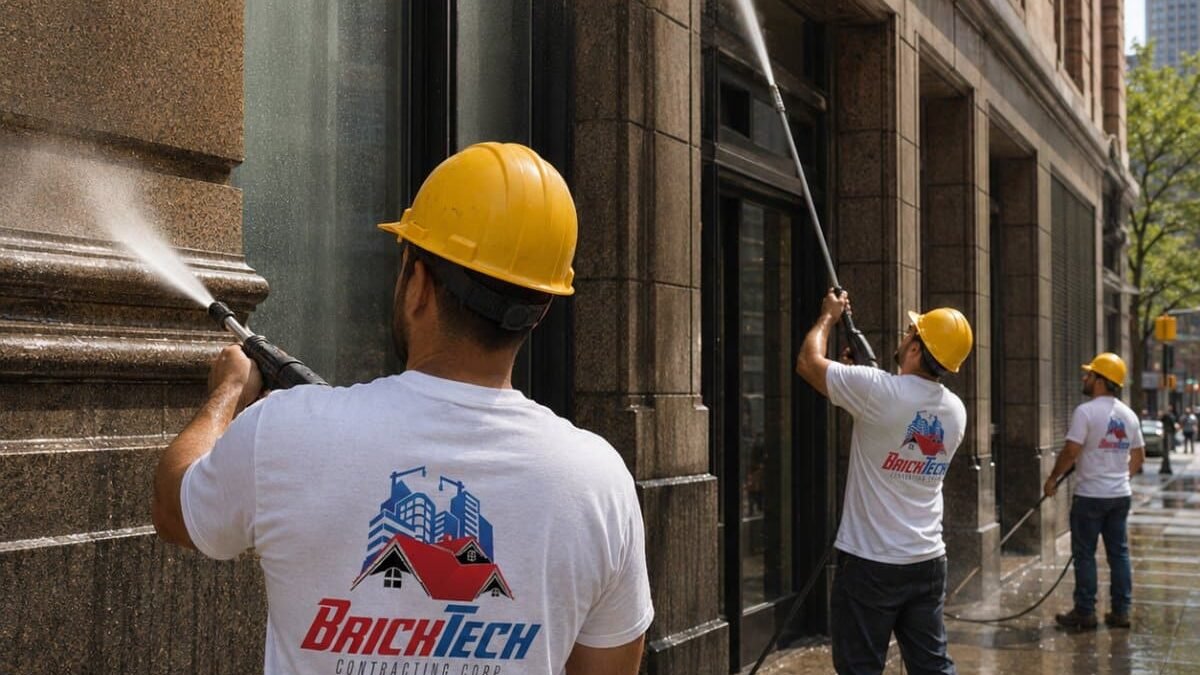
Operating a pressure washer in the five boroughs involves more than just connecting to a water line. The NYC Department of Environmental Protection (DEP) maintains strict oversight regarding wastewater discharge. You cannot simply allow runoff containing detergents, heavy oils, or urban pollutants to enter the city’s storm drains. These drains lead directly to local waterways, and the DEP enforces heavy fines for non-compliance. Professional power washing NYC contractors utilize filtration and containment systems to capture wash water, ensuring your project meets all environmental standards without exposing you to legal liability.
Safety extends beyond the environment to the people sharing the sidewalk. New York City’s dense population means that any exterior maintenance project must prioritize pedestrian protection. This includes using safety barriers, managing hoses to prevent trip hazards, and scheduling work during off-peak hours to minimize disruption. A failure to secure the work area can lead to costly insurance claims or stop-work orders from the Department of Buildings. We coordinate every project to ensure that neighboring properties and passersby remain safe from overspray and debris throughout the cleaning process.
Sidewalk Maintenance and Violation Prevention
The NYC Department of Sanitation (DSNY) requires property owners to maintain a “clean and clear” sidewalk at all times. Failure to remove grease, litter, or organic growth can result in fines that typically start between $100 and $350, with repeat offenses reaching up to $1,000. Beyond cleanliness, accumulated algae and moss in shaded alleyways create slippery conditions that increase your liability for slip-and-fall accidents. Regular maintenance is the most effective way to prevent these issues and is a critical component of NYC sidewalk violation removal. Keeping your concrete surfaces porous and clean prevents the moisture retention that leads to winter cracks and structural “heaving.” Property owners looking to upgrade their outdoor surfaces while maintaining compliance should also explore paver installation NYC professionals who understand local drainage requirements and sub-base engineering.
Eco-Friendly Cleaning in an Urban Setting
Protecting the city’s limited green spaces is a priority for every responsible contractor. Street trees and urban landscaping are highly sensitive to the chemicals often found in industrial cleaners. We utilize non-toxic, biodegradable detergents that break down safely without harming the local ecosystem. As we move through 2026, the industry is shifting toward low-water-use technology and reclamation systems that minimize the total environmental footprint of a deep clean. This approach ensures your building shines without compromising the health of your neighborhood. If you need to bring your property into compliance with local standards, contact our team for a professional consultation to discuss our eco-friendly maintenance solutions.
Why Professional NYC Contractors Beat DIY Solutions
Renting a pressure washer for a weekend might seem like a cost-effective shortcut, but for NYC property owners, it’s a high-stakes gamble. Amateur operators frequently leave behind “wand marks,” which are permanent, unsightly etchings caused by holding a high-pressure nozzle too close to the masonry. These scars cannot be washed away; they often require expensive resurfacing or brick replacement to fix. Professional power washing NYC services utilize industrial-grade equipment that offers far more than raw power. Our units allow for the precise calibration of water temperature and flow rates, ensuring we dissolve urban pollutants without ever compromising the delicate “fire skin” of your brickwork.
Managing a cleaning project in NYC’s vertical landscape requires more than just a long hose. Reaching the upper stories of a multi-family dwelling or a commercial storefront involves complex logistical planning. We account for wind speeds, constant pedestrian traffic, and the specific challenges of working in tight urban corridors. Our team brings the technical expertise required to operate safely at height, ensuring that every inch of your facade receives the same meticulous attention to detail while protecting the public below.
Avoiding Water Infiltration and Interior Damage
The Brick Tech Guarantee: Reliability Since 1980
Brick Tech Contracting Corp has served as a trusted partner for NYC property owners since 1980. As a family-owned business, we prioritize reliability and transparency in every partnership. We view exterior maintenance as a long-term relationship rather than a one-time transaction. Our approach is rooted in our deep understanding of the city’s unique environmental challenges and architectural history. From historic facade restoration to routine sidewalk maintenance, our team delivers the stability and peace of mind that only 40 years of local experience can provide. Contact us today to schedule a professional assessment and discover how we can protect your property’s longevity and value.
Protect Your Property’s Structural Integrity and Curb Appeal
Maintaining a building in the five boroughs requires a proactive approach to exterior care. As we’ve discussed, professional power washing NYC is far more than a cosmetic upgrade. It’s a vital diagnostic tool that reveals the true condition of your masonry and ensures you remain in compliance with strict DEP and DSNY regulations. By removing the corrosive carbon crust and urban soot that trap moisture, you extend the lifespan of your facade and prevent the need for more invasive structural repairs down the road.
Brick Tech Contracting Corp has been a family-owned and operated fixture in the New York construction landscape since 1980. We specialize in masonry restoration and the preservation of structural integrity, bringing decades of localized expertise to every project. Our team understands the unique environmental pressures of the city and treats your property as a long-term investment rather than just another job site. Restore your building’s beauty with Brick Tech’s expert power washing services. We look forward to helping you preserve your facade for the next generation of New Yorkers.
Frequently Asked Questions
Is power washing safe for my historic NYC brownstone?
Power washing is safe for historic brownstones only when performed by experts using low-pressure techniques. Historic stone is porous and fragile; excessive force can cause irreversible surface erosion. We use specialized nozzles and precise temperature controls to gently lift soot without disturbing the stone’s natural integrity. This process ensures your property’s historic character remains intact while removing corrosive pollutants that cause long-term decay.
How often should I have my building professionally power washed in New York?
Most properties in the five boroughs benefit from a professional cleaning every two to three years. Buildings located near major transit hubs or industrial zones might require more frequent attention to prevent heavy carbon crusting. Regular maintenance schedules help you avoid the deep-set stains that eventually necessitate more aggressive restoration. Consistent care is the most reliable way to preserve your facade’s long-term health and value.
What is the difference between pressure washing and power washing?
The primary distinction lies in the temperature of the water used during the process. Power washing utilizes heated water to liquefy industrial grease and oils, while pressure washing relies solely on cold-water force. For the unique soot found in an urban environment, the thermal energy of power washing NYC is often necessary to achieve a truly deep clean on porous masonry surfaces.
Do I need a permit for power washing my sidewalk in NYC?
You don’t typically need a specific permit for sidewalk cleaning, but you must strictly follow DEP wastewater containment rules. If your equipment or safety barriers significantly obstruct pedestrian traffic, a DOT sidewalk occupancy permit may be required. Professional contractors handle these compliance details to ensure the work proceeds without municipal interruptions or unexpected fines from the Department of Environmental Protection.
Can power washing remove graffiti from brick walls?
Professional cleaning is highly effective at removing graffiti when paired with the correct chemical agitants and heat. The heated water helps break down the bond between the paint and the masonry, allowing for extraction without leaving “ghost” images behind. It’s a much safer alternative to abrasive sandblasting, which can permanently thin the face of your brickwork and lead to moisture problems.
Will power washing damage my window seals or cause leaks?
Proper technique prevents damage to window seals and prevents internal leaks during the cleaning process. We use a methodical approach that avoids direct, high-pressure impact on joints, vents, and frames. By directing the water at specific angles and using lower pressure near sensitive architectural features, we ensure the building envelope remains watertight and secure throughout the entire maintenance service.
What time of year is best for power washing a property in NYC?
The best time for exterior maintenance is during the spring or fall when temperatures are moderate. Freezing winter conditions can lead to ice hazards and damage if water expands in masonry cracks. Conversely, extreme summer heat can cause cleaning solutions to evaporate too quickly, reducing their effectiveness. Scheduling during mild weather ensures the best results for your power washing NYC project.
How much does professional power washing cost for a typical NYC building?
The total investment for a professional cleaning depends on your building’s height, total square footage, and the specific type of masonry involved. Factors such as the degree of carbon buildup and the complexity of wastewater containment also influence the final quote. We provide detailed assessments that account for these variables, ensuring you receive a transparent maintenance plan tailored to your property’s specific needs.