That orange “Notice of Violation” on your property record is more than just a piece of paper. It’s a ticking clock that could lead to civil penalties of up to $5,000 under the latest 2026 regulations. We understand the stress that comes with a DOT notice, especially when you’re worried about property liens or the liability of a trip hazard. Navigating NYC sidewalk violation removal doesn’t have to be a bureaucratic nightmare. It’s a process that requires a balance of regulatory knowledge and high-quality craftsmanship.
You likely want this cleared from the public record as quickly and efficiently as possible. You’re right to be cautious about city-contracted repairs that often lack the durability your property deserves. This 2026 guide teaches you how to legally clear DOT violations, avoid insurance hikes, and ensure your new concrete lasts for decades. We’ll walk through the 75-day deadline, the 4000 PSI concrete requirements, and the steps to find a contractor who handles both the permits and the masonry work.
Key Takeaways
- Understand the critical 75-day timeframe to address DOT notices before the city initiates expensive, expedited repairs on your property.
- Identify the specific structural defects, such as vertical displacement and shattered flags, that trigger violations and increase your safety liability.
- Learn why hiring a private masonry firm offers superior quality control and better long-term value compared to standard city-contracted patch jobs.
- Discover the step-by-step process for successful NYC sidewalk violation removal, including how to secure the necessary DOT permits and borough-specific approvals.
- Explore how a masonry-first approach ensures your sidewalk repairs protect your building’s structural health and withstand the NYC environment for decades.
Understanding Your NYC DOT Sidewalk Violation Notice
Receiving a Department of Transportation (DOT) notice can be unsettling for any New York City property owner. This document is a formal notification that your sidewalk fails to meet the standards set by NYC Administrative Code Section 19-152. It is not a simple ticket; it is a legal directive. The city prioritizes these inspections to maintain public safety, a responsibility founded on the legal concept of premises liability. Under this doctrine, you are legally accountable for the condition of the walkway abutting your property. Failing to act can lead to civil penalties of up to $5,000 for certain property types under 2026 regulations, making prompt attention a financial necessity.
Decoding the DOT Notice of Violation
Your paperwork will identify specific “flags,” which are the individual concrete squares requiring attention. Inspectors use a “Category of Defects” list to specify the issue, such as collapsed slabs, hardware trip hazards, or improper slopes. It is vital to cross-reference your notice with the NYC DOT’s official portal to confirm the exact location and nature of the cited defects. This clarity allows for a more accurate NYC sidewalk violation removal strategy, ensuring you only repair what is legally required while maintaining the structural health of your property. Understanding these specific codes helps you communicate effectively with a masonry professional during the initial site assessment.
The Financial Risks of Ignoring the 75-Day Deadline
The 75-day window is the most critical timeframe in the process. Once this period expires, the city gains the right to hire its own contractors to perform the work. These city-contracted repairs are often significantly more expensive than hiring a private masonry firm. Beyond the immediate bill, the city’s work is typically a standard patch job that may not match the aesthetic or durability of your existing masonry.
An unresolved violation also stays on your property record as a lien if the city’s bill remains unpaid. This creates a “clouded title,” which can halt a home sale or prevent you from refinancing your mortgage. Insurance providers also monitor these public records. An open violation for a trip hazard often triggers premium increases or even policy cancellations because it represents a known safety risk. Managing your own NYC sidewalk violation removal within the deadline ensures you control the masonry quality, the materials used, and the final cost of the project.
Common Causes for NYC Sidewalk Violations in 2026
Understanding why the DOT flagged your property is the first step toward successful NYC sidewalk violation removal. In 2026, inspectors are particularly focused on vertical displacement. This occurs when one sidewalk flag sits higher or lower than its neighbor, creating a distinct trip hazard. Another frequent issue is improper slope. If your sidewalk doesn’t drain correctly, it leads to ice patches during New York winters, significantly increasing your liability risk. Sometimes, the problem involves hardware like manhole covers or water valves. While these are utility-owned, the property owner is often the one who must initiate the repair process to clear the record.
Trip Hazards and Structural Integrity
The DOT follows a strict 1/2 inch rule. If the height difference between two flags exceeds this threshold, it’s an automatic violation. Beyond surface-level issues, we often find undermined conditions. This happens when the sub-base erodes, leaving a hollow space beneath the concrete that eventually leads to a collapse. We also look for spalling, which is the crumbling or flaking of the concrete surface. This is usually a sign of age or the use of sub-par materials in the past. High-quality masonry requires a 4000 PSI mix to resist this type of deterioration; anything less won’t withstand the heavy foot traffic and freeze-thaw cycles common in the city. For a deeper understanding of how the city classifies these defects and what the permit process entails, our DOT sidewalk violation NYC guide for 2026 covers the specific standards inspectors use to flag your property.
Tree Roots and Historic District Challenges
Borough-specific challenges often complicate the NYC sidewalk violation removal process. In Brooklyn and Queens, mature city trees frequently lift sidewalk flags with their roots. You can’t simply cut these roots; you must coordinate with the NYC Parks Department to avoid heavy fines. Similarly, if your property is in a Manhattan historic district, you face Landmark Preservation Commission (LPC) regulations regarding concrete color and texture. It’s essential to work with a NYC sidewalk repair contractor who knows these specific neighborhood requirements.
You can check the official NYC sidewalk violation process for more details on appeals and hardware issues. Navigating these overlapping city agencies requires a partner who understands the technical and bureaucratic hurdles. If you’re concerned about the specific defects listed on your notice, Brick Tech Contracting Corp can provide a professional site assessment to ensure your masonry repairs meet every city standard for long-term compliance.
Private Contractor vs. City Repair: Evaluating Your Options
When that DOT notice arrives, you face a critical decision: hire a professional masonry firm or wait for the city to handle the work. Many property owners assume the city’s “expedited repair” program is a convenient safety net. In reality, taking control of your own NYC sidewalk violation removal is almost always the more strategic financial choice. Private contractors provide competitive bids and personalized service, whereas city-managed repairs often come with fixed rates that don’t account for the specific nuances of your property’s exterior.
The Hidden Costs of City-Mandated Repairs
Choosing to let the city perform the repairs often leads to “sticker shock” when the final bill arrives. The city’s invoice typically includes administrative overhead and processing fees that aren’t immediately apparent. If the bill isn’t settled promptly, interest can accrue, leading to a lien on your property title. Beyond the cost, you lose control over the timeline. City crews work on their own schedule, which might result in significant disruption to your home or business at an inconvenient time.
Quality is another major concern with city-contracted work. These repairs are designed for basic safety compliance rather than long-term durability or aesthetic harmony. You’ll often see mismatched concrete patches that stand out against your original sidewalk, which can negatively impact your curb appeal. Once the city completes the work, your right to dispute the quality or the final cost is severely limited. Hiring your own expert allows you to demand a high standard of craftsmanship from the start.
Benefits of Hiring a Licensed NYC Masonry Expert
A licensed contractor ensures your sidewalk meets the rigorous 2026 DOT specifications, including the required 4000 PSI concrete strength. This level of durability is essential for surviving New York’s freeze-thaw cycles. We provide a professional “broom finish” that offers superior slip resistance, protecting you from future liability claims. Working with a dedicated masonry firm also allows for comprehensive maintenance. You can easily coordinate your sidewalk project with other essential services like brick pointing NYC to ensure your building’s entire envelope is resilient and weather-resistant.
The most significant advantage of private hire is the “Dismissal” support. We handle the bureaucratic burden, from securing the initial DOT permits to ensuring the final work is inspected and cleared from the public record. This proactive approach prevents the lingering administrative errors that often happen with city-managed projects. You get the peace of mind that comes with a clean property title and a sidewalk built to last for decades.

The Step-by-Step NYC Sidewalk Violation Removal Process
Successfully clearing a property record involves more than just pouring new concrete. It’s a bureaucratic procedure that requires precise timing and specific documentation. Many property owners make the mistake of completing the physical repair but failing to notify the city, which leaves the violation active indefinitely. A methodical approach ensures the NYC sidewalk violation removal is recognized by the DOT and your property title remains clear.
- Step 1: Consultation and Site Assessment. We perform a formal walk-through to map out every flagged square and identify underlying issues like drainage or sub-base erosion.
- Step 2: Permit Acquisition. We secure the necessary DOT permits and, if applicable, DOB approvals tailored to your specific borough’s requirements.
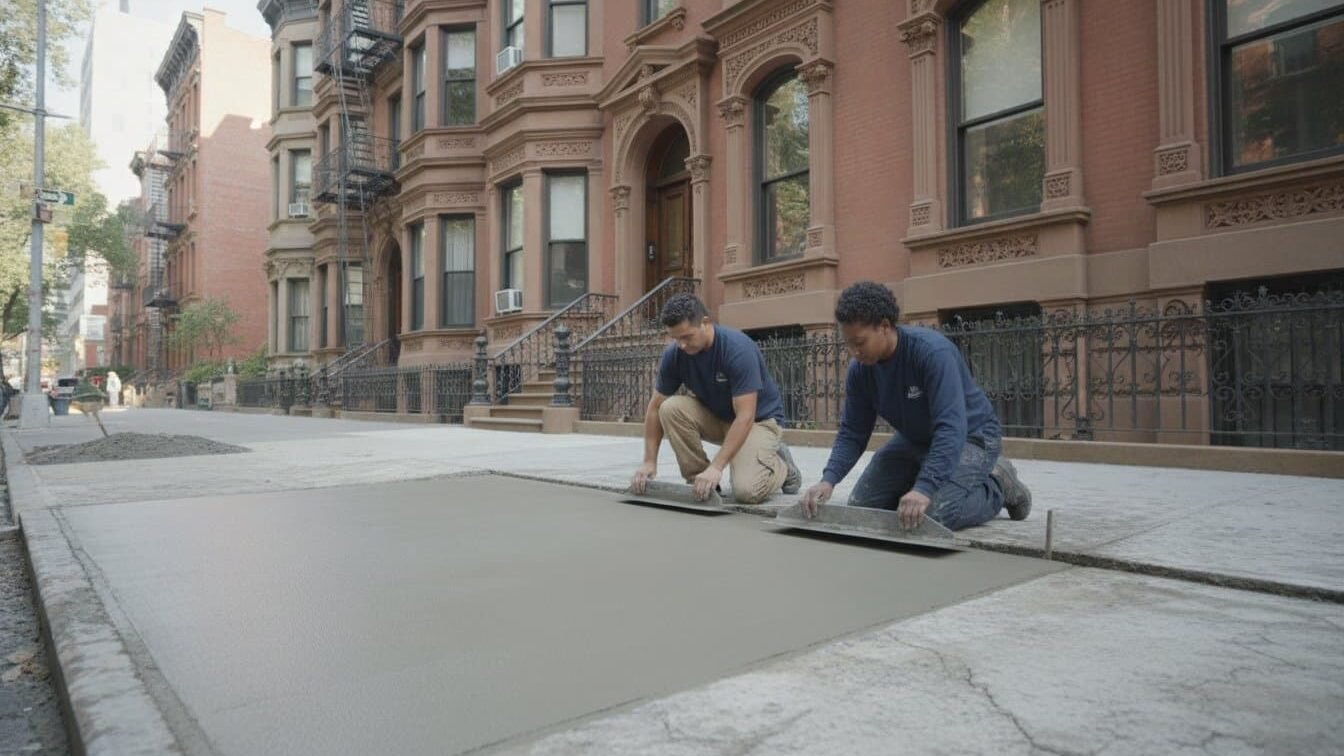
- Step 3: Masonry Execution. This phase involves excavation, framing, and pouring 4000 PSI concrete to ensure the repair stands up to heavy foot traffic.
- Step 4: Re-inspection Filing. Once the site is clean, we file the critical paperwork to request a final inspection from the city.
Securing DOT Permits and Ensuring Compliance
You must have an active permit on-site before a single flag is broken. This isn’t just a legal formality; it’s a safety requirement. We manage pedestrian safety by installing “Work in Progress” signage and maintaining clear walkways during the excavation. Our team ensures the new flags match the existing streetscape and curb lines, which is a common point of contention for DOT inspectors. If the new concrete doesn’t align with the neighboring flags, it creates a new trip hazard and can lead to a failed inspection. We focus on a “broom finish” that provides the necessary slip resistance while maintaining a clean, professional appearance.
The Inspection and Dismissal Request
Filing the “Dismissal Request” form is the most important legal step in the NYC sidewalk violation removal process. After the masonry work is finished, this document notifies the DOT that the property is now in compliance. You can track the status of this request through the official DOT portal or by calling 311. It’s common for an inspector to visit the site within a few weeks of the filing. If they request minor adjustments, such as smoothing a joint or adjusting a slope, we handle those corrections immediately to ensure the final sign-off.
Once the inspector approves the work, the violation is officially removed from the public record. This step is what finally protects your property title and prevents insurance hikes. If you’re ready to start the paperwork and secure your investment, Brick Tech Contracting Corp offers full-service support to handle every permit and masonry detail for you.
Why Brick Tech is Your Best Partner for Sidewalk Compliance
Choosing a contractor for NYC sidewalk violation removal is about more than finding someone with a cement mixer. You’re choosing a partner to protect your property’s legal standing and its long-term structural value. At Brick Tech Contracting Corp, we view sidewalk repair as a specialized branch of masonry that requires both technical skill and an understanding of city bureaucracy. We’ve been a family-owned and operated expert since 1980, providing property owners across all five boroughs with the stability and peace of mind they need during the violation process.
Our approach is grounded in transparency. We don’t believe in leaving our clients guessing about the status of their permits or the progress of their masonry work. We guide you through the DOT requirements, ensuring every step of the process is documented and every repair meets the highest standards of craftsmanship. This methodical focus prevents the administrative errors that often cause dismissal delays, allowing you to move forward with a clean public record.
A Legacy of Masonry Excellence in NYC
Our 45 plus years of experience matter because we’ve seen NYC’s building codes evolve firsthand. We understand how the city’s harsh freeze-thaw cycles affect different materials and why a standard concrete patch isn’t enough for lasting protection. We use high-quality materials designed for resilience, ensuring your investment stands up to heavy foot traffic and extreme weather for decades. As a family-owned firm, we treat every project as a partnership, offering the kind of personalized service that larger, city-contracted crews simply can’t provide.
Total Exterior Protection and Violation Management
If you’ve received a DOT sidewalk violation NYC notice and want to avoid the high costs of city-mandated repairs, the time to act is now. We provide full-service support that handles everything from the initial permit filing to the final dismissal request. Contact Brick Tech Contracting Corp today for a professional site assessment and a clear path toward total compliance and property protection.
Securing Your Property’s Future with Expert Compliance
Resolving a DOT notice is about more than just aesthetics; it’s a matter of protecting your long-term investment. You now understand that acting within the critical 75-day window prevents costly city-mandated repairs and ensures your property title remains clear of administrative liens. By prioritizing high-quality materials and managing the dismissal paperwork correctly, you eliminate safety liabilities and prevent unnecessary insurance hikes. Successful NYC sidewalk violation removal requires a precise balance of technical masonry skill and deep bureaucratic knowledge.
Don’t let a sidewalk defect compromise your property’s value or safety. Get Your Free NYC Sidewalk Violation Assessment from Brick Tech Contracting Corp to start the process today. We’ve been serving New York City since 1980 as a licensed, bonded, and fully insured family business. Our team provides expert DOT compliance management to ensure your repairs are permanent and your public record is officially cleared. Taking the right steps now ensures a safe, durable walkway that protects your property for decades.
Frequently Asked Questions
How long does it take for a sidewalk violation to be removed from the record?
Removal typically takes several weeks after you file a formal Dismissal Request. Once the masonry work is finished, the DOT must perform a final inspection to verify that the repairs meet city standards. After the inspector signs off on the project, the city updates the public record to show the violation as dismissed. You should monitor the official DOT portal regularly to ensure the status change is reflected on your property title.
What is the typical cost per square foot for NYC sidewalk repair in 2026?
The total cost depends on several variables, including the number of flags being replaced, the depth of the required excavation, and the complexity of the sub-base preparation. While we don’t provide fixed square-foot pricing here, private masonry bids are generally more competitive and offer better craftsmanship than city-contracted repairs. A professional site assessment is the only way to get an accurate estimate that accounts for the specific defects listed in your notice.
Can I sell my NYC property if it has an active sidewalk violation?
You can technically sell the property, but an active violation makes the process much more difficult. Most lenders won’t approve a mortgage for a buyer if there’s a “clouded title” or a potential lien from a sidewalk notice. In many cases, the seller must either complete the NYC sidewalk violation removal before the closing or place a significant amount of money in escrow to cover future repair costs.
Will the NYC DOT remove a violation if the damage was caused by a city tree?
The NYC Parks Department offers a “Trees & Sidewalks” program that may provide no-cost repairs for owners of one, two, or three-family homes. If the damage is caused solely by the roots of a city-owned tree, you can apply for this program. However, if the inspector determines the sidewalk is also suffering from general neglect or age-related wear, the property owner may still be held responsible for the repair costs.
What happens if I ignore a sidewalk violation for more than 75 days?
If you fail to act within the 75-day window, the city has the legal right to hire its own contractors to perform the work. You’ll then receive a bill for these repairs, which is often significantly higher than what a private contractor would charge. Additionally, 2026 regulations include civil penalties of up to $5,000 for certain property owners who don’t comply with the repair directive in a timely manner.
Do I need a permit if I am only repairing one or two sidewalk flags?
Yes, you must have a valid DOT permit on-site before any concrete is broken, regardless of the size of the repair. Even replacing a single flag requires a permit to ensure the work is performed by a licensed professional and meets city specifications. Working without a permit can lead to “Stop Work” orders and additional fines that complicate the NYC sidewalk violation removal process.
How do I know if a contractor is properly licensed to perform DOT sidewalk work?
You should verify a contractor’s license through the NYC Department of Consumer and Worker Protection. A qualified firm must hold a Home Improvement Contractor license and carry active general liability and workers’ compensation insurance. A reliable expert will always be transparent about their credentials and provide proof of insurance to protect you from any liability during the construction phase.
Does insurance cover the cost of NYC sidewalk violation removal?
Standard property insurance policies usually don’t cover sidewalk repairs because they’re classified as routine maintenance. However, ignoring a violation can negatively impact your insurance status. Many providers will increase premiums or even cancel a policy if they see an open violation for a trip hazard, as it represents a high risk for personal injury lawsuits under premises liability laws.