Would your building’s parapet wall survive a surprise inspection today, or is a single loose brick currently risking a heavy Department of Buildings violation? For many property owners, the roofline is out of sight and out of mind until falling masonry or a dreaded DOB notice brings it to the forefront. When you’re facing the pressure of NYC Local Law 126, finding reliable parapet wall repair Brooklyn services becomes a matter of both safety and legal survival.
It’s understandable to feel overwhelmed by the technical jargon of annual inspections and the fear of hidden water damage reaching your building’s interior. You want a stable, waterproofed structure that protects your investment without the constant worry of liability. This guide will show you exactly how to identify parapet failure, navigate the latest NYC inspection requirements, and restore your building’s structural integrity. We’ll explore the transition from identifying hazardous conditions to implementing long-term masonry solutions that offer true peace of mind.
Key Takeaways
- Identify visual warning signs such as step cracks and outward leaning masonry that signal immediate structural instability.
- Navigate the mandatory annual observation requirements under NYC Local Law 126 to avoid costly DOB violations and penalties.
- Learn how comprehensive parapet wall repair Brooklyn services protect your property from hidden water damage and structural rot.
- Understand the professional restoration lifecycle, including site safety protocols and the preservation of historic brickwork.
- Gain long-term peace of mind by partnering with experienced specialists who prioritize durability and safety compliance.
Understanding the Role of Parapet Walls in Brooklyn Architecture
A parapet wall serves as a building facade extension that rises above the roofline. While it might look like a simple decorative border, it serves several critical roles for any NYC structure. If you are asking What is a Parapet Wall?, think of it as a multi-functional barrier. It provides safety for people on the roof, acts as a fire break between tightly packed row houses, and serves as the architectural termination of the facade. In Brooklyn, where buildings are often centuries old, these walls are the most exposed part of the structure, bearing the brunt of every storm.
Brooklyn’s historic brownstones are uniquely vulnerable to parapet issues because of how they handle water. The parapet is intimately connected to the building’s drainage system; it directs water toward gutters and scuppers. When the masonry begins to fail, water doesn’t just sit on the roof. It seeps into the top of the wall, eventually reaching the interior joists and ceilings. Seeking professional parapet wall repair Brooklyn is often the only way to stop this hidden decay before it compromises the building’s structural integrity.
The Structural Importance of Roof-Level Masonry
The parapet is your building’s first line of defense against the elements. Because it’s un-braced on one side, it must withstand significant lateral pressure from high winds. This physical stress is constant. In older Brooklyn neighborhoods, historic buildings were constructed using lime-based mortar. This material is softer and more breathable than modern alternatives. It allows the building to “breathe,” but it also requires specialized care. We often see damage caused by previous contractors who used rigid Portland cement for repairs. This modern cement traps moisture inside the older bricks, causing them to crack or “spall” during New York’s harsh freeze-thaw cycles. Proper parapet wall repair Brooklyn requires matching the mortar’s composition to the original materials to ensure long-term durability.
Commercial vs. Residential Parapet Requirements
Identifying Common Signs of Parapet Damage and Hidden Decay
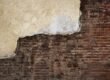
Detecting the need for parapet wall repair Brooklyn usually starts with a visual scan from the street or roof. Property owners should look for “step cracks” that follow the mortar joints in a diagonal pattern or bulging bricks that appear to be pushing out from the wall’s surface. These aren’t just aesthetic flaws. They indicate that the internal bond between the masonry and the backup wall has been compromised. If you notice a section of the wall that isn’t perfectly vertical, you’re likely seeing an outward lean. This is a critical safety risk; gravity and wind pressure can eventually cause masonry to detach and fall to the sidewalk below.
Sometimes the most dangerous damage is invisible from the outside. Property owners should watch for water stains on top-floor ceilings or peeling paint near the roofline. These interior symptoms often point to “concealed decay,” which is currently the leading threat to Brooklyn buildings in 2026. Moisture can sit behind a seemingly stable facade for years, rotting timber joists or rusting steel supports while the exterior brickwork looks acceptable. By the time a crack appears on the outside, the internal damage may already be extensive. Identifying these subtle shifts early is the best way to prevent a minor repair from becoming a full-scale reconstruction.
Cracking and Spalling: More Than Just Cosmetic Issues
Not all cracks are created equal. Small, hairline settlement cracks are common in older buildings, but deep fissures or crumbling brick faces, known as spalling, indicate a serious problem. In NYC, our intense freeze-thaw cycles are brutal on masonry. When water enters the pores of a brick and freezes, it expands, literally popping the face of the brick off. This cycle accelerates quickly. If you see these signs, it’s helpful to review the signs your NYC building needs brick repointing now to understand how to stop moisture ingress before it destroys the wall core.
The Problem with Leaning and Displacement
Leaning masonry often results from rotation at the base of the parapet. This happens when the anchors that tie the wall to the roof structure fail or when rusted steel lintels expand and push the bricks outward. Under NYC Local Law 126, any significant lean or displacement is categorized as a hazardous condition. The DOB requires owners to report these “Immediate” safety hazards within 24 hours. Catching these issues early during a routine inspection can prevent an emergency scaffold installation. If you’re unsure about a specific crack or bulge, our team can provide a detailed facade restoration assessment to determine your next steps and ensure your building remains compliant.
NYC Compliance: Navigating Local Law 126 Parapet Observations
NYC Local Law 126 of 2021 introduced a significant shift in how property owners must manage their rooflines. Starting January 1, 2024, the Department of Buildings (DOB) requires annual visual observations of all parapet walls that front a public right-of-way. This mandate applies to nearly every building in the city, regardless of height, with the only exception being detached one- and two-family homes. If your building has a parapet facing a sidewalk or street, you’re legally required to have it inspected every calendar year to ensure public safety.
The law allows these observations to be performed by a “qualified person.” This can include a building superintendent, an experienced mason, or a licensed engineer. The goal is to identify hazardous conditions before they lead to structural failure. According to the NYC parapet inspection requirements, owners must keep these observation records for at least six years. If a professional identifies an immediate hazard, you’ve only 24 hours to notify the DOB. Delaying parapet wall repair Brooklyn after a failed observation isn’t just a safety risk; it’s a fast track to heavy fines and legal liability.
The Inspection Checklist for Building Owners
A thorough observation goes beyond a quick glance. A qualified inspector will look for loose coping stones, which are the protective caps at the very top of the wall. If these stones shift or the joints between them fail, water enters the core of the masonry. They’ll also evaluate the through-wall flashing and counter-flashing to ensure moisture is being directed away from the building’s interior. We often find that previous “quick fixes,” like slathering roofing cement over a crack, have trapped water inside the wall, accelerating the decay. A professional assessment identifies these hidden traps before they become emergency repairs.
Resolving DOB Violations and ECB Fines
Receiving a “Failure to Maintain” violation from the DOB is a serious matter that can lead to Environmental Control Board (ECB) hearings and escalating penalties. If your building is flagged, the first step is to hire a licensed contractor to pull the necessary permits and address the specific hazardous conditions. This process often mirrors the steps found in our NYC sidewalk violation removal guide, where clear documentation and professional remediation are key to clearing your property’s record. Addressing parapet wall repair Brooklyn proactively ensures that you stay ahead of the city’s strict enforcement and keep your building’s facade in good standing.

The Professional Parapet Wall Restoration Process
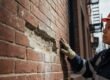
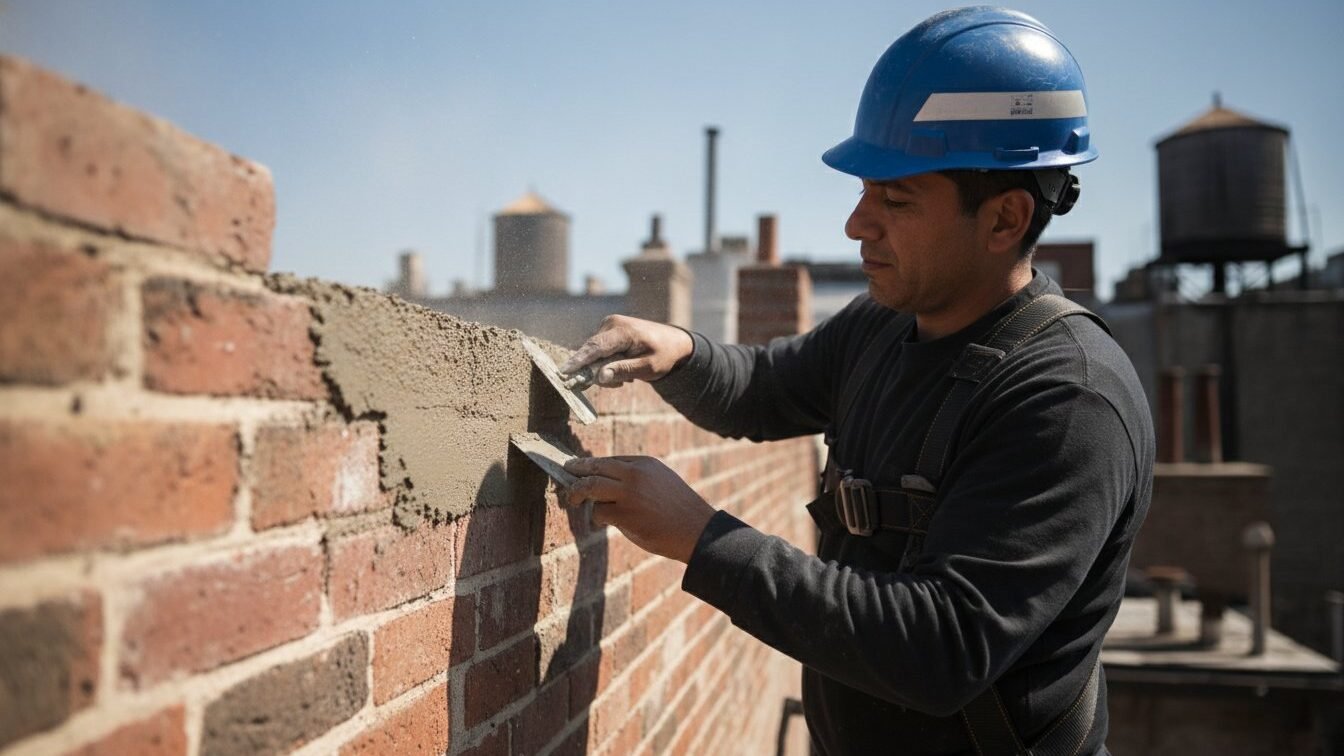
Restoring a compromised roofline is a methodical engineering task that demands technical precision. A successful parapet wall repair Brooklyn project follows a structured sequence to ensure the finished structure is both watertight and compliant with NYC safety codes. The process begins with securing site access. We install NYC-compliant scaffolding or sidewalk sheds to protect pedestrians and provide our masons with a stable platform for meticulous work. This setup ensures safety while allowing for a thorough assessment of the masonry’s core.
- Demolition and Salvage: We carefully remove unstable masonry sections. Our team prioritizes preserving salvageable historic brick to maintain the building’s original character.
- Moisture Management: We install through-wall flashing at the base of the parapet. This critical layer redirects any water that penetrates the masonry back out to the roof or exterior, preventing internal rot.
- Structural Rebuild: The masonry core is rebuilt using structural anchors that tie the wall securely to the building’s frame. We use mortar matched specifically to the existing structure’s strength and breathability.
- Finishing: We set the coping stones and apply high-grade waterproofing sealants to all joints to create a final, impenetrable barrier against driving rain.
Waterproofing and Coping Stone Maintenance
Coping stones act as the “hat” of your building’s facade. If this cap isn’t watertight, the entire wall remains at risk for saturation. In modern construction, we rely on stainless steel flashing beneath these stones because it doesn’t corrode or degrade over time. This creates a permanent drainage path for moisture. As a professional waterproofing contractor NYC, we focus on these hidden details that determine whether a repair lasts five years or fifty. We ensure every joint is rake-cleaned and sealed with professional-grade materials to withstand the city’s extreme weather.
Historic Brick Pointing Techniques
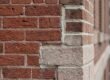
For Brooklyn’s historic brownstones, the choice of mortar is vital. We match the color, texture, and strength of the original lime-based mortars used in the 19th and early 20th centuries. Using a modern mortar that’s too hard can actually destroy historic bricks by trapping moisture and causing the faces to pop off during winter. We employ deep-joint repointing techniques to ensure a bond that can last 30 years or more. This meticulous approach preserves the structural integrity of the brickwork while maintaining its aesthetic value. If your roofline shows signs of wear, it’s time to schedule a professional facade inspection to catch issues before they require a full rebuild.
Why Choose Brick Tech for Parapet Wall Repair in Brooklyn
Brick Tech Contracting Corp has served as a cornerstone of the NYC masonry industry since 1980. For over four decades, our family-owned business has focused on protecting the structural integrity of buildings across the five boroughs. When you choose us for parapet wall repair Brooklyn, you’re partnering with a team that understands the specific environmental challenges of our local climate. We don’t believe in quick patches or superficial fixes. Instead, we prioritize long-term resilience, ensuring that every brick laid and every joint sealed contributes to the lasting safety of your property.
Our expertise spans the full spectrum of Brooklyn architecture. We’re equally comfortable performing meticulous restoration on a 19th-century brownstone as we are managing large-scale compliance projects for modern commercial buildings. We handle the entire project lifecycle, from securing necessary DOB permits and erecting compliant scaffolding to the final site cleanup. This comprehensive approach removes the burden from the property owner, providing a single, reliable point of contact for all masonry and waterproofing needs. We view our work as a partnership, aiming to instill a sense of security through expert craftsmanship and technical precision.
Our Commitment to Quality and Safety
Safety isn’t just a checkbox for our team; it’s the foundation of our reputation. We strictly adhere to all NYC safety standards and the latest Local Law 126 guidelines to keep your building in good standing. By using high-grade materials like stainless steel through-wall flashing and custom-blended mortar mixes, we create barriers that stand up to decades of driving rain and wind. Our communication is transparent and grounded, providing you with detailed project timelines so you always know the status of your building’s restoration. We focus on protection and longevity, ensuring your investment remains secure for the long haul.
Get Your Brooklyn Parapet Inspection Today
It’s vital to act before the next major storm season to discover any hidden vulnerabilities in your roofline. Proactive inspections are the most effective way to avoid the high costs and stress of emergency repairs. Brick Tech Contracting Corp helps owners identify minor issues before they escalate into hazardous conditions that trigger DOB violations or falling masonry risks. Taking action now protects your investment and ensures your building remains a safe, compliant part of the Brooklyn skyline. Contact Brick Tech Contracting Corp for a professional parapet evaluation and secure the peace of mind that comes with expert craftsmanship and reliable results.
Securing Your Building’s Future and Compliance
Maintaining a safe roofline is a continuous responsibility that demands more than just a quick glance. With the enforcement of Local Law 126, staying ahead of annual observations is the only way to avoid the stress of immediate hazard notices and Department of Buildings fines. Real protection comes from identifying hidden decay early and choosing a partner who values durability over a cheap patch. When you invest in professional parapet wall repair Brooklyn, you’re ensuring the structural integrity of your property for decades to come.
Brick Tech Contracting Corp has been family-owned and operated since 1980. We’ve built our reputation as experts in NYC DOB violation removal and specialists in historic Brooklyn masonry restoration. We handle every technical detail to ensure your facade remains both beautiful and compliant. Don’t wait for the next storm to reveal a problem that could have been prevented. Take the first step toward long-term peace of mind today. Request a Professional Parapet Inspection & Quote to secure your building’s legacy.
Frequently Asked Questions
How much does parapet wall repair cost in Brooklyn?
Determining the exact investment for parapet wall repair Brooklyn depends on several project variables. Scaffolding requirements, the total linear footage of the wall, and the complexity of the masonry all influence the final scope. Historic brownstones often require custom mortar mixes and specialized brick matching, which adds to the project’s detail. We recommend a professional on-site evaluation to assess the level of structural decay and provide an accurate project outline tailored to your building’s needs.
Does my building need a Local Law 126 parapet observation in 2026?
The NYC Department of Buildings requires almost all buildings with a parapet fronting a public right-of-way to complete an annual observation. This mandate became effective on January 1, 2024. Building owners must ensure these observations are performed by a qualified person each calendar year. It’s essential to keep detailed records for at least six years to remain compliant. Failure to do so can result in significant DOB violations and administrative penalties.
Why is my parapet wall leaning or bowing?
A leaning or bowing parapet is typically a sign of advanced structural distress. This often happens when water enters the wall and causes internal steel anchors to rust and expand, pushing the masonry outward. NYC’s intense freeze-thaw cycles also play a major role as trapped moisture expands and weakens the mortar bonds. If the wall is rotating at its base, it indicates that the connection between the roof and the masonry has been compromised.
How long does a typical parapet rebuilding project take?
A typical restoration project usually ranges from two to four weeks, though this timeline shifts based on the building’s size. The first week often focuses on securing permits and installing NYC-compliant scaffolding or sidewalk sheds. The actual masonry work, including demolition and rebuilding the core, follows. Final steps include setting coping stones and applying waterproofing sealants. We prioritize a methodical pace to ensure the long-term durability and structural integrity of the finished work.
What is the difference between a parapet wall and a facade?
While people often use the terms interchangeably, they refer to different parts of the structure. The facade is the entire front face of the building seen from the street. The parapet wall is specifically the portion of that facade that extends above the roofline. Because the parapet is exposed to the elements on both sides and at the top, it often requires parapet wall repair Brooklyn services more frequently than the protected lower facade.
Can I repair a parapet wall from the roof without scaffolding?
While some minor maintenance on the interior side of the wall can be done from the roof, most comprehensive repairs require scaffolding. Safety regulations and the need to access the exterior facade make scaffolding or a sidewalk shed necessary for any structural rebuilding. It’s a major safety violation to attempt work over the edge without proper support. Scaffolding also allows our masons to perform the meticulous work required for a truly watertight finish.
What happens if I ignore a Department of Buildings (DOB) masonry violation?
Ignoring a DOB masonry violation leads to escalating Environmental Control Board (ECB) fines and legal complications. If the condition’s deemed an “Immediate Hazard,” the city might perform emergency repairs themselves and bill the owner at a much higher rate. Unresolved violations also make it difficult to sell or refinance your property. Addressing these issues promptly with a licensed contractor is the most cost-effective way to protect your investment and maintain your building’s compliance.
What is the best material for parapet coping stones in NYC?
The best material for coping stones in New York City is one that offers maximum weather resistance and durability. Natural stones like granite or bluestone are excellent choices for their longevity and aesthetic appeal. Precast concrete is another popular option due to its precision and cost-effectiveness. Regardless of the material, the most important factor is the installation of high-quality stainless steel flashing beneath the stones to ensure a completely watertight seal for the wall core.