What if those faint white streaks on your building’s facade aren’t just a cosmetic nuisance, but the first warning of a structural failure that could lead to a costly NYC building violation? Identifying the early signs of water damage brick wall structures exhibit is the only way to stop moisture infiltration before it compromises the integrity of your property. Most owners feel a sense of unease when they notice new cracks or damp patches, wondering if they’re looking at a minor repair or a looming financial burden. With FISP Cycle 10 inspections currently underway, ignoring these subtle signals can quickly lead to mandatory sidewalk sheds and steep penalties.
You deserve a clear understanding of what’s happening behind your masonry. This diagnostic checklist provides a professional framework to help you distinguish between surface-level wear and deep-seated structural threats. We’ll show you exactly how to evaluate your brickwork, identify where waterproofing has failed, and determine the right time to call for an expert masonry inspection. By the end of this guide, you’ll have the confidence to address moisture issues head-on and ensure your building remains a resilient, weather-resistant asset for years to come.
Key Takeaways
- Understand why brick’s natural porosity and the “wicking” effect allow moisture to penetrate deep into your building’s structural assembly.
- Learn to identify the primary signs of water damage brick wall exteriors display, such as white salt deposits and surface flaking, before they escalate.
- Discover how to spot high-risk structural red flags like bulging masonry and diagonal step cracking that signal internal instability.
- See how unique NYC environmental stressors, including subway vibrations and urban pollution, accelerate the decay of historic mortar.
- Gain a clear roadmap for professional restoration, from precision brick pointing to applying breathable waterproofing membranes for long-term protection.
Understanding Brick Porosity: Why Water Infiltrates Masonry
To the naked eye, a brick wall looks like a solid, immovable fortress. In reality, brick is a highly porous, breathable material that functions much like a hard sponge. It contains thousands of microscopic pores that naturally absorb and release moisture as weather conditions change. This breathability is vital for the health of your building, but it also creates a path for water to enter where it doesn’t belong.
When rain hits the surface of your facade, a phenomenon known as the “wicking” effect takes over. Through capillary action, the bricks literally draw liquid water deep into the wall assembly, moving it from the exterior face toward the interior structure. If the wall cannot dry out fast enough, this moisture begins to accumulate. Structural dampness occurs when this internal moisture level stays high, eventually leading to the visible signs of water damage brick wall owners often mistake for simple aging.
Your mortar joints play a critical role in this ecosystem as a sacrificial element. Mortar is intentionally designed to be softer and more permeable than the brick itself, ensuring that moisture and thermal expansion stress affect the joints rather than the masonry units. Hydrostatic pressure is the physical force exerted by liquid water against the facade that effectively drives moisture through these pores and any existing micro-fissures in the mortar. When this pressure becomes too great, the sacrificial mortar begins to crumble, signaling that it’s time for professional brick pointing to restore the protective seal.
The Difference Between Absorption and Infiltration
Healthy masonry undergoes a constant cycle of absorption and evaporation. Problems arise when this balance shifts toward saturation, transforming normal absorption into destructive infiltration. When a building envelope becomes oversaturated, water gets trapped behind the facade with nowhere to go. This is frequently exacerbated by improper past repairs, such as the use of non-breathable paints or sealers. These coatings act like a plastic wrap, sealing moisture inside the brick and causing it to decay from the inside out.
NYC Weather Patterns and Masonry Stress
New York City property owners face a unique set of environmental challenges. Wind-driven rain is particularly aggressive on high-rise facades, where the height of the building increases the velocity and pressure of water hitting the brickwork. In boroughs like Queens and Brooklyn, coastal salt air accelerates the chemical decay of historic lime-based mortar, leaving the building vulnerable. Recent data from 2026 indicates that heavier, more frequent rainfall patterns in the Northeast are significantly increasing the moisture load on aging NYC facades, making regular diagnostic checks more critical than ever.
The Exterior Diagnostic Checklist: Visible Signs of Water Damage
Property owners often overlook subtle changes in their facade until a minor issue becomes a structural emergency. Recognizing the signs of water damage brick wall exteriors display early is the best way to avoid a full-scale facade failure. Use this diagnostic checklist to walk your property and evaluate the current state of your masonry. If you notice any of these indicators, it’s time to consider a professional waterproofing assessment to protect your investment.
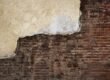
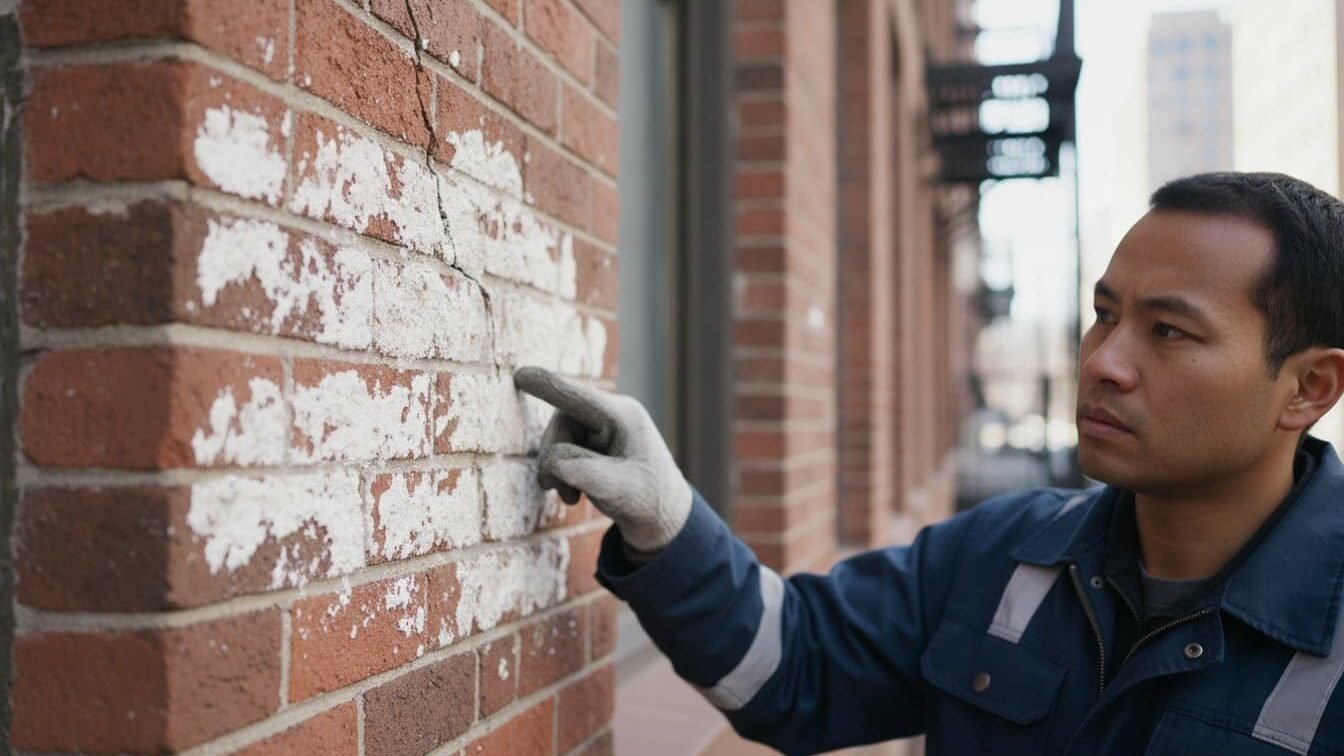
- Efflorescence: This appears as a white, powdery salt deposit on the brick surface. It isn’t just a stain; it’s proof that water is moving through the wall and carrying internal salts to the surface as it evaporates.
- Spalling: Look for bricks where the face is flaking, chipping, or popping off entirely. This usually indicates that water has saturated the brick and expanded during a freeze-thaw cycle.
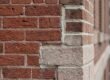
- Mortar Erosion: Check your joints for sandy, soft, or recessed mortar. When mortar is missing, water pools in the gaps, accelerating the decay of the surrounding bricks.
- Vegetation Growth: The presence of moss, algae, or ivy is a definitive red flag for permanent dampness. Roots act like wedges, widening cracks and holding moisture against the facade.
- Dark Staining: Distinguish between general urban soot and deep-seated saturation. If a patch of brick remains dark long after a rainstorm has passed, the wall is likely holding significant internal moisture.
Identifying Efflorescence vs. Staining
Determining the source of a mark is the first step in a proper diagnosis. You can test a white mark by rubbing it with a damp cloth; if it dissolves easily, it’s likely efflorescence. Calcium leaching, which is a harder, crustier deposit, often signals a deeper leak path from a roof or parapet. Localized staining frequently points to specific mechanical failures, such as a clogged gutter or a cracked lintel. Ignoring these “damp patches” that never seem to dry allows brick restoration best practices to be ignored, leading to more invasive and expensive repairs later.
Spalling and Flaking: The Point of No Return
Spalling is one of the most serious signs of water damage brick wall surfaces can exhibit. When water enters the pores of a brick and freezes, it expands by roughly 9%. This internal pressure is enough to shear off the hard outer face of the masonry. Once the protective “fire-skin” of the brick is gone, the soft interior core is exposed to the elements, leading to rapid disintegration. At this stage, the bricks can’t be saved with a simple coating; they must be cut out and replaced. You can find detailed remediation steps in our guide to spalling brick repair NYC to understand how to stabilize your facade correctly.
Structural Red Flags: When Water Compromises Integrity
While surface-level issues like efflorescence are concerning, they often precede more dangerous structural failures. When moisture moves from the brick’s pores into the core of the wall, it begins to degrade the very stability of your building. Identifying the structural signs of water damage brick wall units experience is critical for preventing a catastrophic collapse or an expensive NYC Department of Buildings (DOB) violation. If you notice your facade looks “puffy” or distorted, you’re likely seeing a bulging or bowing wall. This occurs when the internal ties holding the brick veneer to the structural frame fail due to corrosion, or when water trapped behind the brick exerts outward pressure as it freezes.
Diagonal cracks following the mortar joints, often called step cracking, are another urgent red flag. While these can indicate foundation settling, they frequently signal significant moisture problems in masonry that have caused the mortar to lose its load-bearing capacity. These shifts aren’t just aesthetic; they mean the wall is no longer distributing weight evenly, putting the entire facade at risk. If you suspect your building’s structural integrity is at risk, a professional consultation with a NYC masonry specialist can help you identify the best path forward.
Steel Lintel Corrosion and Jack Arch Failure
One of the most destructive forces in NYC masonry is “rust heave.” Most windows and doors are supported by steel lintels. When water reaches this steel, the metal begins to oxidize and expand. This expansion exerts thousands of pounds of pressure on the surrounding bricks, leading to “eyebrow” cracks that arch over the top of the opening. If you see cracks radiating from the corners of your windows, the steel support is failing and requires immediate intervention from a masonry expert to prevent the bricks above from falling.
Internal Wall Dampness and Mold
You don’t always have to be outside to see the damage. Bubbling paint, peeling wallpaper, or a persistent musty odor on the inside of an exterior wall are clear indicators that water has successfully migrated through the facade. Many modern brick walls use “weep holes” to allow internal moisture to escape; when these become clogged with debris or improper mortar, water builds up inside the wall assembly. It’s important to distinguish these issues from roof leaks. If the dampness is concentrated around window frames or mid-wall sections rather than the ceiling, you’re likely dealing with facade infiltration rather than a roofing failure.

NYC Environmental Stressors: Why Our Bricks Fail Faster
NYC isn’t just a tough place for people; it’s an incredibly harsh environment for masonry. The city’s unique infrastructure and climate create a perfect storm of stressors that accelerate the appearance of the signs of water damage brick wall structures experience elsewhere. For owners of buildings taller than six stories, these environmental factors are more than just maintenance issues. They’re regulatory triggers. Under the current FISP Cycle 10, which runs from 2025 through 2029, any visible moisture infiltration can lead to a “SWARMP” or an “Unsafe” classification. This triggers the mandatory installation of sidewalk sheds under Local Law 48, which now limits permits to 90 days to encourage rapid restoration.
The Role of Parapet Walls in Water Entry
The highest point of your building is often its weakest link. Parapet walls are exposed to the elements on three sides, making them the most vulnerable entry point for moisture. If the coping stones or roof-to-wall transitions aren’t perfectly sealed, water will travel down into the core of the building. This is why we prioritize parapet wall construction New York standards that focus on robust flashing and waterproofing. Common failure points usually include the transition where the roofing membrane meets the masonry, where even a tiny gap allows gallons of water to bypass your facade’s defenses.
Vibration and Settlement in the Five Boroughs
NYC’s geology and constant motion play a hidden role in facade decay. Constant vibrations from subways and heavy truck traffic act like a slow-motion jackhammer on your building. This movement is especially problematic in high-vibration zones where rigid, old mortar cannot flex. It’s essential to distinguish between simple settlement cracks and water-expanded cracks. Settlement cracks are often stable, but water-expanded cracks grow as the freeze-thaw cycle worsens. If you’re concerned about your building’s compliance or structural health, our team specializes in Local Law 11 Repair to keep your property safe and violation-free.
Professional Solutions: From Brick Pointing to Waterproofing
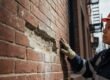
Once you’ve identified the signs of water damage brick wall surfaces exhibit, the focus must shift from diagnosis to stabilization. For most NYC properties, the first line of defense is professional brick pointing. This meticulous process involves grinding out the decayed, sandy mortar we discussed earlier and replacing it with fresh mortar that matches the original’s strength and permeability. By resealing these joints, you effectively shut the door on moisture infiltration and restore the facade’s structural unity before water can reach the internal steel or foundation.
When the masonry is sound but still vulnerable to NYC’s wind-driven rain, we apply advanced waterproofing membranes. These aren’t typical paints; they’re breathable, silane-siloxane clear coats that penetrate deep into the brick’s pores. They allow water vapor to escape from the inside while repelling liquid water from the outside. If the damage has progressed to significant spalling or structural shifting, a comprehensive facade restoration becomes necessary. This ensures that every component, from the lintels to the parapets, is returned to a safe, weather-resistant state. It’s vital to partner with an experienced waterproofing contractor NYC property owners trust to handle historic materials with precision.
Why ‘Off-the-Shelf’ Sealants Can Damage Your Building
Many property owners attempt to fix leaks with generic, “vapor-closed” hardware store sealants. These products are often dangerous for historic masonry because they trap moisture behind a plastic-like film. When that trapped water freezes, it causes the brick faces to shear off in a matter of months. Professional-grade solutions must remain breathable to prevent this internal decay. For buildings requiring a more robust aesthetic and protective finish, we utilize specialized masonry coatings like Thorocoat. These systems provide a durable, flexible shield that bridges small cracks while maintaining the vital vapor exchange your building needs to stay healthy.
Preventative Maintenance Schedule for 2026
Maintaining a resilient facade requires a proactive approach rather than a reactive one. We recommend an annual visual inspection every spring. Use binoculars to check for new efflorescence, recessed joints, or dark patches that might indicate the early signs of water damage brick wall units are suffering. A key part of this routine is power washing NYC facades to clear away the acidic pollutants and salts that eat into your mortar. If you spot changes in your brickwork or if your building is approaching its next FISP filing deadline, scheduling a professional masonry consultation is the most cost-effective way to prevent minor leaks from turning into major structural violations.
Protecting Your Facade Against NYC Environmental Stressors
Maintaining a historic NYC facade requires constant vigilance and a clear understanding of masonry health. We’ve explored how brick’s natural porosity leads to moisture infiltration and why visible cues like efflorescence or spalling shouldn’t be ignored. Recognizing the early signs of water damage brick wall structures exhibit allows you to intervene before simple maintenance turns into a structural emergency or a costly building violation. From the relentless vibration of the subways to the hidden pressure of the freeze-thaw cycle, your building’s exterior faces unique challenges that demand expert care.
Since 1980, our family-owned and operated team has helped property owners navigate these urban stressors with precision and transparency. We specialize in Local Law 11 compliance and long-term facade restoration, ensuring your investment remains secure for the future. Don’t wait for a small crack to become a major liability. You can Schedule a Professional Masonry Inspection with Brick Tech Contracting Corp today to get a definitive diagnosis of your building’s condition. Taking action now provides the peace of mind that comes with a stable, well-protected property.
Frequently Asked Questions
Is efflorescence on brick a serious problem?
Efflorescence is a serious warning sign that moisture is actively moving through your masonry. While the white powder itself is not structurally damaging, it proves that water is wicking through the wall and dissolving internal salts. If you ignore this signal, the ongoing moisture path will eventually lead to mortar erosion and internal structural decay. It’s an early indicator that your building’s protective envelope has been compromised and requires a professional evaluation.
Can water damage cause a brick wall to collapse?
Yes, chronic water damage can eventually lead to a total structural collapse. When moisture infiltrates the core of a wall, it causes the mortar to lose its bonding strength and triggers rust heave in internal steel supports. As these supports expand, they exert immense pressure that can cause the brickwork to bow or buckle. Addressing these issues early is vital for maintaining the safety and stability of your property.
How do I know if my building needs brick pointing or waterproofing?
You need brick pointing when your mortar joints are visibly recessed, sandy, or crumbling. This process restores the physical seal of the wall. Waterproofing is a preventative shield applied after the masonry is repaired to repel wind-driven rain. If you’re noticing the signs of water damage brick wall owners often report, such as interior dampness, a professional contractor can determine if you need a full repointing or a breathable sealant.
Why is my brick wall flaking and crumbling?
Your brick wall is likely crumbling because of a process called spalling. This happens when water enters the pores of the brick and expands during NYC’s frequent freeze-thaw cycles. The internal pressure becomes so great that it shears off the hard outer face of the brick. Once this happens, the soft inner core is exposed to the elements, causing the brick to disintegrate rapidly and necessitating professional replacement.
Does insurance cover water damage to exterior brick walls?
Most insurance policies don’t cover water damage resulting from gradual seepage or a lack of maintenance. While a sudden, accidental event might be covered, the slow decay of mortar joints and brick faces is generally viewed as a maintenance issue. Because these repairs are the owner’s responsibility, proactive measures like brick pointing and waterproofing are essential for avoiding the high costs of a complete structural failure.
How often should I inspect my NYC building for water infiltration?
You should conduct a visual check of your building at least once a year, preferably after the winter season. NYC property owners with buildings taller than six stories must also comply with the Façade Inspection Safety Program (FISP), which requires a professional inspection every five years. Regular monitoring allows you to catch the signs of water damage brick wall exteriors display before they result in mandatory sidewalk sheds or DOB penalties.
What is the white powdery stuff on my bricks?
The white powdery substance on your bricks is called efflorescence. It consists of natural salts that were dissolved by moisture inside the wall and then left behind on the surface after the water evaporated. This powder is a definitive sign that water is infiltrating your masonry. While you can wash it away, it will continue to return until the underlying leak or moisture path is professionally sealed.
Can I waterproof my brick wall myself?
It isn’t recommended for NYC property owners because of the risk of using non-breathable sealants. Many off-the-shelf sealants are vapor-closed, meaning they trap moisture inside the brick and cause it to rot from the inside out. Professional contractors use specialized, breathable silane-siloxane clear coats. These products allow the wall to breathe while repelling liquid water, ensuring protection without the risk of causing accidental structural damage.