Imagine walking out to your front door only to find a bright yellow NYC DOT notice taped to your property. That single piece of paper can instantly trigger a wave of anxiety about city-imposed liens and the threat of expensive lawsuits from trip hazards. Dealing with sidewalk violation removal Queens property owners face shouldn’t feel like a legal battle against the city. It’s a technical challenge that requires a steady hand and a deep understanding of local masonry standards.
We know it’s stressful to face a 75-day repair deadline while trying to find a licensed contractor who actually understands NYC Administrative Code § 19-152. You’re looking for more than just a quick patch; you want a permanent solution that secures your property’s title and protects your investment. This 2026 guide provides the exact steps to resolve your violation legally and permanently. We’ll walk you through everything from securing DOT permits to passing the final dismissal inspection, so you can regain your peace of mind and a clean property record.
Key Takeaways
- Learn how to navigate the 75-day grace period to avoid the high costs and lack of control associated with city-contracted repairs.
- Discover how Queens’ unique terrain and mature tree-lined streets impact concrete longevity and your specific legal responsibilities under NYC Administrative Code.
- Understand the “Lien” process and how an unresolved notice can negatively impact your property title and insurance liability.
- Follow our step-by-step roadmap for sidewalk violation removal Queens to ensure your repairs meet every NYC DOT specification for a permanent dismissal.
- Identify the critical permits and licensing requirements needed to guarantee your masonry work is fully compliant, durable, and weather-resistant.
Understanding Your Sidewalk Violation in Queens
NYC Administrative Code § 19-152 places the legal burden of sidewalk maintenance responsibilities squarely on the property owner. When a DOT inspector identifies a defect, they issue a “Notice of Account.” This document serves as a formal record of non-compliance that remains attached to your property until the city officially dismisses it. In Queens, these inspections are frequent because the borough’s diverse geography and aging infrastructure lead to specific structural failures that the city monitors closely.
While a basic understanding of what is a sidewalk covers its function as a pedestrian path, the city’s technical requirements are far more demanding. Queens property owners often face violation triggers like aggressive tree roots in neighborhoods like Forest Hills or the corrosive effects of heavy salt use during harsh winters. Settling soil in coastal areas can also cause concrete flags to shift or tilt. These shifts create trip hazards that lead to immediate citations and potential liability for the owner.
The 75-Day Grace Period: Why Timing Matters
You have exactly 75 days from the date of the notice to complete the necessary repairs. Missing this window allows the DOT to hire its own crews to perform the work. This usually results in a bill that is significantly higher than what a private contractor would charge. Beyond the immediate cost, an unresolved violation creates a lien on your property title. This can block a home sale or stop a refinancing process in its tracks. Utilizing professional sidewalk violation removal Queens expertise early prevents these avoidable financial headaches.
Common Violation Categories in NYC
DOT inspectors generally look for three main categories of defects. First are hardware violations, which involve missing manhole covers or utility plates that aren’t flush with the concrete surface. Second are structural violations, such as collapsed flags, large cracks, or “undermined” conditions where the ground beneath the slab has washed away. Finally, many owners are cited for improper previous repairs. Non-compliant patches or DIY fixes don’t meet DOT standards and will be rejected upon inspection.
Professional sidewalk violation removal Queens services ensure your masonry is durable and fully compliant with city codes. Property owners often choose to coordinate these repairs with other essential maintenance, such as brick pointing NYC, to maintain the building’s overall structural integrity and aesthetic value. Addressing these issues collectively ensures long-term protection for your investment.
Why Queens Properties Face Unique Sidewalk Challenges
Queens presents a unique set of environmental challenges that property owners in other boroughs might not encounter. From the dense commercial corridors of Flushing to the quiet, canopy-covered streets of Bayside, the local terrain dictates the lifespan of your concrete. High-traffic zones in Long Island City and Astoria subject sidewalks to constant vibration and heavy loads, leading to accelerated cracking and joint failure. Meanwhile, the aggressive freeze-thaw cycles of a Queens winter, combined with the heavy use of de-icing salts, can cause surface scaling that quickly triggers a Sidewalk Violation Notice.
The borough’s geography also plays a significant role in masonry health. Coastal areas or neighborhoods with high water tables often experience soil shifting that leaves concrete flags unsupported. When the ground beneath the slab settles unevenly, the concrete loses its structural integrity. Addressing these issues requires more than a simple patch; it demands a thorough understanding of the local soil conditions and the specific stressors of each neighborhood.
Tree Roots and the NYC Parks Department
In leafy neighborhoods like Forest Hills and Bayside, the relationship between “City Trees” and concrete is a frequent source of conflict. These trees are under the jurisdiction of the NYC Parks Department, which adds a layer of complexity to any repair. If you receive a notice for damage caused by a city tree, you cannot simply hire a crew to cut the roots. Doing so without a permit is illegal and can lead to heavy fines. Successful sidewalk violation removal Queens projects often require careful coordination between the DOT and the Parks Department to ensure the tree’s health is preserved while the walkway is restored to city standards.
Soil Settling in Low-Lying Queens Areas
Low-lying areas of the borough often struggle with poor drainage and shifting soil bases. When water pools beneath the concrete, it washes away the sub-base, creating “undermined” flags that are prone to collapse under foot traffic. This instability doesn’t just affect your walkway; it can also impact your building’s foundation. If you notice sinking concrete near your exterior walls, consulting a Professional Waterproofing Contractor NYC can help identify if moisture is compromising your structure. Proper drainage and high-strength concrete are essential for long-term durability in these environments. If you are concerned about the state of your property’s exterior, scheduling a professional inspection can help you catch these issues before they become costly city violations.
The Financial Risks of Ignoring a Queens Sidewalk Notice
Ignoring a DOT notice isn’t just a matter of aesthetics. It’s a serious financial risk. The most immediate concern is the “Lien” process. When a violation remains unresolved, it’s recorded against your property’s title. This legal cloud makes it nearly impossible to sell your home or refinance your mortgage. Lenders see these violations as liabilities that must be cleared before any transaction can proceed. Professional sidewalk violation removal Queens services are the only way to ensure your title remains clean and marketable.
Beyond title issues, the threat of personal injury lawsuits looms large. In New York City, property owners are responsible for the safety of the walkway adjacent to their land. If a pedestrian trips on a cracked flag or a shifted slab, you could face a settlement that far exceeds the cost of a repair. Insurance providers also keep a close eye on these records. A pending notice can lead to hiked premiums or even a total cancellation of your homeowner’s policy. For a detailed breakdown of these regulations, you can consult NYC’s official guide to sidewalk violations to understand your specific obligations.
The Cost of City-Mandated Repairs
If you fail to act within the 75-day grace period, the city may step in. While this might seem convenient, it’s almost always the more expensive route. The DOT hires third-party contractors and passes those costs directly to you, often at rates higher than a private contractor would charge. They also tack on administrative fees and interest that are added to your property tax bill. Disputing these charges after the city has already performed the work is a notoriously difficult process. Investing in proactive sidewalk violation removal Queens services allows you to control the quality of the work and the final bill.
Protecting Your Property Value and Curb Appeal
Your sidewalk is the first thing people see. It sets the tone for your entire property. A crumbling, uneven walkway detracts from even the most professional facade restoration NYC. High-quality masonry isn’t just a fix; it’s a structural investment that enhances curb appeal and protects your building’s value. We prioritize matching concrete finishes to the existing neighborhood aesthetic to ensure a seamless look. Meticulous craftsmanship and durable materials ensure your repair lasts for decades, providing peace of mind and long-term protection for your investment.

A Step-by-Step Guide to Sidewalk Violation Removal Queens
Successfully resolving a DOT notice requires a methodical approach that balances technical masonry with administrative precision. The process for sidewalk violation removal Queens begins with selecting a contractor who is not only licensed by the NYC Department of Consumer and Worker Protection but also carries the specific insurance required by the city. Hiring a specialist ensures that your project is handled by someone who understands the intricacies of local codes and the emotional stakes of your property title.
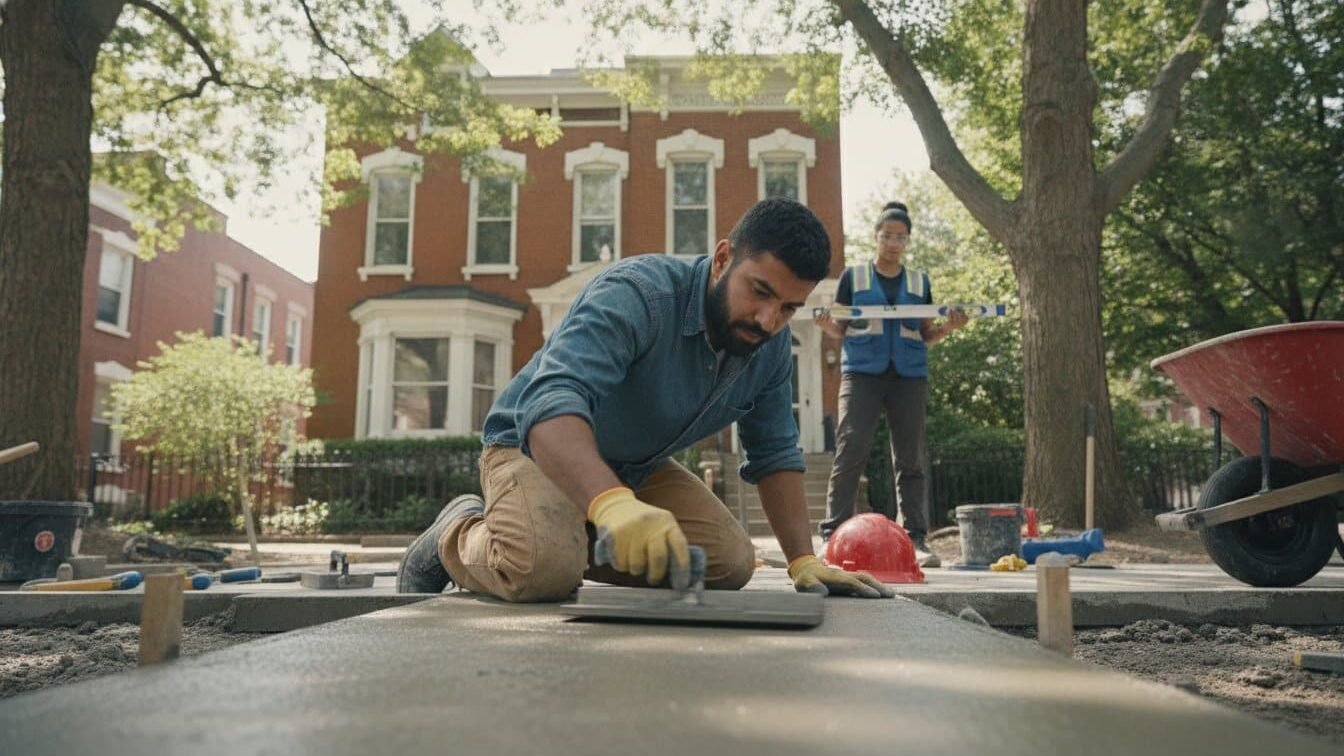
Once your contractor is on-site, the technical work follows a strict sequence to ensure the repair is permanent and compliant. We follow these essential steps for every project:
- Permit Acquisition: Securing the necessary NYC DOT permits before any shovel hits the ground.
- Sub-base Preparation: Removing old concrete and compacting the sub-grade to prevent future settling or “undermined” flags.
- Material Standards: Pouring 4500 PSI concrete, which is the high-strength standard required to withstand NYC’s freeze-thaw cycles.
- Finishing: Applying a broom finish and ensuring expansion joints are correctly placed to meet ADA standards.
The Permit Process: Navigating NYC Bureaucracy
You can’t legally repair a sidewalk in NYC without a valid DOT permit. This document is your proof that the work is authorized and will be performed to city specifications. Your contractor should handle all the documentation, ensuring that the work adheres to Americans with Disabilities Act (ADA) standards. This includes maintaining the proper slope for drainage and ensuring that the walkway is accessible for all pedestrians. Without this permit, any work performed is considered unauthorized and won’t lead to a violation dismissal.
The Final Inspection and Violation Dismissal
Completing the physical repair is only the first half of the battle. To officially clear your record, you must file a Certificate of Correction and request a DOT re-inspection. This is a critical step that many property owners overlook. After the repair is finished, your contractor must submit the paperwork to trigger a city inspector’s visit. You can then verify the status through the NYC DOT portal to ensure the violation is marked as “dismissed.” Keep these records in a safe place, as you’ll need them for future property transactions or insurance renewals. If you want to ensure your walkway is restored correctly and your violation is cleared, reach out to our expert team for a consultation today.
Why Brick Tech is the Leading Choice for Queens Property Owners
Brick Tech Contracting Corp has served as a cornerstone of the Queens masonry industry since 1980. Our family-owned team brings over four decades of localized experience to every project. We understand that sidewalk violation removal Queens isn’t just about pouring concrete; it’s about protecting a neighbor’s investment and ensuring the safety of our shared streets. We prioritize a “do it right the first time” philosophy because we know the frustration of a rejected repair. By using high-strength materials and following DOT specifications exactly, we provide repairs that stand up to the borough’s unique environmental pressures.
Our expertise extends beyond the walkway. We view the sidewalk as the foundation of your property’s curb appeal and structural defense. A well-maintained walkway prevents water from pooling near your foundation and complements the overall health of your building’s exterior. This holistic approach ensures that your property remains compliant, safe, and visually cohesive with the surrounding neighborhood. We take pride in our reputation for reliability and the peace of mind we provide to every client.
Beyond the Sidewalk: Total Exterior Protection
Maintaining a property in NYC requires a comprehensive strategy. While we specialize in sidewalk violation removal Queens, our skills encompass the entire building envelope. Our integrated services include:
- Precision brick pointing NYC to restore mortar joints and prevent leaks.
- Expert parapet wall construction New York for roofline safety and compliance.
- Comprehensive facade restoration to enhance curb appeal and long-term value.
This relationship-based approach means you have a single, reliable expert to manage your exterior maintenance. We ensure quality craftsmanship across every square inch of your facade, creating a unified barrier against the elements. Our commitment to excellence means we never cut corners on materials or techniques.
Ready to Clear Your Title? Contact Brick Tech Today
Don’t let a DOT notice linger on your property record. Our team streamlines the entire process, from pulling the necessary permits to filing the final Certificate of Correction. We offer transparent estimates that help you plan your repairs without the stress of hidden fees. We take pride in our ability to handle the bureaucratic paperwork so you can focus on your daily life. When you partner with us, you aren’t just hiring a crew; you’re gaining a dedicated guide committed to the longevity of your home. To get started on your repair and secure your property’s future, Contact Brick Tech for Sidewalk Violation Removal in Queens today.
Protect Your Investment with Reliable Queens Masonry
Receiving a DOT notice doesn’t have to be a source of long-term stress. By understanding the specific triggers of sidewalk violation removal Queens and taking proactive steps, you can secure your property title and avoid the inflated costs of city-mandated repairs. The key to a permanent resolution lies in combining high-strength materials with meticulous permit management. This ensures your walkway remains safe, durable, and fully compliant with 2026 standards.
Brick Tech Contracting Corp is a family-owned and operated business that has served the borough as a licensed NYC contractor since 1980. We provide a 100% DOT compliance guarantee to give you total peace of mind regarding your repair. Our team handles every detail, from the initial inspection to the final dismissal paperwork, so you can focus on what matters most. Don’t let a violation compromise your property’s value or your personal liability.
Schedule Your Free Queens Sidewalk Inspection with Brick Tech today and take the first step toward a clean title and a safer property. We’re here to guide you through every stage of the process with the expertise your investment deserves.
Frequently Asked Questions
How do I know if my Queens property has a sidewalk violation?
You’ll receive a physical “Notice of Account” by mail or find one taped to your door. You can also check the NYC DOT online portal using your property’s Borough, Block, and Lot (BBL) number. This digital record shows all active notices and detailed inspection reports. It’s best to check this portal regularly because physical notices can sometimes be lost in the mail or removed from your door by wind.
Can I fix the sidewalk myself to save money?
You cannot legally repair your sidewalk yourself if the work costs more than $200 or requires a DOT permit. NYC law requires a contractor with a Home Improvement Contractor License from the Department of Consumer and Worker Protection. DIY repairs often fail to meet strict DOT specifications. This leads to rejected inspections and requires you to pay for the work to be done again by a professional.
What is the standard DOT concrete specification for Queens sidewalks?
The NYC DOT requires high-strength concrete, typically specified at 4500 PSI, to ensure long-term durability. The flags must be four inches thick, though driveways require a six-inch thickness. The finish must be a non-slip broom finish with expansion joints placed at specific intervals. Using the correct mix is essential for sidewalk violation removal Queens, as lower-grade concrete will fail under the borough’s heavy freeze-thaw cycles.
How long does it take to remove a sidewalk violation from my record?
The physical repair usually takes one to two days, but the administrative removal takes longer. After the work is finished, your contractor files a Certificate of Correction. A DOT inspector must then visit the site to verify the repair meets all standards. Once approved, the violation is typically cleared from the city’s digital portal within several weeks. This timeline depends on the current inspector backlog at the DOT.
Does the City of Queens pay for sidewalk repairs caused by city trees?
There is no “City of Queens” government; repairs are handled by NYC. The “Trees & Sidewalks” program may provide free repairs for eligible one, two, or three-family homes if damage is caused exclusively by city tree roots. However, commercial properties and larger residential buildings remain responsible for these costs. If you’re eligible and hire your own contractor, you may apply for reimbursement through the NYC Comptroller’s office within 90 days.
What happens if I sell my house with an active sidewalk violation?
An active violation acts as a lien on your property title. Most title companies will flag this during the closing process, and lenders will likely refuse to fund the buyer’s mortgage until the violation is cleared. You’ll either need to complete the sidewalk violation removal Queens process before closing or place funds in an escrow account to cover the cost of future repairs. Clearing it early is always the smoother option.
Why should I hire a licensed contractor instead of a general handyman?
A general handyman lacks the specific Home Improvement Contractor License and required DOT insurance to pull legal permits. Handymen often use standard concrete mixes that don’t meet the 4500 PSI requirement. If the city inspects a repair done by an unlicensed individual, they can reject the work and fine the property owner. Licensed contractors provide the technical precision and legal documentation necessary to guarantee a permanent violation dismissal.
Will the DOT fine me if I start the repairs after the 75-day period?
The DOT doesn’t usually issue immediate financial fines for starting late, but they may take control of the project. Once the 75-day grace period expires, the city reserves the right to hire its own contractors to perform the work. These city-led repairs are billed directly to your property tax account and are often much more expensive than private quotes. It’s critical to secure a private contractor before the city initiates its own work.