A DOT sidewalk violation NYC isn’t a fine or a summons, but it can effectively freeze your property’s value until the city’s requirements are met. Finding that notice in the mail often triggers immediate stress about liens and the looming 75-day repair deadline. You’re right to be concerned about the City’s contractors performing the work themselves. Their rates are notoriously high, and any unpaid bills can lead to a 20% interest charge added to your property record.
We understand that maintaining a safe walkway is a priority, but the bureaucratic process of clearing a violation often feels overwhelming. This guide shows you exactly why the DOT flagged your property, whether it’s a 1/4-inch trip hazard or a 1/2-inch crack. You’ll learn the specific steps to obtain a permit, the 4,500 PSI concrete standards required for compliance, and how to officially dismiss the violation from your title. We’ll cover everything you need to know to protect your investment and ensure your sidewalk is safe for every pedestrian.
Key Takeaways
- Understand why a violation is a legal record on your property title rather than a simple fine.
- Identify the specific criteria inspectors use to flag defects, including hardware issues and vertical trip hazard thresholds.
- Learn the procedural steps to resolve a DOT sidewalk violation NYC within the 75-day window to avoid city-imposed interest charges.
- Discover why choosing a private masonry expert allows for better control over material quality and project scheduling.
- Follow the formal inspection and dismissal process to ensure your property record is officially cleared.
What is a DOT Sidewalk Violation and Why Did You Receive One?
Receiving a notice from the Department of Transportation can be unsettling for any property owner. However, you should understand that a DOT sidewalk violation NYC isn’t a fine or a summons. It does not require an immediate payment to the city treasury. Instead, it serves as a formal legal notice that your sidewalk contains specific defects that could compromise public safety. Under NYC Administrative Code Section 19-152, property owners are legally responsible for the maintenance and repair of the sidewalk fronting their property. This law ensures that the burden of safety rests with the individual owner rather than the city at large.
The city views the sidewalk as a critical extension of the public infrastructure. While the city owns the land, the owner carries the burden of upkeep. When an inspector identifies a hazard, they file a notice with the County Clerk. This filing acts as a “cloud” on your property title. It won’t result in a lien immediately; however, it will likely prevent you from selling or refinancing your home until the record is officially cleared. High-quality sidewalk construction and consistent masonry maintenance are the best ways to protect your investment from these legal hurdles and ensure your property remains marketable.
The Purpose of NYC Sidewalk Inspections
The primary driver behind these inspections is pedestrian safety. NYC is a walking city where thousands of people may cross your sidewalk every day. The DOT prioritizes inspections in high-traffic zones, particularly near schools, hospitals, and transit hubs. By enforcing strict standards, the city aims to prevent trip-and-fall incidents that lead to costly lawsuits against both the city and the property owner. Regular inspections ensure that the structural integrity of our walkways remains resilient against the freeze-thaw cycles typical of our local climate. Ensuring a smooth surface isn’t just about compliance; it’s about protecting your neighbors and your assets.
How You Are Notified of a Violation
The process usually starts with a physical yellow notice left at your property by an inspector. This is your first warning. Following this, the DOT sends a formal Notice of Violation via certified mail to the owner of record. This document is critical because it includes a detailed map or description of the specific sidewalk flags that require attention. If you suspect a violation but haven’t received mail, you can verify your status through the NYC DOT Sidewalk Management Database online. Staying proactive helps you manage the 75-day repair window before the city considers hiring its own contractors to do the work at a much higher cost.
NYC DOT Sidewalk Defect Criteria: What Inspectors Look For
NYC inspectors follow a precise technical checklist when evaluating your property’s frontage. If you receive a DOT sidewalk violation NYC, it’s because a specific measurement or material standard has been breached. The most common trigger is a vertical misalignment between adjacent sidewalk flags. According to the latest standards, a vertical difference of 1/4 inch or greater is officially classified as a trip hazard. While that might seem like a minor gap, it’s enough to catch a shoe or a stroller wheel, creating a significant liability for the property owner. Inspectors also look for “hardware” issues that many owners overlook. If a manhole cover, utility cap, or cellar door isn’t perfectly flush with the surrounding concrete, it’s considered a defect that must be corrected.
The city also monitors the materials used for previous fixes. A common mistake is using asphalt or “cold patch” to fill a hole in a concrete sidewalk. This is a non-standard repair that will trigger a violation notice because asphalt doesn’t provide the same structural integrity or durability as concrete. For a repair to be compliant, it must use concrete rated at a minimum of 4,500 PSI. If you’re concerned about the current state of your walkway, a professional NYC sidewalk repair assessment can help you identify these specific issues before an inspector arrives.
Common Trip Hazards and Surface Defects
Surface defects are the most visible signs of wear and tear. Inspectors specifically look for cracks that are 1/2 inch wide or wider. They also check for “spalling” or scaling, which is when the top layer of the concrete begins to crumble or flake away. This often happens due to poor-quality masonry or the heavy use of de-icing salts during NYC winters. Tree roots are another major factor; as they grow, they heave flags upward, creating dangerous slopes. Under NYC DOT sidewalk regulations, any upheaval or “trip hazard” created by root growth remains the legal responsibility of the property owner to fix, even though the city owns the tree.
Structural and Drainage Issues
Structural failure often happens where you can’t see it. Inspectors look for “undermined” flags, which are sections of concrete with hollow voids underneath caused by soil erosion or water runoff. These flags are prone to sudden collapse under weight. Drainage is equally important for compliance. If a sidewalk slopes toward a building or allows water to pool rather than flow toward the gutter, it’s considered defective. Inspectors also check for missing expansion joint material. These joints are essential for allowing concrete to expand and contract with the weather; without them, the sidewalk will inevitably buckle and crack, leading to another violation in a few short years.
Navigating the 45-Day Window: Steps to Fix Your Sidewalk Violation
Once you receive a DOT sidewalk violation NYC, the clock begins ticking on your response. While the official NYC Sidewalk Violation and Repair Process technically allows for a 75-day window to complete repairs, the first 45 days are the most critical for property owners who want to maintain control over the project. Taking decisive action during this initial period prevents the city from stepping in and assigning their own contractors to the job. Following a structured roadmap ensures that your repair is compliant, durable, and officially recognized by the Department of Transportation.
- Step 1: Review the Notice of Violation. Carefully examine the sketch and descriptions provided in your notice. It will identify specific sidewalk flags by number, showing you exactly which sections require replacement.
- Step 2: Hire a qualified specialist. It’s essential to hire a licensed NYC sidewalk repair contractor who has experience with city compliance. They understand the nuances of local masonry and the specific bureaucratic steps required for violation removal.
- Step 3: Secure the necessary permits. Your contractor must obtain a sidewalk repair permit before any work begins. For a single property, this permit typically costs $70 for every 300 linear feet of sidewalk.
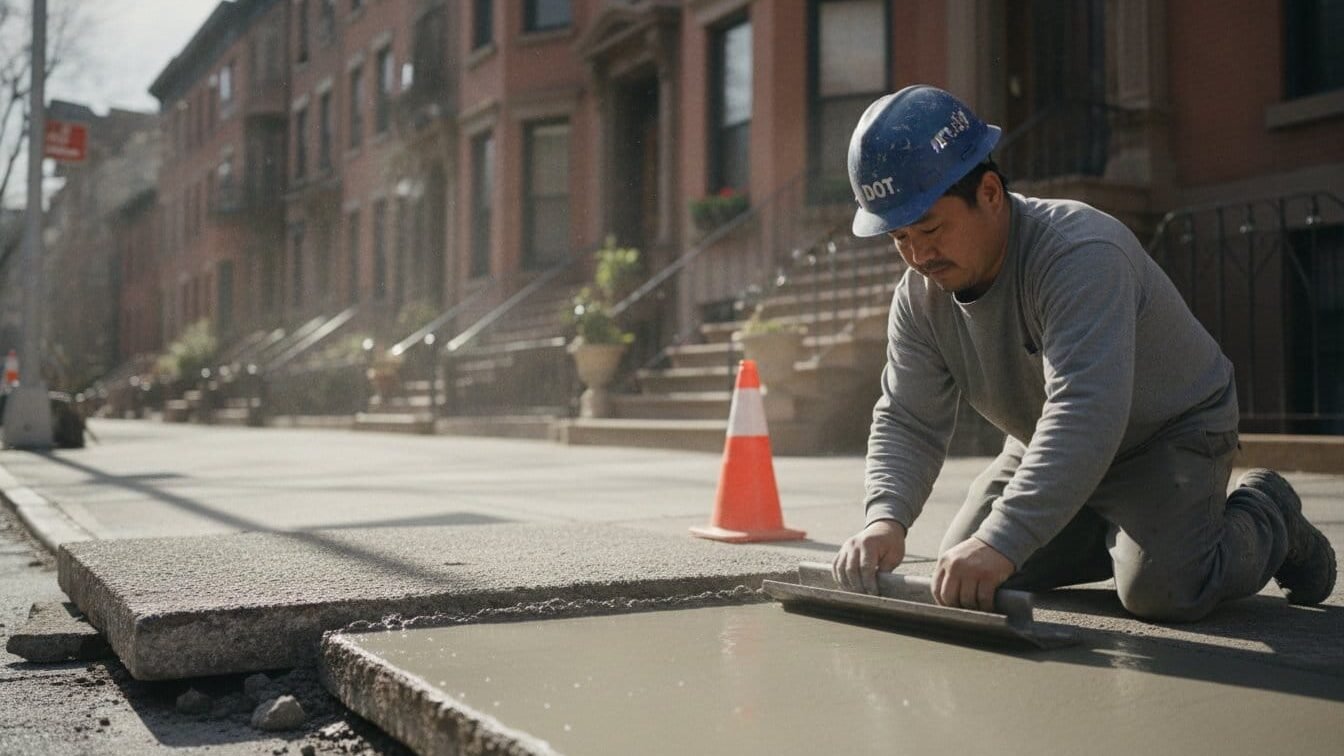
- Step 4: Execute the repair. The new concrete must be poured to a minimum strength of 4,500 PSI. The contractor must follow all DOT standard specifications, including proper expansion joint placement and slope requirements.
- Step 5: Request a dismissal inspection. After the work is finished, you must call 311 to request a final inspection. The violation will only be cleared from your property record once a DOT inspector verifies that the work meets their standards.
Understanding the 45-Day Deadline
The 45-day period is your opportunity to avoid city intervention. If you don’t pull a permit or show progress within this timeframe, the DOT may authorize its own contractors to perform the work. You want to avoid this scenario. City-led repairs are often significantly more expensive than hiring a private contractor. Furthermore, if you fail to pay the city’s bill, a 20% interest charge is typically added. Acting early allows you to vet your own contractor and ensure the work is done with high-quality materials that will last for decades.
The Role of DOT Permits
Permits serve as the official link between your repair work and your violation number in the city’s database. You should never allow a contractor to begin work without a physical permit present at the site. This document ensures that the city is aware the repair is happening and that it’s being performed by a registered entity. Without a valid permit, the DOT won’t recognize your repair as a legitimate fix. This means the violation could remain on your property title indefinitely, even if the physical sidewalk looks brand new.

Comparing Your Options: Private Contractors vs. City-Led Repairs
When you receive a DOT sidewalk violation NYC, you face a critical choice: hire a private masonry expert or let the City handle the work. While the City will eventually step in if you remain inactive, this “default” option is rarely in the property owner’s best interest. Choosing a private contractor gives you total control over the materials, the timeline, and the final cost. Most importantly, it allows you to ensure the work meets high standards of durability rather than just the bare minimum requirements for compliance.
A private contractor provides a fixed quote, giving you financial predictability that the City’s billing process lacks. When the Department of Transportation hires its own crews, they bill the property owner for labor and materials at rates that are often significantly higher than private market averages. These bills are sent after the work is completed, leaving you with little room to negotiate. If the invoice goes unpaid, the City can place a lien on your property, which complicates any future attempts to sell or refinance your home. By taking the lead, you avoid these administrative headaches and the risk of a 20% interest charge on unpaid balances.
Why Quality Masonry Matters
NYC winters are brutal on concrete. The constant cycle of freezing and thawing causes low-quality pours to crack and scale within just a few seasons. A professional masonry team focuses on long-term resilience, using high-strength concrete and precise finishing techniques that resist weather damage. This level of care is essential for maintaining your building’s overall health. Just as brick pointing NYC protects your facade from water infiltration, a properly installed sidewalk prevents moisture from undermining your foundation. Investing in expert craftsmanship ensures that your new sidewalk flags match the aesthetic of your property while providing a safe, level surface for years to come.
The Financial Risk of City Intervention
Allowing the City to perform repairs is a significant financial gamble. The City’s primary goal is to remove the public hazard, not to find the most cost-effective solution for the owner. Their contractors work on their own schedule, which could leave your property in a state of disrepair for months, increasing your liability for trip-and-fall accidents. Once the City completes the job, the bill is added to your property tax record. Disputing these charges is a notoriously difficult and time-consuming process. Working with a dedicated professional allows you to address the violation on your terms and ensures the job is done right the first time. If you need to clear your record efficiently, reach out to the experts at Brick Tech Contracting for a professional assessment.
Finalizing the Process: NYC Sidewalk Violation Removal and Compliance
The physical work is finished and the concrete has cured, but your property record may still show an active DOT sidewalk violation NYC. This final stage is where many owners encounter unexpected delays. Simply fixing the sidewalk doesn’t automatically complete the violation removal process from the County Clerk’s records. You must take proactive steps to ensure the Department of Transportation acknowledges the repair and officially dismisses the case. This administrative closure is just as vital as the masonry itself, especially if you plan to sell or refinance your property in the future.
To start the dismissal process, you or your contractor must request a final inspection. While your contractor handled the permits and the pour, the city needs to verify that the work meets all 2026 safety and material standards. This is done by calling 311 or using the DOT’s online portal to schedule a re-inspection. During this visit, an inspector will confirm that the trip hazards have been eliminated and that the expansion joints and slope are correct. Having a contractor who specializes in NYC sidewalk violation removal is a major advantage here, as they ensure the work is performed to inspection-ready standards from day one.
Confirming Your Compliance
Once the inspection is complete, you should monitor the DOT Sidewalk Management Account online. It can take several weeks for the status to update from “Active” to “Dismissed.” Don’t assume the record is clear just because the inspector gave a verbal approval on-site. You should also check for any outstanding administrative fees or permit issues. During a property sale, a title company will perform a “Lien Search.” If the violation hasn’t been formally dismissed in the system, it will appear as an encumbrance, potentially stalling your closing. Keep digital copies of your signed contract, the DOT permit, and the final dismissal letter in your permanent property files.
Partnering with Brick Tech for Peace of Mind
Brick Tech Contracting Corp has served as a trusted guide for NYC property owners since 1980. We understand that a DOT notice is a stressful disruption to your schedule and your finances. Our family-owned business takes a relationship-oriented approach, handling both the technical masonry and the bureaucratic requirements. We don’t just pour concrete; we manage the process from the initial permit filing to the final dismissal inspection. This comprehensive care ensures your investment is protected and your property title remains clean. Contact us today for a professional assessment of your DOT notice and let our experts handle the compliance details for you.
Protect Your Property Title Today
Resolving a DOT sidewalk violation NYC is a manageable task once you understand the city’s specific defect criteria and repair deadlines. By taking the lead rather than waiting for city intervention, you ensure your property is repaired with high-strength materials that stand up to local weather. You’ve learned how to identify trip hazards, navigate the permitting process, and request the final inspection required to clear your title. This proactive approach keeps your investment secure and your walkways safe for the community.
Brick Tech Contracting Corp has been a reliable expert for New York owners since 1980. We are fully licensed and insured NYC contractors, carrying an A+ rating for sidewalk repair and violation removal. Our team handles every detail, from the first permit to the final dismissal letter. Get a Professional Assessment of Your NYC Sidewalk Violation Today and gain the peace of mind that comes with expert masonry. You’ve taken the first step by getting informed, and we’re ready to help you finish the job with confidence.
Frequently Asked Questions
How do I check if my NYC property has a DOT sidewalk violation?
You can verify your property’s status by visiting the NYC DOT Sidewalk Management Database online. Simply enter your borough, block, and lot number to view any active notices. If you don’t have access to a computer, you can also call 311 to inquire about your property record. Staying informed about your status is the first step in protecting your property’s marketability.
Is a sidewalk violation the same as an OATH/ECB fine?
A DOT sidewalk violation NYC is not a fine, though many owners confuse the two. Unlike OATH or ECB summonses that require a monetary payment to the city, this violation is a legal notice of a defective condition. It remains as a “cloud” on your property title until the repair is certified. If you ignore the notice, the city may perform the work and bill you, which can then lead to an actual lien.
Can I repair the sidewalk myself to save money?
Most property owners aren’t permitted to perform these repairs themselves. NYC law requires that work on the public right-of-way be done by a licensed contractor who can pull the necessary DOT permits. The city also mandates specific materials, such as 4,500 PSI concrete, which requires professional handling to ensure the repair passes a final inspection. Hiring a specialist ensures the work is compliant and durable.
What happens if a tree root caused the sidewalk damage?
You are still legally responsible for the repair even if a city-owned tree root caused the upheaval. Under Section 19-152 of the Administrative Code, the maintenance burden remains with the property owner. You must coordinate with the Parks Department before any root pruning occurs to avoid separate fines. An experienced contractor can help manage this coordination to ensure the tree stays healthy while your sidewalk becomes level.
How much does it typically cost to remove a sidewalk violation?
The cost depends on the specific number of sidewalk flags identified in your notice and the complexity of the site. Factors like the presence of tree roots or the need for specialized hardware grading will influence the final price. Choosing a private contractor allows you to receive a fixed, transparent quote before any work begins. This is generally more cost-effective than waiting for the city to bill you at their own predetermined rates.
Does the DOT violation ever expire on its own?
No, a sidewalk violation remains on the property record indefinitely until it is formally dismissed. It won’t disappear with time or simply because the sidewalk looks better. The only way to clear the record is to complete the repairs, pass a DOT dismissal inspection, and verify that the city has updated its database. Addressing this early prevents complications when you eventually decide to sell or refinance.
What should I do if I think the violation was issued in error?
You can request a re-inspection through the DOT if you believe the inspector made a mistake. This is a formal process where you challenge the measurement of a trip hazard or the location of the flagged flags. You’ll need to provide clear evidence that the sidewalk meets the city’s safety thresholds. If the re-inspection confirms the sidewalk is safe, the DOT will remove the notice from your property record.