
Ensuring Safety, Compliance, and Long-Term Urban Maintenance
Sidewalks play a critical role in New York City’s urban landscape, supporting pedestrian safety, accessibility, and neighborhood connectivity. When sidewalks fall into disrepair, the NYC Department of Transportation (DOT) may issue violations that require prompt attention from property owners. This comprehensive guide explains how DOT sidewalk violations occur, who is responsible for repairs, and how to navigate the violation removal process efficiently—while maintaining compliance with city regulations and contributing to a safer city environment.
Understanding DOT Sidewalk Violations and NYC Sidewalk Repair Responsibilities
NYC Sidewalk Regulations and the Role of the DOT
In New York City, sidewalk maintenance is governed by strict regulations enforced by the Department of Transportation (DOT). The DOT routinely inspects sidewalks and issues violations when conditions pose safety hazards or fail to meet city standards. Common DOT sidewalk violations include cracked concrete, uneven slabs, trip hazards, and obstructions that compromise pedestrian safety and accessibility.
Common Causes of Sidewalk Violations
DOT sidewalk violations often result from:
- Natural wear and aging of concrete
- Tree root intrusion causing uplift or cracking
- Weather-related damage such as freeze-thaw cycles
- Improper or outdated repairs
These hazards increase the risk of slips, trips, and falls—particularly for seniors, children, and individuals with mobility challenges—making timely repairs essential.
Property Owner Responsibilities in NYC
Property owners are legally responsible for maintaining sidewalks adjacent to their buildings across all five boroughs, including Brooklyn, Queens, the Bronx, Staten Island, and Manhattan. This responsibility includes repairing damage, maintaining accessibility, and addressing violations promptly. Proactive inspections and maintenance help property owners avoid fines, liability claims, and escalated enforcement actions.
Legal and Financial Implications of Non-Compliance
Failing to address DOT sidewalk violations can lead to fines, penalties, and increased liability if injuries occur. If violations remain unresolved, the city may complete the repairs and bill the property owner at a higher cost. Timely violation removal protects both legal standing and property value.
The DOT Sidewalk Violation Removal Process in NYC
Identifying and Assessing Sidewalk Violations
Regular sidewalk inspections are the first line of defense. Property owners can use NYC 311 and the DOT’s online portal to confirm active violations. When damage is observed, documenting the issue with photos and detailed notes helps streamline the repair and approval process.
Step-by-Step Guide to Removing DOT Sidewalk Violations
- Verify the violation through NYC 311 or the DOT website
- Hire a licensed contractor, such as Brick Tech Contracting Corp, experienced in NYC DOT-compliant sidewalk repairs
- Schedule a DOT inspection to assess repair requirements
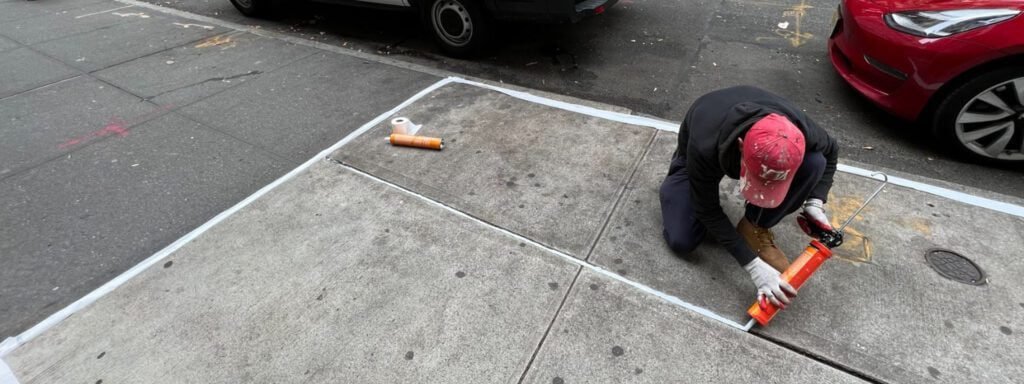
- Complete repairs according to NYC code specifications
- Submit a violation removal request with documentation
- Final inspection and clearance by the city
Once approved, the violation is officially removed from city records.
Documentation, Timelines, and Costs
Required documentation typically includes permits, before-and-after photos, and contractor invoices. Timelines vary depending on damage severity, ranging from several weeks to a few months. Costs depend on whether repairs involve simple patching, slab replacement, or full sidewalk reconstruction. Working with experienced contractors helps minimize delays and unexpected expenses.
Best Practices for NYC Sidewalk Repairs and Long-Term Safety
Types of Sidewalk Repairs
- Patching: Ideal for minor cracks or surface damage
- Replacement: Removing and replacing damaged sidewalk sections
- Reconstruction: Full sidewalk rebuild for extensive or structural damage
Materials and Techniques for Code Compliance
Durable, DOT-approved concrete materials, proper reinforcement, correct joint spacing, and controlled curing are essential for long-lasting repairs. Brick Tech Contracting Corp specializes in delivering high-quality, code-compliant concrete sidewalk repairs across NYC.
Preventative Maintenance Strategies
Routine inspections, early repair of small defects, and proactive tree root management help prevent future violations. Establishing a maintenance schedule reduces long-term costs and liability risks.
Permits, Inspections, and Accessibility
Major sidewalk repairs require proper permits and inspections coordinated with the NYC DOT and Department of Buildings. Ensuring sidewalks remain clear, level, and accessible supports ADA compliance and public safety.

Contributing to a Safer, More Accessible New York City
Well-maintained sidewalks reduce accidents, improve walkability, and enhance neighborhood appeal. Collaboration between property owners, licensed contractors, city agencies, and local communities plays a vital role in maintaining NYC’s infrastructure. Proactive sidewalk management not only ensures compliance but also strengthens property value and community trust.
Conclusion
DOT sidewalk violation removal and NYC sidewalk repairs are essential responsibilities for property owners committed to safety, compliance, and long-term property protection. Addressing violations promptly, following proper procedures, and investing in quality repairs help prevent fines, reduce liability, and contribute to a safer urban environment.
For property owners seeking reliable, code-compliant sidewalk repair and DOT violation removal services, Brick Tech Contracting Corp is a trusted partner across New York City. With extensive experience navigating NYC regulations, securing permits, and completing durable concrete sidewalk repairs, Brick Tech ensures violations are resolved efficiently and correctly the first time.
By working with Brick Tech Contracting Corp, property owners can move forward with confidence—knowing their sidewalks meet city standards, enhance public safety, and support the long-term value of their properties.